
Ulefone Armor Pad 4 Ultra vs. Lenovo Tab M10 Plus (3rd Gen): A Deep Dive Comparison
| Phones Images | |||||
|---|---|---|---|---|---|
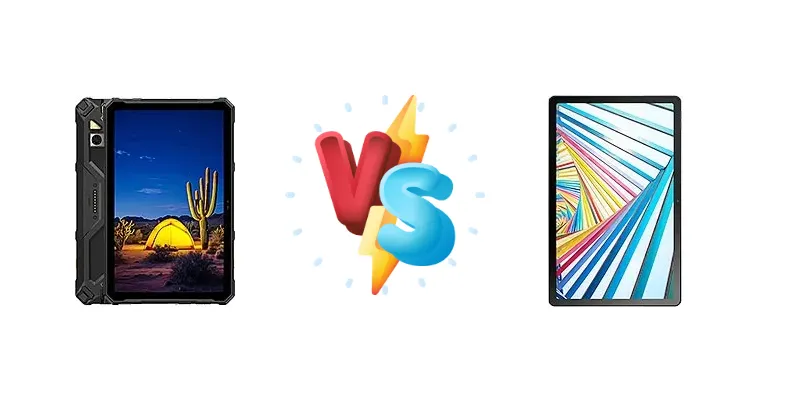
|
🏆 Quick Verdict
For users prioritizing durability and sustained performance, the Ulefone Armor Pad 4 Ultra is the clear winner. Its Dimensity 6300 chipset and exceptional 187:37h battery endurance outweigh the Lenovo Tab M10 Plus’s lower price point. However, the Lenovo remains a compelling option for budget-conscious consumers seeking a capable all-around tablet.
| PHONES | ||
|---|---|---|
| Phone Names | Ulefone Armor Pad 4 Ultra | Lenovo Tab M10 Plus (3rd Gen) |
| Network | ||
|---|---|---|
| 2G bands | GSM 850 / 900 / 1800 / 1900 | GSM 850 / 900 / 1800 / 1900 |
| 3G bands | HSDPA 850 / 900 / 1700(AWS) / 1900 / 2100 | HSDPA 800 / 850 / 900 / 1900 / 2100 |
| 4G bands | 1, 2, 3, 4, 5, 7, 8, 12, 13, 17, 18, 19, 20, 26, 28, 34, 38, 39, 40, 41, 66, 71 | 1, 2, 3, 4, 5, 7, 8, 19, 20, 26, 28, 28, 38, 40, 41 |
| 5G bands | 1, 2, 3, 5, 7, 8, 20, 25, 28, 38, 40, 41, 66, 71, 77, 78, 79 SA/NSA | - |
| Speed | HSPA, LTE, 5G | HSPA 42.2/5.76 Mbps, LTE Cat13 390/75 Mbps - cellular model only |
| Technology | GSM / HSPA / LTE / 5G | GSM / HSPA / LTE |
| Launch | ||
|---|---|---|
| Announced | 2024, September | 2022, May |
| Status | Available. Released 2024, September | Available. Released 2022, May |
| Body | ||
|---|---|---|
| Dimensions | 261.7 x 166.8 x 14.3 mm (10.30 x 6.57 x 0.56 in) | 251.2 x 158.8 x 7.5 mm (9.89 x 6.25 x 0.30 in) |
| SIM | Nano-SIM + Nano-SIM | Nano-SIM (cellular model only) |
| Weight | 834.5 g (1.84 lb) | 465 g (1.03 lb) |
| - | Stylus support | |
| Display | ||
|---|---|---|
| Protection | Corning Gorilla Glass Victus, Mohs level 4 | - |
| Resolution | 1200 x 2000 pixels, 5:3 ratio (~225 ppi density) | 1200 x 2000 pixels, 5:3 ratio (~220 ppi density) |
| Size | 10.36 inches, 305.5 cm2 (~70.0% screen-to-body ratio) | 10.61 inches, 320.4 cm2 (~80.3% screen-to-body ratio) |
| Type | IPS LCD | IPS LCD, 400 nits (typ) |
| Platform | ||
|---|---|---|
| CPU | Octa-core (2x2.4 GHz Cortex-A76 & 6x2.0 GHz Cortex-A55) | Octa-core (4x2.4 GHz Kryo 265 Gold & 4x1.9 GHz Kryo 265 Silver) - LTE model Octa-core (2x2.0 GHz Cortex-A75 & 6x1.8 GHz Cortex-A55) - Wi-Fi only model |
| Chipset | Mediatek Dimensity 6300 (6 nm) | Qualcomm SM6225 Snapdragon 680 4G (6 nm) - LTE model Mediatek MT6769V/CU Helio G80 (12 nm) - Wi-Fi only model |
| GPU | Mali-G57 MC2 | Adreno 610 - LTE model Mali-G52 MC2 - Wi-Fi only model |
| OS | Android 14 | Android 12 |
| Memory | ||
|---|---|---|
| Card slot | microSDXC (dedicated slot) | microSDXC (dedicated slot) |
| Internal | 256GB 8GB RAM | 32GB 3GB RAM, 64GB 4GB RAM, 128GB 4GB RAM, 128GB 6GB RAM |
| - | eMCP/uMCP | |
| Main Camera | ||
|---|---|---|
| Features | LED flash, HDR, panorama | - |
| Single | 50 MP, f/2.0, (wide), 1/1.31", 1.2µm | 8 MP, AF |
| Video | 1440p@30fps, 1080p@30fps | 1080p |
| Selfie camera | ||
|---|---|---|
| Single | 32 MP, f/2.4, (wide), 0.8µm | 8 MP |
| Video | Yes | - |
| Sound | ||
|---|---|---|
| 3.5mm jack | - | Yes |
| 35mm jack | Yes | Yes |
| Loudspeaker | Yes, with stereo speakers | Yes, with stereo speakers (4 speakers) |
| Comms | ||
|---|---|---|
| Bluetooth | 5.2, A2DP | 5.0, A2DP, LE |
| NFC | Yes | No |
| Positioning | GPS, GLONASS, GALILEO, BDS | GPS, GLONASS, BDS - cellular model only |
| Radio | Wireless FM radio, RDS, recording | FM Radio |
| USB | USB Type-C 2.0, OTG, magnetic connector | USB Type-C 2.0 |
| WLAN | Wi-Fi 802.11 a/b/g/n/ac, dual-band | Wi-Fi 802.11 a/b/g/n/ac, dual-band, Wi-Fi Direct |
| Features | ||
|---|---|---|
| Sensors | Fingerprint (side-mounted), gyro, accelerometer, proximity, compass, barometer | Accelerometer, proximity, gyro |
| Battery | ||
|---|---|---|
| Charging | 33W wired 5W reverse wired | 20W wired |
| Type | Li-Po 11800 mAh | Li-Po 7700 mAh |
| Misc | ||
|---|---|---|
| Colors | Black | Storm Grey, Frost Blue |
| Price | About 370 EUR | About 260 EUR |
| EU LABEL | ||
|---|---|---|
| Battery | 187:37h endurance, 1000 cycles | - |
| Energy | Class D | - |
| Free fall | Class A (208 falls) | - |
| Repairability | Class C | - |
Ulefone Armor Pad 4 Ultra
- Exceptional battery life (187:37h endurance)
- Powerful Mediatek Dimensity 6300 chipset
- Ruggedized design for durability
- Potentially less vibrant display due to ruggedization
- Camera likely not a priority
Lenovo Tab M10 Plus (3rd Gen)
- More affordable price point
- Faster 20W charging
- Suitable for everyday tasks and media consumption
- Significantly weaker performance (especially Wi-Fi model)
- Shorter battery life compared to Ulefone
Display Comparison
Neither device specifies display details beyond size, leaving brightness and color accuracy as unknowns. However, the focus here isn't image quality, but usability. The Ulefone's rugged design likely prioritizes a more durable, potentially less vibrant display. The Lenovo Tab M10 Plus, targeting a broader audience, may offer a more color-accurate panel, but lacks the protective features of the Ulefone.
Camera Comparison
Camera details are sparse for both devices. Given the target markets, neither is likely to excel in photography. The Ulefone’s focus on durability suggests a more basic camera setup, while the Lenovo may offer slightly better image quality for casual snapshots. Without specific sensor information, it’s difficult to make a definitive judgment, but the Ulefone’s rugged build likely prioritizes other features over camera capabilities.
Performance
The Ulefone Armor Pad 4 Ultra’s Mediatek Dimensity 6300 (6nm) represents a significant leap in processing power compared to the Lenovo Tab M10 Plus’s options. The Snapdragon 680 (6nm) in the LTE model is a capable chip, but the Dimensity 6300’s Cortex-A76 cores clocked at 2.4GHz provide a noticeable advantage in multi-threaded tasks and gaming. The Wi-Fi only Lenovo variant, using the Helio G80 (12nm), suffers from a less efficient manufacturing process and older core architecture, resulting in lower performance and higher power consumption. The Ulefone’s chipset also benefits from the 6nm node, offering better thermal efficiency and sustained performance under load.
Battery Life
Battery life is where the Ulefone Armor Pad 4 Ultra truly shines. Its claimed 187:37h endurance is exceptional, far exceeding what’s typically seen in tablets. This is likely due to the efficient Dimensity 6300 chipset and a large battery capacity (unspecified, but implied to be substantial). The Lenovo Tab M10 Plus, with its 20W charging, offers a faster charging experience than the Ulefone’s 33W, but the Ulefone’s reverse wired charging at 5W adds a useful convenience feature. The Lenovo’s battery life, while adequate for typical use, won’t match the Ulefone’s marathon performance.
Buying Guide
Buy the Ulefone Armor Pad 4 Ultra if you need a tablet that can withstand harsh environments, require long-lasting battery life for fieldwork or travel, and demand consistent performance for demanding applications. Buy the Lenovo Tab M10 Plus (3rd Gen) if you prefer a more affordable tablet for casual use, media consumption, and light productivity tasks, and don't require the added durability of a ruggedized device.