
Ulefone Armor Pad 4 Ultra Thermal vs. Armor 17 Pro: Which Rugged Device Reigns Supreme?
| Phones Images | |||||
|---|---|---|---|---|---|
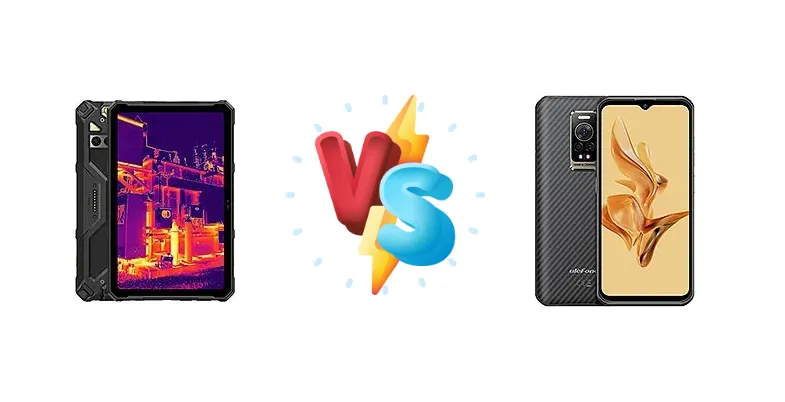
|
🏆 Quick Verdict
For users prioritizing sustained performance and a larger display for productivity, the Ulefone Armor Pad 4 Ultra Thermal is the better choice. While the Armor 17 Pro boasts significantly faster 66W charging and wireless charging, the Armor Pad 4 Ultra Thermal’s more modern chipset provides a noticeable edge in processing power.
| PHONES | ||
|---|---|---|
| Phone Names | Ulefone Armor Pad 4 Ultra Thermal | Ulefone Armor 17 Pro |
| Network | ||
|---|---|---|
| 2G bands | GSM 850 / 900 / 1800 / 1900 | GSM 850 / 900 / 1800 / 1900 |
| 3G bands | HSDPA 850 / 900 / 1700(AWS) / 1900 / 2100 | HSDPA 800 / 850 / 900 / 1700(AWS) / 1900 / 2100 |
| 4G bands | 1, 2, 3, 4, 5, 7, 8, 12, 13, 17, 18, 19, 20, 26, 28, 34, 38, 39, 40, 41, 66, 71 | 1, 2, 3, 4, 5, 7, 8, 12, 13, 17, 18, 19, 20, 25, 26, 28, 34, 38, 39, 40, 41, 66 |
| 5G bands | 1, 2, 3, 5, 7, 8, 20, 25, 28, 38, 40, 41, 66, 71, 77, 78, 79 SA/NSA | - |
| Speed | HSPA, LTE, 5G | HSPA, LTE |
| Technology | GSM / HSPA / LTE / 5G | GSM / HSPA / LTE |
| Launch | ||
|---|---|---|
| Announced | 2024, September | 2022, October 31 |
| Status | Available. Released 2024, September | Available. Released 2022, October 31 |
| Body | ||
|---|---|---|
| Dimensions | 261.7 x 166.8 x 14.3 mm (10.30 x 6.57 x 0.56 in) | 172.7 x 80.4 x 12.5 mm (6.80 x 3.17 x 0.49 in) |
| SIM | Nano-SIM + Nano-SIM | Nano-SIM + Nano-SIM |
| Weight | 834.5 g (1.84 lb) | 290 g (10.23 oz) |
| - | IP68/IP69K dust/water resistant (up to 1.5m for 30 min) Drop-to-concrete resistance from up to 1.5m MIL-STD-810G compliant | |
| Display | ||
|---|---|---|
| Protection | Corning Gorilla Glass Victus | Corning Gorilla Glass 5 |
| Resolution | 1200 x 2000 pixels, 5:3 ratio (~225 ppi density) | 1080 x 2408 pixels, 20:9 ratio (~401 ppi density) |
| Size | 10.36 inches, 305.5 cm2 (~70.0% screen-to-body ratio) | 6.58 inches, 104.3 cm2 (~75.1% screen-to-body ratio) |
| Type | IPS LCD | IPS LCD, 120Hz |
| Platform | ||
|---|---|---|
| CPU | Octa-core (2x2.4 GHz Cortex-A76 & 6x2.0 GHz Cortex-A55) | Octa-core (2x2.2 GHz Cortex-A76 & 6x2.0 GHz Cortex-A55) |
| Chipset | Mediatek Dimensity 6300 (6 nm) | Mediatek Helio G99 (6 nm) |
| GPU | Mali-G57 MC2 | Mali-G57 MC2 |
| OS | Android 14 | Android 12 |
| Memory | ||
|---|---|---|
| Card slot | microSDXC (dedicated slot) | microSDXC (dedicated slot) |
| Internal | 256GB 8GB RAM | 256GB 8GB RAM |
| Main Camera | ||
|---|---|---|
| Dual | 50 MP, f/2.0, (wide), 1/1.31", 1.2µm Thermal camera by ThermoVue, 160x120 px, 25Hz, 12μm | - |
| Features | LED flash, HDR, panorama | Triple-LED flash, HDR, panorama |
| Single | - | 16 MP, f/2.2, (wide), 1.0µm |
| Triple | - | 108 MP, f/1.9, (wide), 1/1.52”, 0.7µm, PDAF 8 MP, f/2.2, 119˚, (ultrawide), 1/4.0", 1.12µm 8 MP, (night vision), 2 infrared night vision lights |
| Video | 1440p@30fps, 1080p@30fps | 1440p@30fps, 1080p@30fps |
| Selfie camera | ||
|---|---|---|
| Single | 32 MP, f/2.4, (wide), 0.8µm | 16 MP, f/2.2, (wide), 1.0µm |
| Video | Yes | 1080p@30fps |
| Sound | ||
|---|---|---|
| 3.5mm jack | - | Yes |
| 35mm jack | Yes | Yes |
| Loudspeaker | Yes, with stereo speakers | Yes |
| Comms | ||
|---|---|---|
| Bluetooth | 5.2, A2DP | 5.2, A2DP, LE |
| NFC | Yes | Yes |
| Positioning | GPS, GLONASS, GALILEO, BDS | GPS, GLONASS, GALILEO, BDS |
| Radio | Wireless FM radio, RDS, recording | Wireless FM radio, RDS, recording |
| USB | USB Type-C 2.0, OTG, magnetic connector | USB Type-C 2.0, OTG |
| WLAN | Wi-Fi 802.11 a/b/g/n/ac, dual-band | Wi-Fi 802.11 a/b/g/n/ac, dual-band |
| Features | ||
|---|---|---|
| Sensors | Fingerprint (side-mounted), gyro, accelerometer, proximity, compass, barometer | Fingerprint (side-mounted), accelerometer, gyro, proximity, compass |
| - | MagSafe compatible accessories | |
| Battery | ||
|---|---|---|
| Charging | 33W wired 5W reverse wired | 66W wired, 53% in 15 min 15W wireless Wireless reversed |
| Type | Li-Po 11800 mAh | Li-Po 5380 mAh |
| Misc | ||
|---|---|---|
| Colors | Black | Black |
| Price | About 460 EUR | About 260 EUR |
Ulefone Armor Pad 4 Ultra Thermal
- More powerful Dimensity 6300 chipset
- Larger display for improved productivity
- Potentially better thermal management due to size
- Slower 33W charging
- Larger form factor less convenient for portability
Ulefone Armor 17 Pro
- 66W wired charging with fast 15-minute boost
- 15W wireless charging and reverse wireless charging
- More portable smartphone form factor
- Less powerful Helio G99 chipset
- Smaller display may limit multitasking
Display Comparison
The Armor Pad 4 Ultra Thermal, being a tablet, inherently offers a larger viewing area, though specific screen size and resolution data are missing. The Armor 17 Pro, as a phone, will have a smaller, more dense display. While both utilize 6nm chipsets, the tablet’s larger form factor allows for potentially better thermal dissipation, which could translate to sustained brightness levels. Without knowing the panel technology (IPS, AMOLED) or peak brightness for either device, it’s difficult to assess color accuracy or outdoor visibility definitively.
Camera Comparison
Without detailed camera specifications beyond the chipsets, a direct comparison is limited. However, the Armor Pad 4 Ultra Thermal’s larger size could accommodate a larger image sensor, potentially capturing more light and detail. The image signal processor (ISP) within the Dimensity 6300 may also offer more advanced image processing capabilities. The Armor 17 Pro’s camera performance will likely be adequate for casual use, but the Armor Pad 4 Ultra Thermal has the potential for superior image quality, assuming it features a comparable or better sensor.
Performance
The Ulefone Armor Pad 4 Ultra Thermal’s Mediatek Dimensity 6300 (2x2.4 GHz Cortex-A76 & 6x2.0 GHz Cortex-A55) represents a step up in CPU clock speed compared to the Armor 17 Pro’s Helio G99 (2x2.2 GHz Cortex-A76 & 6x2.0 GHz Cortex-A55). This, combined with potential architectural improvements within the Dimensity 6300, suggests better multi-core performance. While both chipsets are fabricated on a 6nm process, the Dimensity 6300 is generally more efficient, potentially leading to better sustained performance under load. The Armor Pad 4 Ultra Thermal is likely to benefit from more generous thermal headroom due to its larger size.
Battery Life
The Armor 17 Pro’s 66W wired charging is a significant advantage, promising a 53% charge in just 15 minutes. The addition of 15W wireless charging and reverse wireless charging further enhances its convenience. The Armor Pad 4 Ultra Thermal’s 33W charging is considerably slower. While battery capacity isn’t specified for either device, the Armor 17 Pro’s faster charging mitigates the impact of a potentially smaller battery. The Armor Pad 4 Ultra Thermal’s larger size might allow for a larger battery, but it will take longer to replenish.
Buying Guide
Buy the Ulefone Armor Pad 4 Ultra Thermal if you need a larger screen for multitasking, media consumption, or field work requiring detailed map viewing and data analysis. Its Dimensity 6300 chipset offers a performance advantage for demanding applications. Buy the Ulefone Armor 17 Pro if you prioritize portability, rapid charging (especially with wireless charging support), and a more traditional smartphone form factor for on-the-go communication and quick tasks.