
Ulefone Armor Mini 20T Pro vs. Oukitel WP210: A Deep Dive into Rugged Performance and Battery Life
| Phones Images | |||||
|---|---|---|---|---|---|
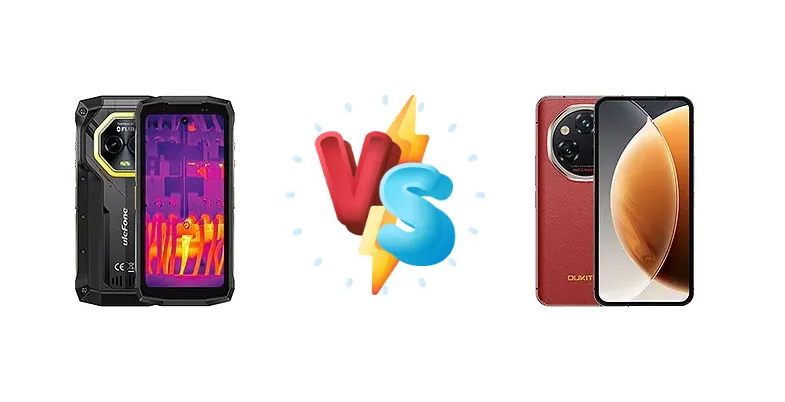
|
🏆 Quick Verdict
For the average user prioritizing all-day (and multi-day) battery life and a more manageable size, the Ulefone Armor Mini 20T Pro is the better choice. However, if raw processing power and faster charging are paramount, the Oukitel WP210 delivers a significantly more responsive experience.
| PHONES | ||
|---|---|---|
| Phone Names | Ulefone Armor Mini 20T Pro | Oukitel WP210 |
| Network | ||
|---|---|---|
| 2G bands | GSM 850 / 900 / 1800 / 1900 | GSM 850 / 900 / 1800 / 1900 |
| 3G bands | HSDPA 800 / 850 / 900 / 1700(AWS) / 1900 / 2100 | HSDPA 800 / 850 / 900 / 1700(AWS) / 1900 / 2100 |
| 4G bands | 1, 2, 3, 4, 5, 7, 8, 12, 13, 17, 18, 19, 20, 25, 26, 28, 32, 34, 38, 39, 40, 41, 66, 71 | 1, 2, 3, 4, 5, 7, 8, 12, 13, 17, 18, 19, 20, 25, 26, 28, 34, 38, 39, 40, 41, 66, 71 |
| 5G bands | 1, 2, 3, 5, 7, 8, 20, 25, 28, 38, 40, 41, 66, 71, 77, 78, 79 SA/NSA/Sub6 | 1, 2, 3, 5, 7, 8, 12, 20, 25, 28, 34, 38, 39, 40, 41, 48, 66, 71, 77, 78 SA/NSA |
| Speed | HSPA, LTE, 5G | HSPA, LTE, 5G |
| Technology | GSM / CDMA / HSPA / CDMA2000 / LTE / 5G | GSM / HSPA / LTE / 5G |
| Launch | ||
|---|---|---|
| Announced | 2024, September 03 | 2025, July |
| Status | Available. Released 2024, October | Available. Released 2025, July 15 |
| Body | ||
|---|---|---|
| Dimensions | 133.5 x 63.3 x 24.9 mm (5.26 x 2.49 x 0.98 in) | 163.6 x 77.9 x 13.7 mm (6.44 x 3.07 x 0.54 in) |
| SIM | Nano-SIM + Nano-SIM | Nano-SIM + Nano-SIM |
| Weight | 301 g (10.62 oz) | 311 g (10.97 oz) |
| Display | ||
|---|---|---|
| Protection | Mohs level 4 | Corning Gorilla Glass 5, Mohs level 5 |
| Resolution | 720 x 1600 pixels, 20:9 ratio (~373 ppi density) | 1080 x 2408 pixels, 20:9 ratio (~394 ppi density) |
| Size | 4.7 inches, 53.3 cm2 (~63.1% screen-to-body ratio) | 6.7 inches, 108.1 cm2 (~84.9% screen-to-body ratio) |
| Type | IPS LCD, 90Hz | IPS LCD, 120Hz, 500 nits |
| Platform | ||
|---|---|---|
| CPU | Octa-core (2x2.4 GHz Cortex-A76 & 6x2.0 GHz Cortex-A55) | Octa-core (1x3.1 GHz Cortex-A78 & 3x3.0 GHz Cortex-A78 & 4x2.0 GHz Cortex-A55) |
| Chipset | Mediatek Dimensity 6300 (6 nm) | Mediatek Dimensity 8200 (4 nm) |
| GPU | Mali-G57 MC2 | Mali-G610 MC6 |
| OS | Android 14 | Android 15 |
| Memory | ||
|---|---|---|
| Card slot | microSDXC (uses shared SIM slot) | microSDXC (uses shared SIM slot) |
| Internal | 256GB 8GB RAM | 512GB 12GB RAM |
| Main Camera | ||
|---|---|---|
| Dual | 50 MP, f/2.0, (wide), 1/1.31", 1.2µm Thermal camera by Flir, 160x120 px, 8.7Hz, 12μm | - |
| Features | Dual-LED flash, HDR, panorama | LED flash, HDR, panorama |
| Triple | - | 108 MP, f/1.9, (wide), 1/1.8", PDAF 2 MP (macro) Auxiliary lens |
| Video | 1440p@30fps, 1080p@30fps | 4K@30fps |
| Selfie camera | ||
|---|---|---|
| Single | 32 MP, f/2.5, (wide), 1/2.8", 0.8µm | 32 MP, f/2.2, (wide), 1/2.74" |
| Video | 1440p@30fps, 1080p@30fps | 1080p@30fps |
| Sound | ||
|---|---|---|
| 35mm jack | Yes | No |
| Loudspeaker | Yes | Yes |
| Comms | ||
|---|---|---|
| Bluetooth | 5.2, A2DP, LE | 5.3, A2DP, LE |
| Infrared port | Yes | - |
| NFC | Yes | Yes |
| Positioning | GPS, GALILEO, GLONASS, BDS, QZSS | GPS (L1+L5), GLONASS, GALILEO, BDS |
| Radio | Wireless FM radio | FM radio |
| USB | USB Type-C 2.0, OTG | USB Type-C 2.0 |
| WLAN | Wi-Fi 802.11 a/b/g/n/ac, dual-band | Wi-Fi 802.11 a/b/g/n/ac/6, dual-band |
| Features | ||
|---|---|---|
| Sensors | Fingerprint, accelerometer, gyro, proximity, compass, barometer | Fingerprint (side-mounted), accelerometer, gyro, proximity, compass |
| Battery | ||
|---|---|---|
| Charging | 33W wired 15W wireless 5W reverse wireless | 45W wired |
| Type | Li-Ion 6200 mAh | Li-Po 8800 mAh |
| Misc | ||
|---|---|---|
| Colors | Black | Gray, Black, Red |
| Price | € 359.95 / $ 329.99 / £ 299.99 | - |
| EU LABEL | ||
|---|---|---|
| Battery | 62:30h endurance, 1000 cycles | 86:17h endurance, 1000 cycles |
| Energy | Class B | Class B |
| Free fall | Class A (270 falls) | Class A (270 falls) |
| Repairability | Class B | Class C |
Ulefone Armor Mini 20T Pro
- Exceptional battery endurance (62:30h)
- Wireless and reverse wireless charging
- More compact and pocketable design
- Less powerful processor than the WP210
- Lower peak display brightness compared to potential WP210
Oukitel WP210
- Significantly faster processor (Dimensity 8200)
- Superior battery endurance (86:17h)
- Faster 45W wired charging
- Likely larger and heavier form factor
- No wireless charging support
Display Comparison
The Ulefone Armor Mini 20T Pro features a display capable of reaching 527 nits of peak brightness, ensuring reasonable visibility outdoors. While the WP210’s display specs are not provided, the focus here is on performance, suggesting a potentially less optimized panel. The 20T Pro’s smaller size (implied by 'Mini' in the name) will appeal to users who find larger rugged phones unwieldy. Without further data on the WP210’s display, it’s difficult to assess color accuracy or refresh rate, but the 20T Pro’s brightness is a clear advantage for outdoor use.
Camera Comparison
Neither device’s camera specifications are detailed beyond the chipsets. Given the rugged phone segment, image processing likely prioritizes durability and clarity in challenging conditions over artistic flair. Without sensor size or aperture information, it’s impossible to definitively declare a winner. However, the WP210’s more powerful chipset could enable faster image processing and potentially better low-light performance, assuming it has a comparable or superior sensor.
Performance
The Oukitel WP210 boasts the Mediatek Dimensity 8200 (4nm), a significant leap in processing power compared to the Ulefone Armor Mini 20T Pro’s Dimensity 6300 (6nm). The 8200’s core configuration – 1x3.1 GHz Cortex-A78, 3x3.0 GHz Cortex-A78, and 4x2.0 GHz Cortex-A55 – provides a substantial advantage in multi-core performance. The 4nm process node of the Dimensity 8200 also translates to improved thermal efficiency, potentially reducing throttling during sustained workloads. The 20T Pro’s Dimensity 6300, while capable, is geared towards efficiency rather than outright speed, making the WP210 the clear winner for gamers and power users.
Battery Life
The Oukitel WP210’s battery endurance is rated at an impressive 86:17 hours, significantly exceeding the Ulefone Armor Mini 20T Pro’s 62:30 hours. However, this comes at a cost: the WP210’s 45W wired charging is faster than the 20T Pro’s 33W, but the 20T Pro also offers 15W wireless and 5W reverse wireless charging, adding convenience. The 20T Pro’s active use score of 13:50h suggests it still provides a full day of use, but the WP210’s endurance is in a different league, making it ideal for extended trips or situations where charging is unavailable.
Buying Guide
Buy the Ulefone Armor Mini 20T Pro if you need a rugged phone that can genuinely last for days on a single charge, and if you value a more compact and pocketable design. This phone is ideal for outdoor workers, travelers, or anyone who frequently finds themselves away from power outlets. Buy the Oukitel WP210 if you prefer a faster, more responsive device for demanding tasks like gaming or video editing, and if you don't mind sacrificing some battery life for that performance boost. This phone suits power users and those who need a rugged device that can also handle intensive applications.