
Ulefone Armor Mini 20T Pro vs. Doogee S89 Pro: Which Rugged Phone Reigns Supreme?
| Phones Images | |||||
|---|---|---|---|---|---|
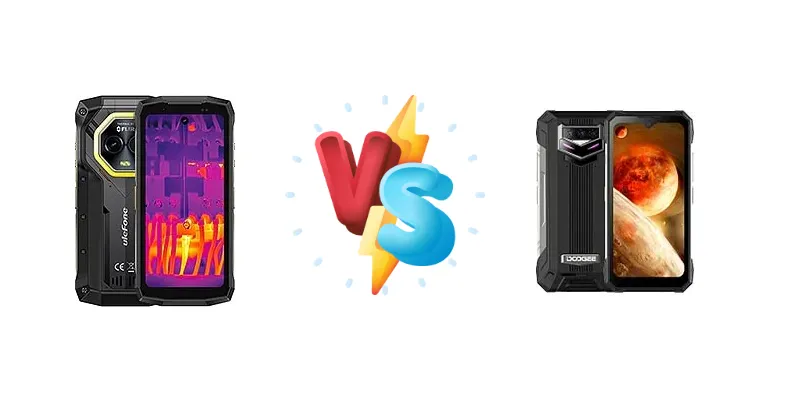
|
🏆 Quick Verdict
For the average user prioritizing long-term performance and battery longevity, the Ulefone Armor Mini 20T Pro is the better choice. Its Mediatek Dimensity 6300 chipset, built on a 6nm process, offers a significant architectural advantage over the Doogee S89 Pro’s older 12nm Helio P90, translating to improved efficiency and sustained performance.
| PHONES | ||
|---|---|---|
| Phone Names | Ulefone Armor Mini 20T Pro | Doogee S89 Pro |
| Network | ||
|---|---|---|
| 2G bands | GSM 850 / 900 / 1800 / 1900 | GSM 850 / 900 / 1800 / 1900 |
| 3G bands | HSDPA 800 / 850 / 900 / 1700(AWS) / 1900 / 2100 | HSDPA 800 / 850 / 900 / 1700(AWS) / 1900 / 2100 |
| 4G bands | 1, 2, 3, 4, 5, 7, 8, 12, 13, 17, 18, 19, 20, 25, 26, 28, 32, 34, 38, 39, 40, 41, 66, 71 | 1, 2, 3, 4, 5, 7, 8, 12, 13, 17, 18, 19, 20, 25, 26, 28, 34, 38, 39, 40, 41, 66 |
| 5G bands | 1, 2, 3, 5, 7, 8, 20, 25, 28, 38, 40, 41, 66, 71, 77, 78, 79 SA/NSA/Sub6 | - |
| Speed | HSPA, LTE, 5G | HSPA, LTE |
| Technology | GSM / CDMA / HSPA / CDMA2000 / LTE / 5G | GSM / CDMA / HSPA / LTE |
| Launch | ||
|---|---|---|
| Announced | 2024, September 03 | 2022, August 22 |
| Status | Available. Released 2024, October | Available. Released 2022, August 25 |
| Body | ||
|---|---|---|
| Dimensions | 133.5 x 63.3 x 24.9 mm (5.26 x 2.49 x 0.98 in) | 172 x 86 x 19.4 mm (6.77 x 3.39 x 0.76 in) |
| SIM | Nano-SIM + Nano-SIM | Nano-SIM + Nano-SIM |
| Weight | 301 g (10.62 oz) | 400 g (14.11 oz) |
| Display | ||
|---|---|---|
| Protection | Mohs level 4 | Corning Gorilla Glass |
| Resolution | 720 x 1600 pixels, 20:9 ratio (~373 ppi density) | 1080 x 2340 pixels, 19.5:9 ratio (~409 ppi density) |
| Size | 4.7 inches, 53.3 cm2 (~63.1% screen-to-body ratio) | 6.3 inches, 97.4 cm2 (~65.9% screen-to-body ratio) |
| Type | IPS LCD, 90Hz | IPS LCD |
| Platform | ||
|---|---|---|
| CPU | Octa-core (2x2.4 GHz Cortex-A76 & 6x2.0 GHz Cortex-A55) | Octa-core (2x2.1 GHz Cortex-A75 & 6x2.0 GHz Cortex-A55) |
| Chipset | Mediatek Dimensity 6300 (6 nm) | Mediatek MT6779 Helio P90 (12 nm) |
| GPU | Mali-G57 MC2 | PowerVR GM9446 |
| OS | Android 14 | Android 12 |
| Memory | ||
|---|---|---|
| Card slot | microSDXC (uses shared SIM slot) | microSDXC (dedicated slot) |
| Internal | 256GB 8GB RAM | 256GB 8GB RAM |
| Main Camera | ||
|---|---|---|
| Dual | 50 MP, f/2.0, (wide), 1/1.31", 1.2µm Thermal camera by Flir, 160x120 px, 8.7Hz, 12μm | - |
| Features | Dual-LED flash, HDR, panorama | Dual-LED flash, HDR, panorama |
| Triple | - | 64 MP, f/1.8, (wide), PDAF 8 MP, f/2.2, 130˚, (ultrawide) 20 MP, f/1.8, (night vision), 4 infrared night vision lights |
| Video | 1440p@30fps, 1080p@30fps | 1440p, 1080p |
| Selfie camera | ||
|---|---|---|
| Single | 32 MP, f/2.5, (wide), 1/2.8", 0.8µm | 16 MP, f/2.0, (wide) |
| Video | 1440p@30fps, 1080p@30fps | 1080p |
| Sound | ||
|---|---|---|
| 35mm jack | Yes | Yes |
| Loudspeaker | Yes | Yes |
| Comms | ||
|---|---|---|
| Bluetooth | 5.2, A2DP, LE | 5.1, A2DP, LE |
| Infrared port | Yes | - |
| NFC | Yes | Yes |
| Positioning | GPS, GALILEO, GLONASS, BDS, QZSS | GPS, GLONASS, BDS, GALILEO |
| Radio | Wireless FM radio | FM radio |
| USB | USB Type-C 2.0, OTG | USB Type-C 2.0, OTG |
| WLAN | Wi-Fi 802.11 a/b/g/n/ac, dual-band | Wi-Fi 802.11 a/b/g/n/ac, dual-band |
| Features | ||
|---|---|---|
| Sensors | Fingerprint, accelerometer, gyro, proximity, compass, barometer | Fingerprint (side-mounted), accelerometer, gyro, proximity, compass |
| Battery | ||
|---|---|---|
| Charging | 33W wired 15W wireless 5W reverse wireless | 65W wired |
| Type | Li-Ion 6200 mAh | 12000 mAh |
| Misc | ||
|---|---|---|
| Colors | Black | Black, Orange |
| Price | € 359.95 / $ 329.99 / £ 299.99 | About 370 EUR |
| EU LABEL | ||
|---|---|---|
| Battery | 62:30h endurance, 1000 cycles | - |
| Energy | Class B | - |
| Free fall | Class A (270 falls) | - |
| Repairability | Class B | - |
Ulefone Armor Mini 20T Pro
- More efficient and powerful Dimensity 6300 chipset
- Superior battery endurance (62:30h)
- Wireless and reverse wireless charging capabilities
- Slower wired charging (33W) compared to the Doogee S89 Pro
- Limited camera specification details
Doogee S89 Pro
- Ultra-fast 65W wired charging
- Rugged design and build quality
- Potentially lower price point (depending on retailer)
- Older and less efficient Helio P90 chipset
- Likely shorter battery life compared to the Ulefone 20T Pro
- Missing endurance score data
Display Comparison
The Ulefone Armor Mini 20T Pro boasts a display capable of reaching 527 nits of peak brightness, a crucial metric for outdoor visibility. While the Doogee S89 Pro’s brightness isn’t specified, the 20T Pro’s measured output provides a clear advantage in direct sunlight. Both phones likely utilize IPS LCD panels, common in the rugged segment for durability, but the 20T Pro’s higher brightness offers a more usable experience in challenging lighting conditions. Details regarding refresh rates and panel technology (like LTPO) are absent for both, suggesting standard 60Hz panels.
Camera Comparison
Detailed camera specifications are missing for both devices. However, given the market segment, we can expect competent but not class-leading camera performance. The focus is likely on durability rather than photographic excellence. Without sensor size or aperture information, it’s difficult to make a direct comparison. The presence of a 2MP macro camera on either device is largely a marketing tactic, offering limited practical benefit due to the small sensor size and low resolution. Image processing will likely be geared towards producing vibrant, shareable images rather than natural accuracy.
Performance
The core difference lies in the chipsets. The Ulefone Armor Mini 20T Pro’s Mediatek Dimensity 6300 (6nm) is a significant leap forward compared to the Doogee S89 Pro’s Helio P90 (12nm). The 6nm process node allows for greater transistor density and improved power efficiency. The Dimensity 6300’s CPU configuration – 2x2.4 GHz Cortex-A76 & 6x2.0 GHz Cortex-A55 – provides a performance edge over the Helio P90’s 2x2.1 GHz Cortex-A75 & 6x2.0 GHz Cortex-A55. While both are octa-core designs, the newer architecture and smaller process node of the Dimensity 6300 will result in better sustained performance and reduced thermal throttling under load. The lack of LPDDR5x RAM specification for either phone suggests they likely utilize LPDDR4x, a common choice for cost-effective rugged devices.
Battery Life
The Ulefone Armor Mini 20T Pro claims an impressive 62:30h endurance score, backed by a 13:50h active use score. This suggests excellent battery optimization alongside the efficient Dimensity 6300 chipset. The Doogee S89 Pro lacks comparable endurance data, but its 65W wired charging is a key differentiator. While the 20T Pro offers 33W wired, 15W wireless, and 5W reverse wireless charging, the S89 Pro prioritizes speed. The faster charging is beneficial for users who need to quickly replenish their battery, but the 20T Pro’s superior endurance may negate the need for frequent charging in the first place.
Buying Guide
Buy the Ulefone Armor Mini 20T Pro if you need a rugged phone that balances performance with exceptional battery life and future-proofed processing power. It’s ideal for users who frequently use demanding apps or enjoy mobile gaming on the go. Buy the Doogee S89 Pro if you prioritize the fastest possible wired charging and are less concerned with the latest chipset architecture, making it suitable for users who need quick power-ups in the field.