
Ulefone Armor 9 vs. Cat S62 Pro: A Rugged Smartphone Showdown
| Phones Images | |||||
|---|---|---|---|---|---|
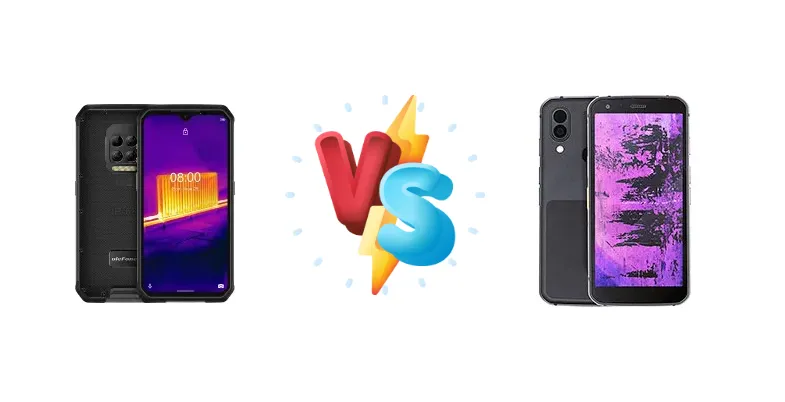
|
🏆 Quick Verdict
For users prioritizing raw performance and potentially longer battery endurance, the Ulefone Armor 9 emerges as the winner. Its Helio P90 chipset offers a noticeable performance edge, and the 148-hour endurance rating suggests superior longevity. However, the Cat S62 Pro remains a solid choice for those valuing Qualcomm’s established ecosystem and potentially more refined software experience.
| PHONES | ||
|---|---|---|
| Phone Names | Ulefone Armor 9 | Cat S62 Pro |
| Network | ||
|---|---|---|
| 2G bands | GSM 850 / 900 / 1800 / 1900 | GSM 850 / 900 / 1800 / 1900 |
| 3G bands | HSDPA 850 / 900 / 1700(AWS) / 1900 / 2100 | HSDPA 850 / 900 / 1700(AWS) / 1900 / 2100 |
| 4G bands | 1, 2, 3, 4, 5, 7, 8, 12, 13, 17, 18, 19, 20, 25, 26, 28, 34, 38, 39, 40, 41, 66 | 1, 2, 3, 4, 5, 7, 8, 20, 28, 38, 40 |
| Speed | HSPA 42.2/11.5 Mbps, LTE Cat12 600/150 Mbps | HSPA 42.2/5.76 Mbps, LTE (2CA) Cat13 400/150 Mbps |
| Technology | GSM / CDMA / HSPA / EVDO / LTE | GSM / HSPA / LTE |
| CDMA2000 1xEV-DO | - | |
| Launch | ||
|---|---|---|
| Announced | 2020, June 29. Released 2020, June 29 | 2020, June 28. Released 2020, August 17 |
| Status | Discontinued | Discontinued |
| Body | ||
|---|---|---|
| Build | Front glass, aluminum back with rubber, aluminum frame | Glass front (Gorilla Glass 6), plastic back, aluminum frame |
| Dimensions | 168.2 x 82 x 15 mm (6.62 x 3.23 x 0.59 in) | 158.5 x 76.7 x 11.9 mm (6.24 x 3.02 x 0.47 in) |
| SIM | Nano-SIM + Nano-SIM | · Nano-SIM· Nano-SIM + Nano-SIM |
| Weight | 320 g (11.29 oz) | 248 g (8.75 oz) |
| IP68/IP69K dust/water resistant (up to 1.5m for 30 min) Drop-to-concrete resistance from up to 1.2m MIL-STD-810G compliant | IP68/IP69 dust/water resistant (up to 1.5m for 35 mins) Drop-to-concrete resistance from up to 1.8m MIL-STD-810H compliant | |
| Display | ||
|---|---|---|
| Protection | Scratch-resistant glass, oleophobic coating | Corning Gorilla Glass 6 |
| Resolution | 1080 x 2340 pixels, 19.5:9 ratio (~409 ppi density) | 1080 x 2160 pixels, 18:9 ratio (~424 ppi density) |
| Size | 6.3 inches, 97.4 cm2 (~70.6% screen-to-body ratio) | 5.7 inches, 83.8 cm2 (~69.0% screen-to-body ratio) |
| Type | IPS LCD | IPS LCD |
| Platform | ||
|---|---|---|
| CPU | Octa-core (2x2.2 GHz Cortex-A75 & 6x2.0 GHz Cortex-A55) | Octa-core (4x2.2 GHz Kryo 260 Gold & 4x1.8 GHz Kryo 260 Silver) |
| Chipset | Mediatek MT6779 Helio P90 (12 nm) | Qualcomm SDM660 Snapdragon 660 (14 nm) |
| GPU | PowerVR GM9446 | Adreno 512 |
| OS | Android 10 | Android 10 |
| Memory | ||
|---|---|---|
| Card slot | microSDXC (uses shared SIM slot) | microSDXC (dedicated slot) |
| Internal | 128GB 8GB RAM | 128GB 6GB RAM |
| UFS 2.1 | - | |
| Main Camera | ||
|---|---|---|
| Dual | - | 12 MP, f/1.8, (wide), 1/2.55", 1.4µm, dual pixel PDAF FLIR thermal camera (Lepton 3.5 module) |
| Features | Thermal imaging, heat palettes, temp. spot meter, quad-LED flash, panorama | Thermal imaging, heat palettes, temp. spot meter, LED flash |
| Triple | 64 MP, f/1.9, 26mm (wide), 1/1.72", 0.8µm, PDAF FLIR thermal camera (Lepton module) Auxiliary lens | - |
| Video | 1080p@30fps | 1080p@30fps, gyro-EIS |
| Selfie camera | ||
|---|---|---|
| Single | 8 MP, f/2.2 | 8 MP |
| Video | 1080p@30fps | 1080p@30fps |
| Sound | ||
|---|---|---|
| 3.5mm jack | Yes | No |
| 35mm jack | Yes | No |
| Loudspeaker | Yes | Yes |
| Comms | ||
|---|---|---|
| Bluetooth | 5.0, A2DP, LE | 5.0, A2DP, LE |
| NFC | Yes | Yes |
| Positioning | GPS, GLONASS, GALILEO, BDS | GPS, GLONASS, GALILEO, BDS |
| Radio | FM radio, RDS, recording | FM radio |
| USB | USB Type-C 2.0, OTG, accessory connector (endoscope) | USB Type-C 2.0, OTG |
| WLAN | Wi-Fi 802.11 a/b/g/n/ac, Wi-Fi Direct | Wi-Fi 802.11 a/b/g/n/ac, dual-band, Wi-Fi Direct |
| Features | ||
|---|---|---|
| Sensors | Fingerprint (side-mounted), accelerometer, gyro, proximity, compass, baroceptor, coulombmeter | Fingerprint (rear-mounted), accelerometer, gyro, proximity, compass |
| Battery | ||
|---|---|---|
| Charging | 18W wired | - |
| Type | Li-Po 6600 mAh | Li-Ion 4000 mAh |
| Misc | ||
|---|---|---|
| Colors | Black | Black |
| Price | About 550 EUR | About 530 EUR |
| Tests | ||
|---|---|---|
| Battery life | Endurance rating 148h | - |
| Camera | Photo / Video | - |
| Display | Contrast ratio: 1541:1 (nominal) | - |
| Loudspeaker | -30.1 LUFS (Below average) | - |
| Performance | AnTuTu: 197000 (v8) GeekBench: 1498 (v5.1) GFXBench: 7.9fps (ES 3.1 onscreen) | - |
Ulefone Armor 9
- Potentially superior performance with Helio P90 chipset
- Excellent battery endurance (148h rating)
- 18W fast charging
- Limited camera specifications
- Mediatek chipset may have less software optimization
Cat S62 Pro
- Qualcomm Snapdragon 660 offers reliable performance
- Established brand reputation for rugged devices
- Potentially smoother software experience
- Less powerful chipset compared to Helio P90
- Battery specifications are unknown
Display Comparison
Both devices lack detailed display specifications beyond the Ulefone Armor 9’s contrast ratio of 1541:1. This suggests a standard IPS panel, likely prioritizing durability over cutting-edge display technology. Given the rugged nature of both phones, neither is expected to compete with flagship displays in terms of color accuracy or peak brightness. The absence of refresh rate data implies a standard 60Hz panel on both, conserving battery life but lacking the smoothness of higher refresh rate options.
Camera Comparison
Both phones list only 'Photo / Video' capabilities, offering no specifics on sensor size, megapixel count, or features like Optical Image Stabilization (OIS). This lack of detail suggests neither phone prioritizes camera performance as a key selling point. It’s reasonable to assume both feature a standard multi-camera setup, but without further information, a meaningful comparison is impossible. The absence of details also suggests the 2MP macro lenses often found in this segment are present, offering limited practical benefit.
Performance
The core difference lies in the chipsets. The Ulefone Armor 9’s Mediatek Helio P90 (12nm) utilizes a dual-cluster architecture – two Cortex-A75 cores for peak performance at 2.2 GHz and six Cortex-A55 cores for efficiency at 2.0 GHz. This contrasts with the Cat S62 Pro’s Qualcomm Snapdragon 660 (14nm), employing a Kryo 260 Gold/Silver configuration at 2.2 GHz/1.8 GHz respectively. While both are octa-core, the Helio P90’s newer architecture and smaller node size *should* translate to better performance per watt, potentially offering a smoother experience with demanding applications. However, the Snapdragon 660 benefits from Qualcomm’s optimized software and modem integration.
Battery Life
The Ulefone Armor 9 boasts an endurance rating of 148 hours, a significant figure indicating excellent battery life. Coupled with its 18W wired charging, it suggests a focus on longevity over rapid charging speeds. The Cat S62 Pro’s battery capacity and charging speed are not specified, but given the Snapdragon 660’s efficiency, it likely offers competitive, though potentially shorter, battery life. The Armor 9’s higher endurance rating suggests it can withstand longer periods of use between charges, crucial for users in remote locations.
Buying Guide
Buy the Ulefone Armor 9 if you need a rugged phone for intensive tasks like running specialized field apps, demanding mobile gaming, or consistently pushing the phone’s processing limits. Buy the Cat S62 Pro if you prefer a more established brand with a focus on reliability, a potentially smoother software experience, and a device optimized for consistent, all-day performance rather than peak power.