
Ulefone Armor 7 vs. Power Armor 13: A Deep Dive into Rugged Performance and Battery Life
| Phones Images | |||||
|---|---|---|---|---|---|
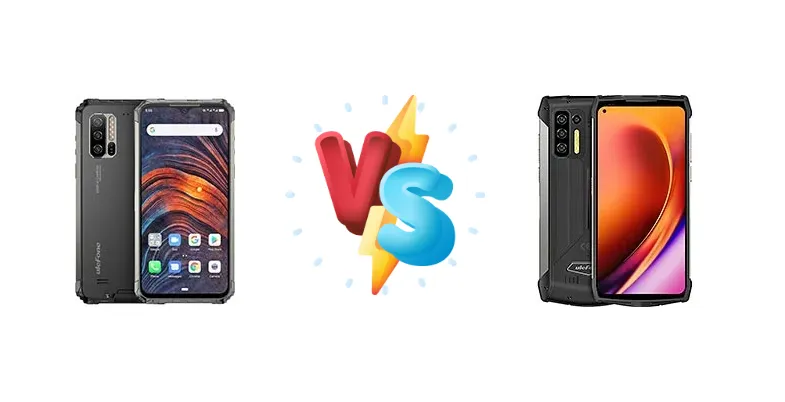
|
🏆 Quick Verdict
For most users prioritizing longevity and faster charging, the Ulefone Power Armor 13 is the clear winner. Its nearly double battery endurance and 33W charging significantly outweigh the Armor 7’s slightly higher contrast ratio. However, the Armor 7 remains a viable option for those on a tighter budget.
| PHONES | ||
|---|---|---|
| Phone Names | Ulefone Armor 7 | Ulefone Power Armor 13 |
| Network | ||
|---|---|---|
| 2G bands | GSM 850 / 900 / 1800 / 1900 | GSM 850 / 900 / 1800 / 1900 |
| 3G bands | HSDPA 850 / 900 / 1700(AWS) / 1900 / 2100 | HSDPA 850 / 900 / 1700(AWS) / 1900 / 2100 |
| 4G bands | 1, 2, 3, 4, 5, 7, 8, 12, 13, 17, 18, 19, 20, 25, 26, 28, 34, 38, 39, 40, 41, 66, 71 | 1, 2, 3, 4, 5, 7, 8, 12, 13, 17, 18, 19, 20, 25, 26, 28, 38, 40, 66 |
| Speed | HSPA 42.2/11.5 Mbps, LTE (2CA) Cat13 600/150 Mbps | HSPA 42.2/11.5 Mbps, LTE Cat12 600/150 Mbps |
| Technology | GSM / CDMA / HSPA / EVDO / LTE | GSM / HSPA / LTE |
| CDMA2000 1xEV-DO | - | |
| Launch | ||
|---|---|---|
| Announced | 2019, October. Released 2019, October | 2021, July 22 |
| Status | Discontinued | Available. Released 2021, July 26 |
| Body | ||
|---|---|---|
| Dimensions | 165.9 x 81 x 13.6 mm (6.53 x 3.19 x 0.54 in) | 183.7 x 85.4 x 20.8 mm (7.23 x 3.36 x 0.82 in) |
| SIM | Nano-SIM + Nano-SIM | Nano-SIM + Nano-SIM |
| Weight | 290 g (10.23 oz) | 492 g (1.08 lb) |
| IP69K dust/water resistant Drop-to-concrete resistance from up to 1.2m MIL-STD-810G compliant | IP68 dust/water resistant (up to 1.5m for 30 min) Drop-to-concrete resistance from up to 1.2m MIL-STD-810G compliant | |
| Display | ||
|---|---|---|
| Protection | - | Corning Gorilla Glass 3 |
| Resolution | 1080 x 2340 pixels, 19.5:9 ratio (~409 ppi density) | 1080 x 2400 pixels, 20:9 ratio (~386 ppi density) |
| Size | 6.3 inches, 97.4 cm2 (~72.5% screen-to-body ratio) | 6.81 inches, 112.0 cm2 (~71.4% screen-to-body ratio) |
| Type | IPS LCD | IPS LCD |
| Platform | ||
|---|---|---|
| CPU | Octa-core (2x2.2 GHz Cortex-A75 & 6x2.0 GHz Cortex-A55) | Octa-core (2x2.05 GHz Cortex-A76 & 6x2.0 GHz Cortex-A55) |
| Chipset | Mediatek MT6779 Helio P90 (12 nm) | Mediatek MT6785V/CD Helio G95 (12 nm) |
| GPU | PowerVR GM9446 | Mali-G76 MC4 |
| OS | Android 9.0 (Pie) | Android 11 |
| Memory | ||
|---|---|---|
| Card slot | microSDXC (uses shared SIM slot) | microSDXC (uses shared SIM slot) |
| Internal | 128GB 8GB RAM | 256GB 8GB RAM |
| Main Camera | ||
|---|---|---|
| Features | 5-LED flash, HDR, panorama | Quad-LED flash, HDR, panorama |
| Penta | - | 48 MP, f/1.8, 26mm (wide), 1/2.0", 0.8µm, PDAF 8 MP, f/2.2, (ultrawide) 2 MP (macro) Auxiliary lens |
| Triple | 48 MP, f/1.7, (wide), 1/2.0", 0.8µm, PDAF 16 MP, f/2.0, (wide), AF 8 MP, f/2.4, (telephoto) | - |
| Video | 4K@30fps, 1080p@30fps | 4K@30fps, 1080p@30fps |
| Selfie camera | ||
|---|---|---|
| Features | - | HDR, panorama |
| Single | 16 MP, f/2.0, (wide), 1/3.06", 1.0µm | 16 MP, f/2.2 |
| Video | 1080p@30fps | 1080p@30fps |
| Sound | ||
|---|---|---|
| 3.5mm jack | No | Yes |
| 35mm jack | No | Yes |
| Loudspeaker | Yes | Yes |
| Comms | ||
|---|---|---|
| Bluetooth | 5.0, A2DP, LE | 5.0, A2DP, LE |
| NFC | Yes | Yes |
| Positioning | GPS, GLONASS, GALILEO, BDS | GPS, GLONASS, GALILEO, BDS |
| Radio | Stereo FM radio, RDS, recording | FM radio, RDS, recording |
| USB | USB Type-C 2.0, OTG | - |
| WLAN | Wi-Fi 802.11 a/b/g/n/ac, dual-band, Wi-Fi Direct | Wi-Fi 802.11 a/b/g/n/ac, dual-band |
| Features | ||
|---|---|---|
| Sensors | Fingerprint (side-mounted), accelerometer, gyro, proximity, compass, heart rate, baroceptor, coulombmeter | Fingerprint (side-mounted), accelerometer, gyro, proximity, compass, baroceptor, coulombmeter |
| - | Infrared distance measure (error range: 1~20m, ±10mm; 20~40m, ±25mm) | |
| Battery | ||
|---|---|---|
| Charging | 15W wired 10W wireless | 33W wired 15W wireless 5W reverse wireless |
| Type | Li-Po 5500 mAh | Li-Po 13200 mAh |
| Misc | ||
|---|---|---|
| Colors | Black | Black |
| Price | About 440 EUR | About 300 EUR |
| Tests | ||
|---|---|---|
| Audio quality | Noise -93.6dB / Crosstalk -72.0dB | - |
| Battery life | Endurance rating 140h | Endurance rating 296h |
| Camera | Photo / Video | Photo / Video |
| Display | Contrast ratio: 1455:1 (nominal) | Contrast ratio: 1306:1 (nominal) |
| Loudspeaker | -31.6 LUFS (Below average) | -28.3 LUFS (Average) |
| Performance | AnTuTu: 163017 (v7), 216770 (v8) GeekBench: 6913 (v4.4), 1476 (v5.1) GFXBench: 7.5fps (ES 3.1 onscreen) | AnTuTu: 294194 (v8), 351678 (v9) GeekBench: 1610 (v5.1) GFXBench: 18fps (ES 3.1 onscreen) |
Ulefone Armor 7
- Slightly higher contrast ratio for potentially more vibrant visuals.
- More affordable price point.
- Compact and lightweight design.
- Significantly shorter battery life.
- Slower 15W charging.
- Less powerful Helio P90 chipset.
Ulefone Power Armor 13
- Exceptional 296-hour battery endurance.
- Faster 33W wired charging.
- More powerful Helio G95 chipset for improved performance.
- Slightly lower contrast ratio.
- Higher price compared to the Armor 7.
- Larger and heavier build.
Display Comparison
Both the Armor 7 and Power Armor 13 feature displays with similar peak brightness, measured at approximately 406 and 401 nits respectively, ensuring reasonable visibility outdoors. However, the Armor 7 boasts a slightly higher contrast ratio of 1455:1 compared to the Power Armor 13’s 1306:1. While this difference is noticeable, it’s unlikely to be a dealbreaker for most users. Neither device specifies panel technology, suggesting standard IPS LCDs, meaning viewing angles and color accuracy will be adequate but not exceptional.
Camera Comparison
Both phones list 'Photo / Video' capabilities, but lack specific details regarding sensor size or resolution. Given the market segment, we can assume both utilize modest camera setups focused on practicality rather than high-end photography. The absence of detailed camera specs suggests neither device will excel in low-light conditions or offer advanced features like optical image stabilization (OIS). Focusing on the core functionality of capturing usable images in challenging environments is likely the design priority.
Performance
The Power Armor 13’s Mediatek Helio G95 chipset represents a significant upgrade over the Armor 7’s Helio P90. The G95 utilizes Cortex-A76 cores clocked at 2.05 GHz, offering a performance advantage over the P90’s Cortex-A75 cores at 2.2 GHz. While the P90’s higher clock speed might show a slight edge in single-core tasks, the G95’s architecture provides better sustained performance and efficiency, particularly in gaming and multitasking. Both devices share 6x2.0 GHz Cortex-A55 efficiency cores. The G95’s improved GPU will also translate to a smoother gaming experience.
Battery Life
The most significant difference lies in battery endurance. The Power Armor 13’s 296-hour endurance rating nearly doubles the Armor 7’s 140-hour rating. This translates to significantly longer usage between charges, a critical advantage for users relying on their phone in remote locations. Furthermore, the Power Armor 13 supports 33W wired charging, drastically reducing charging times compared to the Armor 7’s 15W charging. The addition of 15W wireless charging and 5W reverse wireless charging on the Power Armor 13 adds further convenience.
Buying Guide
Buy the Ulefone Armor 7 if you need a durable phone for occasional outdoor use and prioritize a slightly more vibrant display, while keeping costs down. Buy the Ulefone Power Armor 13 if you demand exceptional battery life for multi-day trips, frequent fieldwork, or simply dislike frequent charging, and appreciate the faster 33W wired charging and reverse wireless charging capabilities.