
Ulefone Armor 7 vs. Cat S62 Pro: A Head-to-Head Rugged Smartphone Showdown
| Phones Images | |||||
|---|---|---|---|---|---|
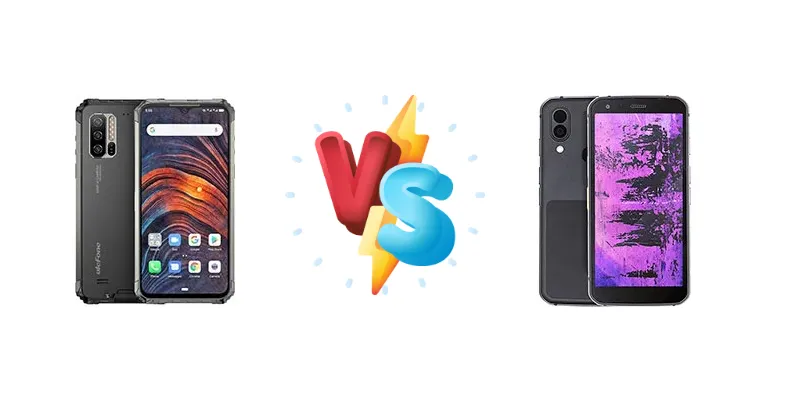
|
🏆 Quick Verdict
For the average user prioritizing raw processing power and potentially longer battery life, the Ulefone Armor 7 emerges as the better choice. Its Helio P90 chipset offers a performance edge over the Snapdragon 660 in the Cat S62 Pro, and the 140-hour endurance rating suggests superior longevity. However, the Cat S62 Pro's brand reputation for ruggedness remains strong.
| PHONES | ||
|---|---|---|
| Phone Names | Ulefone Armor 7 | Cat S62 Pro |
| Network | ||
|---|---|---|
| 2G bands | GSM 850 / 900 / 1800 / 1900 | GSM 850 / 900 / 1800 / 1900 |
| 3G bands | HSDPA 850 / 900 / 1700(AWS) / 1900 / 2100 | HSDPA 850 / 900 / 1700(AWS) / 1900 / 2100 |
| 4G bands | 1, 2, 3, 4, 5, 7, 8, 12, 13, 17, 18, 19, 20, 25, 26, 28, 34, 38, 39, 40, 41, 66, 71 | 1, 2, 3, 4, 5, 7, 8, 20, 28, 38, 40 |
| Speed | HSPA 42.2/11.5 Mbps, LTE (2CA) Cat13 600/150 Mbps | HSPA 42.2/5.76 Mbps, LTE (2CA) Cat13 400/150 Mbps |
| Technology | GSM / CDMA / HSPA / EVDO / LTE | GSM / HSPA / LTE |
| CDMA2000 1xEV-DO | - | |
| Launch | ||
|---|---|---|
| Announced | 2019, October. Released 2019, October | 2020, June 28. Released 2020, August 17 |
| Status | Discontinued | Discontinued |
| Body | ||
|---|---|---|
| Build | - | Glass front (Gorilla Glass 6), plastic back, aluminum frame |
| Dimensions | 165.9 x 81 x 13.6 mm (6.53 x 3.19 x 0.54 in) | 158.5 x 76.7 x 11.9 mm (6.24 x 3.02 x 0.47 in) |
| SIM | Nano-SIM + Nano-SIM | · Nano-SIM· Nano-SIM + Nano-SIM |
| Weight | 290 g (10.23 oz) | 248 g (8.75 oz) |
| IP69K dust/water resistant Drop-to-concrete resistance from up to 1.2m MIL-STD-810G compliant | IP68/IP69 dust/water resistant (up to 1.5m for 35 mins) Drop-to-concrete resistance from up to 1.8m MIL-STD-810H compliant | |
| Display | ||
|---|---|---|
| Protection | - | Corning Gorilla Glass 6 |
| Resolution | 1080 x 2340 pixels, 19.5:9 ratio (~409 ppi density) | 1080 x 2160 pixels, 18:9 ratio (~424 ppi density) |
| Size | 6.3 inches, 97.4 cm2 (~72.5% screen-to-body ratio) | 5.7 inches, 83.8 cm2 (~69.0% screen-to-body ratio) |
| Type | IPS LCD | IPS LCD |
| Platform | ||
|---|---|---|
| CPU | Octa-core (2x2.2 GHz Cortex-A75 & 6x2.0 GHz Cortex-A55) | Octa-core (4x2.2 GHz Kryo 260 Gold & 4x1.8 GHz Kryo 260 Silver) |
| Chipset | Mediatek MT6779 Helio P90 (12 nm) | Qualcomm SDM660 Snapdragon 660 (14 nm) |
| GPU | PowerVR GM9446 | Adreno 512 |
| OS | Android 9.0 (Pie) | Android 10 |
| Memory | ||
|---|---|---|
| Card slot | microSDXC (uses shared SIM slot) | microSDXC (dedicated slot) |
| Internal | 128GB 8GB RAM | 128GB 6GB RAM |
| Main Camera | ||
|---|---|---|
| Dual | - | 12 MP, f/1.8, (wide), 1/2.55", 1.4µm, dual pixel PDAF FLIR thermal camera (Lepton 3.5 module) |
| Features | 5-LED flash, HDR, panorama | Thermal imaging, heat palettes, temp. spot meter, LED flash |
| Triple | 48 MP, f/1.7, (wide), 1/2.0", 0.8µm, PDAF 16 MP, f/2.0, (wide), AF 8 MP, f/2.4, (telephoto) | - |
| Video | 4K@30fps, 1080p@30fps | 1080p@30fps, gyro-EIS |
| Selfie camera | ||
|---|---|---|
| Single | 16 MP, f/2.0, (wide), 1/3.06", 1.0µm | 8 MP |
| Video | 1080p@30fps | 1080p@30fps |
| Sound | ||
|---|---|---|
| 3.5mm jack | No | No |
| 35mm jack | No | No |
| Loudspeaker | Yes | Yes |
| Comms | ||
|---|---|---|
| Bluetooth | 5.0, A2DP, LE | 5.0, A2DP, LE |
| NFC | Yes | Yes |
| Positioning | GPS, GLONASS, GALILEO, BDS | GPS, GLONASS, GALILEO, BDS |
| Radio | Stereo FM radio, RDS, recording | FM radio |
| USB | USB Type-C 2.0, OTG | USB Type-C 2.0, OTG |
| WLAN | Wi-Fi 802.11 a/b/g/n/ac, dual-band, Wi-Fi Direct | Wi-Fi 802.11 a/b/g/n/ac, dual-band, Wi-Fi Direct |
| Features | ||
|---|---|---|
| Sensors | Fingerprint (side-mounted), accelerometer, gyro, proximity, compass, heart rate, baroceptor, coulombmeter | Fingerprint (rear-mounted), accelerometer, gyro, proximity, compass |
| Battery | ||
|---|---|---|
| Charging | 15W wired 10W wireless | - |
| Type | Li-Po 5500 mAh | Li-Ion 4000 mAh |
| Misc | ||
|---|---|---|
| Colors | Black | Black |
| Price | About 440 EUR | About 530 EUR |
| Tests | ||
|---|---|---|
| Audio quality | Noise -93.6dB / Crosstalk -72.0dB | - |
| Battery life | Endurance rating 140h | - |
| Camera | Photo / Video | - |
| Display | Contrast ratio: 1455:1 (nominal) | - |
| Loudspeaker | -31.6 LUFS (Below average) | - |
| Performance | AnTuTu: 163017 (v7), 216770 (v8) GeekBench: 6913 (v4.4), 1476 (v5.1) GFXBench: 7.5fps (ES 3.1 onscreen) | - |
Ulefone Armor 7
- Stronger CPU/GPU performance with Helio P90
- Longer battery life (140h endurance)
- Wireless charging support
- Brand recognition is lower than Cat
- Camera specifications are unknown
Cat S62 Pro
- Established brand reputation for ruggedness
- Potentially optimized power efficiency with Snapdragon 660
- Likely robust build quality
- Older Snapdragon 660 chipset
- Unknown battery capacity and charging speed
Display Comparison
The Ulefone Armor 7 boasts a measured peak brightness of 406 nits and a 1455:1 contrast ratio. While the Cat S62 Pro's display specifications aren't provided, Cat phones generally prioritize visibility in direct sunlight. The Armor 7's higher contrast ratio suggests deeper blacks and a more vibrant image, potentially beneficial for viewing maps or photos in challenging conditions. Without knowing the S62 Pro's nits, it's difficult to definitively say which is better, but the Armor 7's measured value provides a concrete advantage.
Camera Comparison
Both phones list 'Photo / Video' capabilities, but lack specific details. Given the market segment, image quality is likely secondary to durability. Without sensor size, aperture, or image processing details, a direct comparison is impossible. However, the Armor 7's focus on newer technology suggests a potentially more advanced image signal processor (ISP) within the Helio P90, which could lead to better dynamic range and noise reduction. The absence of details makes it difficult to assess the true camera capabilities of either device.
Performance
The Ulefone Armor 7's MediaTek Helio P90 (12nm) chipset features an octa-core configuration with a mix of Cortex-A75 and A55 cores, peaking at 2.2 GHz. This contrasts with the Cat S62 Pro's Qualcomm Snapdragon 660 (14nm). While the Snapdragon 660 is a capable chip, the Helio P90, built on a smaller 12nm process, generally offers superior CPU and GPU performance. The P90's architecture, with its more powerful A75 cores, will translate to faster app loading times and smoother multitasking. The 14nm process of the Snapdragon 660 may result in slightly higher power consumption under sustained load.
Battery Life
The Ulefone Armor 7 claims an impressive 140-hour endurance rating, suggesting a large battery capacity optimized for longevity. It also supports both 15W wired and 10W wireless charging. The Cat S62 Pro's battery capacity is unknown, but its Snapdragon 660 chipset is generally more power-efficient than higher-end processors. However, the Armor 7's endurance rating is a significant advantage, indicating it can last considerably longer between charges. The inclusion of wireless charging on the Armor 7 is a convenience feature absent from the S62 Pro's known specifications.
Buying Guide
Buy the Ulefone Armor 7 if you need a rugged phone with a focus on performance for tasks like mapping, data logging, or occasional gaming, and value extended battery life. Buy the Cat S62 Pro if you prioritize a well-established brand with a proven track record in the rugged phone space, and are less concerned with having the absolute fastest processor.