
Ulefone Armor 3WT vs Cat S62 Pro: A Head-to-Head Rugged Smartphone Showdown
| Phones Images | |||||
|---|---|---|---|---|---|
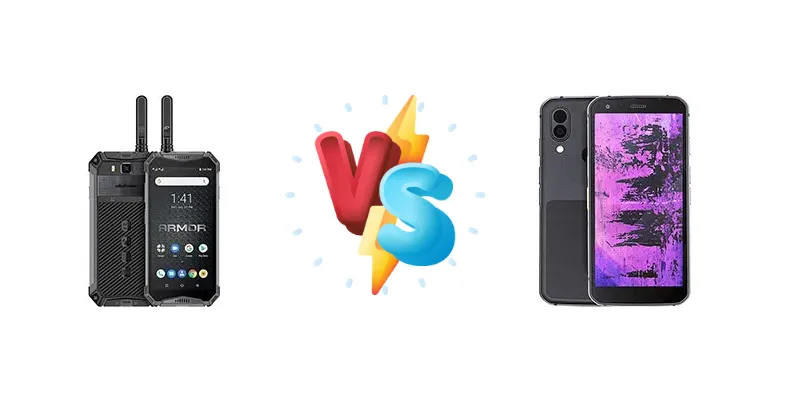
|
🏆 Quick Verdict
For the average user prioritizing consistent performance and a more refined software experience, the Cat S62 Pro emerges as the better choice. While the Ulefone Armor 3WT offers a compelling price point, the Snapdragon 660’s architectural advantages and potentially better software support outweigh the cost savings for most.
| PHONES | ||
|---|---|---|
| Phone Names | Ulefone Armor 3WT | Cat S62 Pro |
| Network | ||
|---|---|---|
| 2G bands | GSM 850 / 900 / 1800 / 1900 | GSM 850 / 900 / 1800 / 1900 |
| 3G bands | HSDPA 800 / 850 / 900 / 1700(AWS) / 1900 / 2100 | HSDPA 850 / 900 / 1700(AWS) / 1900 / 2100 |
| 4G bands | 1, 2, 3, 4, 5, 7, 8, 12, 13, 17, 18, 19, 20, 25, 26, 28, 34, 38, 39, 40, 41 | 1, 2, 3, 4, 5, 7, 8, 20, 28, 38, 40 |
| Speed | HSPA 42.2/11.5 Mbps, LTE (2CA) Cat7 300/150 Mbps | HSPA 42.2/5.76 Mbps, LTE (2CA) Cat13 400/150 Mbps |
| Technology | GSM / CDMA / HSPA / EVDO / LTE | GSM / HSPA / LTE |
| CDMA2000 1xEV-DO | - | |
| Launch | ||
|---|---|---|
| Announced | 2019, September. Released 2019, September | 2020, June 28. Released 2020, August 17 |
| Status | Discontinued | Discontinued |
| Body | ||
|---|---|---|
| Build | - | Glass front (Gorilla Glass 6), plastic back, aluminum frame |
| Dimensions | 164.8 x 79.2 x 18.2 mm (6.49 x 3.12 x 0.72 in) | 158.5 x 76.7 x 11.9 mm (6.24 x 3.02 x 0.47 in) |
| SIM | Nano-SIM + Nano-SIM | · Nano-SIM· Nano-SIM + Nano-SIM |
| Weight | 373.7 g (13.33 oz) | 248 g (8.75 oz) |
| IP68 dust/water resistant (up to 1.5m for 30 min) Drop-to-concrete resistance from up to 1.2m MIL-STD-810G compliant External antenna | IP68/IP69 dust/water resistant (up to 1.5m for 35 mins) Drop-to-concrete resistance from up to 1.8m MIL-STD-810H compliant | |
| Display | ||
|---|---|---|
| Protection | - | Corning Gorilla Glass 6 |
| Resolution | 1080 x 2160 pixels, 18:9 ratio (~424 ppi density) | 1080 x 2160 pixels, 18:9 ratio (~424 ppi density) |
| Size | 5.7 inches, 83.8 cm2 (~64.2% screen-to-body ratio) | 5.7 inches, 83.8 cm2 (~69.0% screen-to-body ratio) |
| Type | IPS LCD | IPS LCD |
| Platform | ||
|---|---|---|
| CPU | Octa-core (4x2.1 GHz Cortex-A73 & 4x2.1 GHz Cortex-A53) | Octa-core (4x2.2 GHz Kryo 260 Gold & 4x1.8 GHz Kryo 260 Silver) |
| Chipset | Mediatek MT6771 Helio P70 (12 nm) | Qualcomm SDM660 Snapdragon 660 (14 nm) |
| GPU | Mali-G72 MP3 | Adreno 512 |
| OS | Android 9.0 (Pie) | Android 10 |
| Memory | ||
|---|---|---|
| Card slot | microSDXC (dedicated slot) | microSDXC (dedicated slot) |
| Internal | 64GB 6GB RAM | 128GB 6GB RAM |
| eMMC 5.1 | - | |
| Main Camera | ||
|---|---|---|
| Dual | - | 12 MP, f/1.8, (wide), 1/2.55", 1.4µm, dual pixel PDAF FLIR thermal camera (Lepton 3.5 module) |
| Features | Dual-LED dual-tone flash, HDR, panorama | Thermal imaging, heat palettes, temp. spot meter, LED flash |
| Single | 21 MP, f/1.8, (wide), 1/2.4", 1.12µm, PDAF | - |
| Video | 1080p@30fps | 1080p@30fps, gyro-EIS |
| Selfie camera | ||
|---|---|---|
| Single | 8 MP | 8 MP |
| Video | 1080p@30fps | 1080p@30fps |
| Sound | ||
|---|---|---|
| 3.5mm jack | No | No |
| 35mm jack | No | No |
| Loudspeaker | Yes | Yes |
| Comms | ||
|---|---|---|
| Bluetooth | 4.1, A2DP | 5.0, A2DP, LE |
| NFC | Yes | Yes |
| Positioning | GPS, GLONASS, BDS | GPS, GLONASS, GALILEO, BDS |
| Radio | Stereo FM radio, RDS, recording | FM radio |
| USB | USB Type-C 2.0, OTG | USB Type-C 2.0, OTG |
| WLAN | Wi-Fi 802.11 a/b/g/n/ac, dual-band, Wi-Fi Direct | Wi-Fi 802.11 a/b/g/n/ac, dual-band, Wi-Fi Direct |
| Features | ||
|---|---|---|
| Sensors | Fingerprint (side-mounted), accelerometer, gyro, proximity, compass, barometer, coulombmeter | Fingerprint (rear-mounted), accelerometer, gyro, proximity, compass |
| Battery | ||
|---|---|---|
| Charging | 18W wired | - |
| Type | Li-Po 10300 mAh | Li-Ion 4000 mAh |
| Misc | ||
|---|---|---|
| Colors | Black | Black |
| Price | - | About 530 EUR |
Ulefone Armor 3WT
- More affordable price point
- Rugged design for demanding environments
- Potentially longer battery life due to efficient chipset
- Less powerful processor for demanding tasks
- Slower charging speed (18W)
- Potentially limited software support
Cat S62 Pro
- Superior processor performance (Snapdragon 660)
- Better image processing capabilities
- Stronger brand reputation in the rugged phone market
- Higher price tag
- May not offer significantly better battery life
- Rugged design may be bulkier
Display Comparison
Neither device boasts a cutting-edge display. Details on panel type and resolution are missing, but the focus here is durability, not visual fidelity. However, the chipset differences *could* impact display responsiveness. The Cat S62 Pro’s Snapdragon 660 has a more powerful GPU, potentially leading to smoother scrolling and animations, even if the panel specs are similar. The Ulefone's Helio P70 may exhibit slight lag in graphically intensive UI elements.
Camera Comparison
Without detailed camera specifications, a direct comparison is difficult. However, the chipset’s image signal processor (ISP) plays a crucial role. Qualcomm’s ISPs are generally regarded as superior in image processing, offering better dynamic range, noise reduction, and color accuracy. The Cat S62 Pro is likely to produce more consistently high-quality photos and videos, particularly in challenging lighting conditions. The Ulefone Armor 3WT’s camera performance will likely be adequate for casual use, but may struggle with detail and clarity in complex scenes.
Performance
The core difference lies in the chipsets. The Cat S62 Pro’s Qualcomm Snapdragon 660 (14nm) utilizes custom Kryo cores, offering a more efficient and powerful architecture than the Ulefone Armor 3WT’s MediaTek Helio P70 (12nm). While the P70’s Cortex-A73 cores clock slightly higher (2.1 GHz vs 2.2 GHz on the Kryo 260 Gold), the Snapdragon 660’s superior instruction set and overall architecture translate to better sustained performance and multitasking capabilities. This benefits users running multiple apps, using demanding productivity tools, or engaging in moderate gaming. The 14nm process of the Snapdragon 660, while older, is well-optimized, and may offer better thermal management under sustained load compared to the 12nm Helio P70.
Battery Life
Both phones likely feature large batteries, typical of rugged devices. The Ulefone Armor 3WT’s 18W charging is relatively slow compared to what’s becoming standard. The Cat S62 Pro’s charging speed is not specified, but given its positioning, it’s reasonable to expect at least 18W, and potentially faster charging. The Snapdragon 660’s power efficiency could offset a potentially smaller battery capacity in the Cat S62 Pro, resulting in comparable or even better real-world battery life. Users prioritizing quick top-ups will likely prefer the Cat S62 Pro if it supports faster charging.
Buying Guide
Buy the Ulefone Armor 3WT if you need a highly affordable, extremely durable phone for basic tasks and aren't concerned with demanding applications or long-term software updates. Buy the Cat S62 Pro if you prioritize smoother multitasking, a more responsive user interface, and a brand with a stronger track record in the ruggedized phone space, even at a higher price.