
Ulefone Armor 34 vs Blackview BV9200: A Deep Dive into Rugged Smartphone Performance
| Phones Images | |||||
|---|---|---|---|---|---|
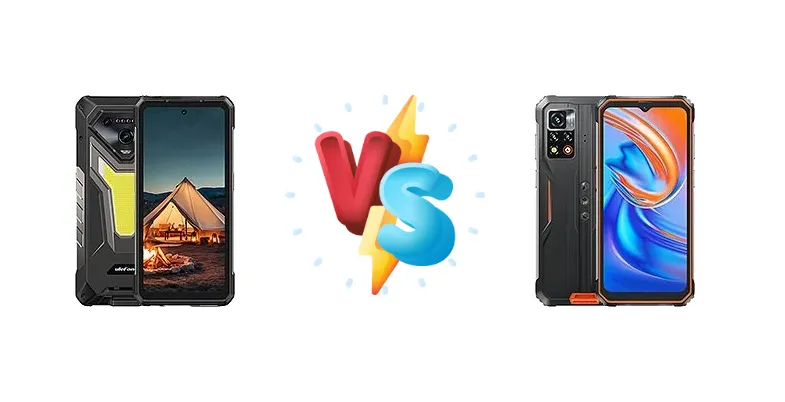
|
🏆 Quick Verdict
For users prioritizing raw performance and long-term battery health, the Ulefone Armor 34 is the clear winner. Its Dimensity 7300 chipset provides a significant performance leap over the BV9200’s Helio G96, and the 1000-cycle battery promises longevity. However, the Blackview BV9200’s wireless charging and brighter screen make it a viable alternative for those valuing convenience and outdoor visibility.
| PHONES | ||
|---|---|---|
| Phone Names | Ulefone Armor 34 | Blackview BV9200 |
| Network | ||
|---|---|---|
| 2G bands | GSM 850 / 900 / 1800 / 1900 | GSM 850 / 900 / 1800 / 1900 |
| 3G bands | HSDPA 800 / 850 / 900 / 1700(AWS) / 1900 / 2100 | HSDPA 850 / 900 / 1700(AWS) / 1900 / 2100 |
| 4G bands | 1, 2, 3, 4, 5, 7, 8, 12, 13, 17, 18, 19, 20, 25, 26, 28, 32, 34, 38, 39, 40, 41, 66, 71 | 1, 2, 3, 4, 5, 7, 8, 12, 13, 17, 18, 19, 20, 25, 26, 28, 34, 38, 39, 40, 41, 66 |
| 5G bands | 1, 2, 3, 5, 7, 8, 20, 25, 28, 38, 40, 41, 66, 71, 77, 78, 79 SA/NSA/Sub6 | - |
| Speed | HSPA, LTE, 5G | HSPA, LTE |
| Technology | GSM / HSPA / LTE / 5G | GSM / CDMA / HSPA / LTE |
| - | CDMA 800 / 1900 | |
| Launch | ||
|---|---|---|
| Announced | 2025, August | 2022, December 28 |
| Status | Available. Released 2025, August 18 | Available. Released 2023, January 09 |
| Body | ||
|---|---|---|
| Dimensions | 183.1 x 86.6 x 32.7 mm (7.21 x 3.41 x 1.29 in) | 174.5 x 81.8 x 13.6 mm (6.87 x 3.22 x 0.54 in) |
| SIM | Nano-SIM + Nano-SIM | Nano-SIM + Nano-SIM |
| Weight | 763 g (1.68 lb) | 310 g (10.93 oz) |
| - | IP68/IP69K dust/water resistant (up to 1.5m for 30 min) Drop-to-concrete resistance from up to 1.8m MIL-STD-810H compliant | |
| Display | ||
|---|---|---|
| Protection | Corning Gorilla Glass 5, Mohs level 4 | Corning Gorilla Glass 5 |
| Resolution | 1080 x 2460 pixels (~387 ppi density) | 1080 x 2408 pixels, 20:9 ratio (~400 ppi density) |
| Size | 6.95 inches, 114.7 cm2 (~72.3% screen-to-body ratio) | 6.6 inches, 104.9 cm2 (~73.5% screen-to-body ratio) |
| Type | IPS LCD, 120Hz, 600 nits (peak) | IPS LCD, 120Hz |
| Platform | ||
|---|---|---|
| CPU | Octa-core (4x2.5 GHz Cortex-A78 & 4x2.0 GHz Cortex-A55) | Octa-core (2x2.05 GHz Cortex-A76 & 6x2.0 GHz Cortex-A55) |
| Chipset | Mediatek Dimensity 7300 (4 nm) | Mediatek MT6781 Helio G96 (12 nm) |
| GPU | Mali-G615 MC2 | Mali-G52 MC2 |
| OS | Android 15 | Android 12, Doke-OS 3.1 |
| Memory | ||
|---|---|---|
| Card slot | microSDXC (dedicated slot) | microSDXC (dedicated slot) |
| Internal | 512GB 16GB RAM | 256GB 8GB RAM |
| - | UFS 2.1 | |
| Main Camera | ||
|---|---|---|
| Features | Dual-LED flash, HDR, panorama | LED flash, HDR, panorama |
| Single | - | 16 MP, (wide), 1/3", 1.0µm |
| Triple | 50 MP, f/2.0, 23mm (wide), 1/1.3", 1.2µm, multi-directional PDAF 64 MP, f/1.8, (night vision), 1/2.0", 0.7µm, 4 infrared lights 50 MP, f/2.2, 16mm, 117˚ (ultrawide), 1/2.76", 0.64µm | 50 MP, f/1.8, (wide), 1/2.76", 0.64µm, PDAF 8 MP, f/1.8, 120˚, (ultrawide), AF Auxiliary lens |
| Video | 4K@30fps, 1080p@30fps, gyro-EIS | 1440p@30fps, 1080p@30fps |
| Selfie camera | ||
|---|---|---|
| Single | 32 MP, f/2.5, 25mm (wide), 1/2.8", 0.8µm | 16 MP, f/2.0, (wide), 1/3", 1.0µm |
| Video | 1080p@30fps | 1080p |
| Sound | ||
|---|---|---|
| 3.5mm jack | - | No |
| 35mm jack | Yes | No |
| Loudspeaker | Yes | Yes, with dual speakers |
| Comms | ||
|---|---|---|
| Bluetooth | 5.4, A2DP, LE | 5.2, A2DP, LE |
| Infrared port | Yes | - |
| NFC | Yes | Yes |
| Positioning | GPS, GALILEO, GLONASS, QZSS, BDS, NavIC | GPS, GLONASS, GALILEO, BDS |
| Radio | Wireless FM radio, RDS, recording | FM radio |
| USB | USB Type-C 2.0, OTG, accessory connector pins | USB Type-C, OTG |
| WLAN | Wi-Fi 802.11 a/b/g/n/ac/6, dual-band | Wi-Fi 802.11 a/b/g/n/ac, dual-band |
| Features | ||
|---|---|---|
| Sensors | Fingerprint (side-mounted), accelerometer, gyro, proximity, compass, barometer | Fingerprint (side-mounted), accelerometer, gyro, proximity, compass, barometer |
| Battery | ||
|---|---|---|
| Charging | 66W wired 10W reverse wired | 66W wired 30W wireless |
| Type | Li-Ion 25500 mAh | 5000 mAh |
| Misc | ||
|---|---|---|
| Colors | Black | Black, Orange, Green |
| Price | € 459.99 / $ 413.32 / £ 369.99 | About 200 EUR |
| EU LABEL | ||
|---|---|---|
| Battery | 384:54h endurance, 1000 cycles | - |
| Energy | Class A | - |
| Free fall | Class D (88 falls) | - |
| Repairability | Class C | - |
Ulefone Armor 34
- Significantly more powerful processor (Dimensity 7300)
- Exceptional battery endurance (384:54h)
- Long-term battery health (1000 charge cycles)
- Display specifications are unknown
- Lacks wireless charging
Blackview BV9200
- Brighter display (481 nits)
- Wireless charging support (30W)
- Higher contrast ratio (1423:1)
- Less powerful processor (Helio G96)
- Battery endurance not specified
Display Comparison
The Blackview BV9200 distinguishes itself with a measured peak brightness of 481 nits and a 1423:1 contrast ratio, making it more suitable for outdoor use where direct sunlight can wash out the screen. The Ulefone Armor 34’s display specifications are not provided, so we can only assume it offers a standard rugged phone experience. The BV9200’s higher contrast ratio will also deliver richer, more vibrant colors. However, without knowing the Armor 34’s panel technology (e.g., IPS, AMOLED) or refresh rate, a definitive judgment is difficult.
Camera Comparison
Neither device’s camera specifications are detailed enough to draw firm conclusions. Without knowing sensor sizes, aperture values, or image processing algorithms, it’s impossible to assess image quality. However, the absence of any mention of advanced features like OIS on either device suggests a focus on basic photography capabilities. The inclusion of a 2MP macro camera on the BV9200 is a common, but often underwhelming, feature in this price segment.
Performance
The Ulefone Armor 34’s Mediatek Dimensity 7300 (4nm) chipset represents a substantial upgrade over the Blackview BV9200’s Helio G96 (12nm). The Dimensity 7300’s octa-core configuration (4x2.5 GHz Cortex-A78 & 4x2.0 GHz Cortex-A55) offers significantly higher peak performance and improved power efficiency compared to the Helio G96’s (2x2.05 GHz Cortex-A76 & 6x2.0 GHz Cortex-A55). The 4nm process node of the Dimensity 7300 translates to less heat generation and reduced throttling during sustained workloads, benefiting gamers and power users. This difference will be noticeable in app loading times, multitasking, and graphically demanding games.
Battery Life
The Ulefone Armor 34 boasts impressive battery endurance, rated at 384:54h, and a claimed 1000 charge cycles, suggesting exceptional long-term battery health. While both phones support 66W wired charging, the Armor 34’s superior endurance means users will likely need to charge less frequently. The Blackview BV9200 compensates with the addition of 30W wireless charging, offering a convenient alternative to wired connections. However, wireless charging is typically slower than wired charging, and the BV9200’s overall endurance is not specified, making it difficult to compare directly.
Buying Guide
Buy the Ulefone Armor 34 if you need a rugged phone for demanding tasks like mobile gaming, video editing, or running resource-intensive applications. Its superior processing power and efficient 4nm chipset will provide a smoother, more responsive experience. Buy the Blackview BV9200 if you prioritize convenience features like wireless charging and require a display that remains easily visible in direct sunlight, even if it means sacrificing some processing power.