
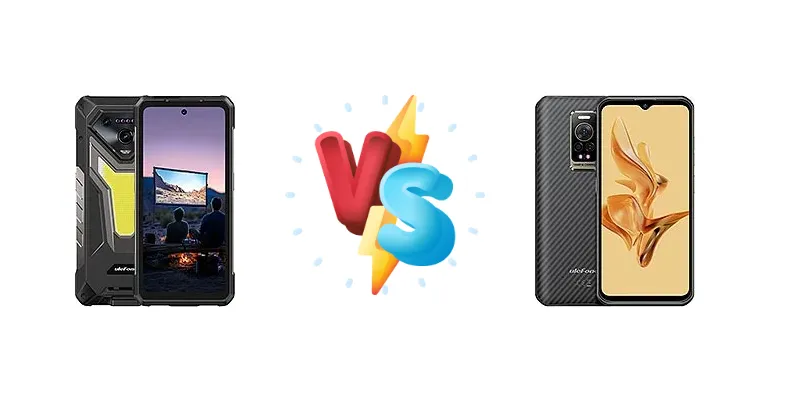
Ulefone Armor 34 Pro vs. Armor 17 Pro: A Deep Dive into Rugged Smartphone Performance
| Phones Images | |||||
|---|---|---|---|---|---|
|
🏆 Quick Verdict
For most users, the Ulefone Armor 34 Pro is the superior choice. Its Dimensity 7300 chipset provides a substantial performance uplift over the Armor 17 Pro’s Helio G99, and the 384:54h endurance suggests significantly longer battery life. While the 17 Pro offers wireless charging, the 34 Pro’s faster wired charging and overall processing power make it the winner.
| PHONES | ||
|---|---|---|
| Phone Names | Ulefone Armor 34 Pro | Ulefone Armor 17 Pro |
| Network | ||
|---|---|---|
| 2G bands | GSM 850 / 900 / 1800 / 1900 | GSM 850 / 900 / 1800 / 1900 |
| 3G bands | HSDPA 800 / 850 / 900 / 1700(AWS) / 1900 / 2100 | HSDPA 800 / 850 / 900 / 1700(AWS) / 1900 / 2100 |
| 4G bands | 1, 2, 3, 4, 5, 7, 8, 12, 13, 17, 18, 19, 20, 25, 26, 28, 32, 34, 38, 39, 40, 41, 66, 71 | 1, 2, 3, 4, 5, 7, 8, 12, 13, 17, 18, 19, 20, 25, 26, 28, 34, 38, 39, 40, 41, 66 |
| 5G bands | 1, 2, 3, 5, 7, 8, 20, 25, 28, 38, 40, 41, 66, 71, 77, 78, 79 SA/NSA/Sub6 | - |
| Speed | HSPA, LTE, 5G | HSPA, LTE |
| Technology | GSM / CDMA / HSPA / CDMA2000 / LTE / 5G | GSM / HSPA / LTE |
| Launch | ||
|---|---|---|
| Announced | 2025, March 03 | 2022, October 31 |
| Status | Available. Released 2025, June | Available. Released 2022, October 31 |
| Body | ||
|---|---|---|
| Dimensions | 183.1 x 86.6 x 32.7 mm (7.21 x 3.41 x 1.29 in) | 172.7 x 80.4 x 12.5 mm (6.80 x 3.17 x 0.49 in) |
| SIM | Nano-SIM + Nano-SIM | Nano-SIM + Nano-SIM |
| Weight | 825 g (1.82 lb) | 290 g (10.23 oz) |
| - | IP68/IP69K dust/water resistant (up to 1.5m for 30 min) Drop-to-concrete resistance from up to 1.5m MIL-STD-810G compliant | |
| Display | ||
|---|---|---|
| Protection | Corning Gorilla Glass 5, Mohs level 4 | Corning Gorilla Glass 5 |
| Resolution | 1080 x 2460 pixels (~387 ppi density) | 1080 x 2408 pixels, 20:9 ratio (~401 ppi density) |
| Size | 6.95 inches, 114.7 cm2 (~72.3% screen-to-body ratio) | 6.58 inches, 104.3 cm2 (~75.1% screen-to-body ratio) |
| Type | IPS LCD, 120Hz, 600 nits (peak) | IPS LCD, 120Hz |
| Platform | ||
|---|---|---|
| CPU | Octa-core (4x2.5 GHz Cortex-A78 & 4x2.0 GHz Cortex-A55) | Octa-core (2x2.2 GHz Cortex-A76 & 6x2.0 GHz Cortex-A55) |
| Chipset | Mediatek Dimensity 7300 (4 nm) | Mediatek Helio G99 (6 nm) |
| GPU | Mali-G615 MC2 | Mali-G57 MC2 |
| OS | Android 15 | Android 12 |
| Memory | ||
|---|---|---|
| Card slot | microSDXC (dedicated slot) | microSDXC (dedicated slot) |
| Internal | 512GB 16GB RAM | 256GB 8GB RAM |
| Main Camera | ||
|---|---|---|
| Features | Dual-LED flash, HDR, panorama | Triple-LED flash, HDR, panorama |
| Single | - | 16 MP, f/2.2, (wide), 1.0µm |
| Triple | 50 MP, f/2.0, (wide), 1/1.3", 1.2µm, PDAF 64 MP, f/1.8, (night vision), 1/2.0", 0.7µm, 4 infrared lights 50 MP, f/2.2, 117˚ (ultrawide), 1/2.76", 0.64µm, AF | 108 MP, f/1.9, (wide), 1/1.52”, 0.7µm, PDAF 8 MP, f/2.2, 119˚, (ultrawide), 1/4.0", 1.12µm 8 MP, (night vision), 2 infrared night vision lights |
| Video | 4K@30fps, 1080p@30/60fps, gyro-EIS | 1440p@30fps, 1080p@30fps |
| Selfie camera | ||
|---|---|---|
| Single | 32 MP, f/2.5, (wide), 1/2.8", 0.8µm | 16 MP, f/2.2, (wide), 1.0µm |
| Video | 1080p@30fps | 1080p@30fps |
| Sound | ||
|---|---|---|
| 3.5mm jack | - | Yes |
| 35mm jack | Yes | Yes |
| Loudspeaker | Yes | Yes |
| Comms | ||
|---|---|---|
| Bluetooth | 5.4, A2DP, LE | 5.2, A2DP, LE |
| Infrared port | Yes | - |
| NFC | Yes | Yes |
| Positioning | GPS, GALILEO, GLONASS, QZSS, BDS, NavIC | GPS, GLONASS, GALILEO, BDS |
| Radio | Wireless FM radio, RDS, recording | Wireless FM radio, RDS, recording |
| USB | USB Type-C 2.0, OTG, accessory connector pins | USB Type-C 2.0, OTG |
| WLAN | Wi-Fi 802.11 a/b/g/n/ac/6e, tri-band | Wi-Fi 802.11 a/b/g/n/ac, dual-band |
| Features | ||
|---|---|---|
| Sensors | Fingerprint (side-mounted), accelerometer, gyro, proximity, compass, barometer | Fingerprint (side-mounted), accelerometer, gyro, proximity, compass |
| - | MagSafe compatible accessories | |
| Battery | ||
|---|---|---|
| Charging | 66W wired 10W reverse wired | 66W wired, 53% in 15 min 15W wireless Wireless reversed |
| Type | Li-Po 25500 mAh | Li-Po 5380 mAh |
| Misc | ||
|---|---|---|
| Colors | Black | Black |
| Price | € 637.49 / $ 516.41 / £ 479.99 / ₹ 81,500 | About 260 EUR |
| EU LABEL | ||
|---|---|---|
| Battery | 384:54h endurance, 1000 cycles | - |
| Energy | Class A | - |
| Free fall | Class D (88 falls) | - |
| Repairability | Class C | - |
Ulefone Armor 34 Pro
- Significantly faster processor with the Dimensity 7300
- Exceptional battery endurance (384:54h)
- Potentially better thermal management due to 4nm process
- Wireless charging not supported
- Camera specifications unknown
Ulefone Armor 17 Pro
- Wireless charging and reverse wireless charging
- More affordable price point (likely)
- Good efficiency from the Helio G99
- Noticeably slower processor compared to the 34 Pro
- Likely shorter battery life under heavy use
Display Comparison
Display specifications are not provided, but given the Armor series’ focus on practicality, we can assume both devices feature durable, likely IPS LCD panels. The Armor 34 Pro’s newer chipset *could* support higher refresh rates, though this isn’t confirmed. The Armor 17 Pro’s display likely prioritizes efficiency to complement the Helio G99’s power consumption. Bezels are likely similar, focusing on impact resistance rather than minimizing size.
Camera Comparison
Camera details are absent, but the Armor series typically focuses on functional cameras rather than flagship-level imaging. The chipset difference will impact image processing speed; the Dimensity 7300 in the 34 Pro will likely handle complex algorithms and noise reduction more effectively. Without sensor size or aperture information, it’s difficult to definitively say which camera is superior, but the 34 Pro’s processing power gives it an edge. We can assume both phones will have a similar focus on durability in camera module construction.
Performance
The core difference lies in the chipsets. The Ulefone Armor 34 Pro’s Mediatek Dimensity 7300 (4nm) is a significant upgrade over the Armor 17 Pro’s Helio G99 (6nm). The Dimensity 7300’s architecture – Octa-core (4x2.5 GHz Cortex-A78 & 4x2.0 GHz Cortex-A55) – offers substantially higher CPU and GPU performance. The 4nm process node translates to improved thermal efficiency, meaning the 34 Pro is less likely to throttle under sustained load. The Armor 17 Pro’s Helio G99 (Octa-core (2x2.2 GHz Cortex-A76 & 6x2.0 GHz Cortex-A55)) is still capable, but will struggle with graphically intensive games and applications compared to the 34 Pro.
Battery Life
The Ulefone Armor 34 Pro boasts an impressive 384:54h endurance rating, indicating exceptional battery life. While the Armor 17 Pro’s battery capacity isn’t specified, the Helio G99 is more power-efficient. However, the 34 Pro’s larger battery and more efficient chipset likely outweigh this advantage. Both support 66W wired charging, but the Armor 17 Pro adds 15W wireless charging and reverse wireless charging, offering added convenience. The 17 Pro claims 53% charge in 15 minutes, while the 34 Pro’s charging speed is not specified, but 66W should be comparable.
Buying Guide
Buy the Ulefone Armor 34 Pro if you prioritize raw performance for demanding tasks like gaming or video editing, and require exceptional battery life for extended field work. Buy the Ulefone Armor 17 Pro if you value wireless charging convenience and are looking for a more budget-friendly rugged option for everyday use and less intensive applications.