
Ulefone Armor 34 Pro vs Cubot KingKong Star 2: A Deep Dive into Rugged Smartphone Performance
| Phones Images | |||||
|---|---|---|---|---|---|
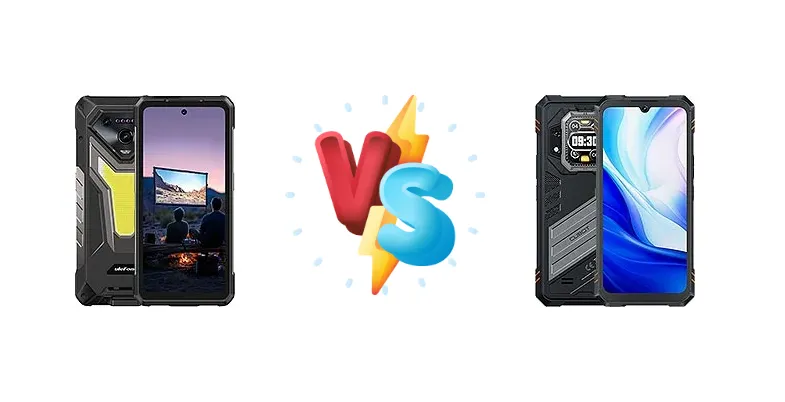
|
🏆 Quick Verdict
For most users prioritizing sustained performance and future-proofing, the Cubot KingKong Star 2 emerges as the winner. Its Dimensity 8200 chipset offers a noticeable performance advantage, despite a shorter battery endurance rating. However, the Ulefone Armor 34 Pro’s superior battery cycle count and 66W charging make it a compelling choice for those prioritizing longevity and quick top-ups.
| PHONES | ||
|---|---|---|
| Phone Names | Ulefone Armor 34 Pro | Cubot KingKong Star 2 |
| Network | ||
|---|---|---|
| 2G bands | GSM 850 / 900 / 1800 / 1900 | GSM 850 / 900 / 1800 / 1900 |
| 3G bands | HSDPA 800 / 850 / 900 / 1700(AWS) / 1900 / 2100 | HSDPA 800 / 850 / 900 / 1700(AWS) / 1900 / 2100 |
| 4G bands | 1, 2, 3, 4, 5, 7, 8, 12, 13, 17, 18, 19, 20, 25, 26, 28, 32, 34, 38, 39, 40, 41, 66, 71 | 1, 2, 3, 4, 5, 7, 8, 12, 13, 17, 18, 19, 20, 25, 26, 28, 34, 38, 39, 40, 41, 66, 71 |
| 5G bands | 1, 2, 3, 5, 7, 8, 20, 25, 28, 38, 40, 41, 66, 71, 77, 78, 79 SA/NSA/Sub6 | 1, 2, 3, 5, 7, 8, , 20, 25, 28, 38, 40, 41, 66, 77, 78 SA/NSA |
| Speed | HSPA, LTE, 5G | HSPA, LTE, 5G |
| Technology | GSM / CDMA / HSPA / CDMA2000 / LTE / 5G | GSM / HSPA / LTE / 5G |
| Launch | ||
|---|---|---|
| Announced | 2025, March 03 | 2024, September 30 |
| Status | Available. Released 2025, June | Available. Released 2024, October |
| Body | ||
|---|---|---|
| Dimensions | 183.1 x 86.6 x 32.7 mm (7.21 x 3.41 x 1.29 in) | 177.7 x 81.8 x 13.5 mm (7.00 x 3.22 x 0.53 in) |
| SIM | Nano-SIM + Nano-SIM | Nano-SIM + Nano-SIM |
| Weight | 825 g (1.82 lb) | 305 g (10.76 oz) |
| Display | ||
|---|---|---|
| Protection | Corning Gorilla Glass 5, Mohs level 4 | Corning Gorilla Glass, Mohs level 6 |
| Resolution | 1080 x 2460 pixels (~387 ppi density) | 1080 x 2400 pixels, 20:9 ratio (~392 ppi density) |
| Size | 6.95 inches, 114.7 cm2 (~72.3% screen-to-body ratio) | 6.72 inches, 109.0 cm2 (~75.0% screen-to-body ratio) |
| Type | IPS LCD, 120Hz, 600 nits (peak) | IPS LCD, 144Hz, 1500 nits (peak) |
| Platform | ||
|---|---|---|
| CPU | Octa-core (4x2.5 GHz Cortex-A78 & 4x2.0 GHz Cortex-A55) | Octa-core (1x3.1 GHz Cortex-A78 & 3x3.0 GHz Cortex-A78 & 4x2.0 GHz Cortex-A55) |
| Chipset | Mediatek Dimensity 7300 (4 nm) | Mediatek Dimensity 8200 (4 nm) |
| GPU | Mali-G615 MC2 | Mali-G610 MC6 |
| OS | Android 15 | Android 14 |
| Memory | ||
|---|---|---|
| Card slot | microSDXC (dedicated slot) | microSDXC (uses shared SIM slot) |
| Internal | 512GB 16GB RAM | 256GB 12GB RAM |
| Main Camera | ||
|---|---|---|
| Dual | - | 100 MP, (wide), PDAF 5 MP (macro), AF |
| Features | Dual-LED flash, HDR, panorama | LED flash |
| Triple | 50 MP, f/2.0, (wide), 1/1.3", 1.2µm, PDAF 64 MP, f/1.8, (night vision), 1/2.0", 0.7µm, 4 infrared lights 50 MP, f/2.2, 117˚ (ultrawide), 1/2.76", 0.64µm, AF | - |
| Video | 4K@30fps, 1080p@30/60fps, gyro-EIS | Yes |
| Selfie camera | ||
|---|---|---|
| Single | 32 MP, f/2.5, (wide), 1/2.8", 0.8µm | 32 MP |
| Video | 1080p@30fps | Yes |
| Sound | ||
|---|---|---|
| 35mm jack | Yes | No |
| Loudspeaker | Yes | Yes |
| Comms | ||
|---|---|---|
| Bluetooth | 5.4, A2DP, LE | 5.3, A2DP, LE |
| Infrared port | Yes | - |
| NFC | Yes | Yes |
| Positioning | GPS, GALILEO, GLONASS, QZSS, BDS, NavIC | GPS (L1+L5), GALILEO, GLONASS, BDS |
| Radio | Wireless FM radio, RDS, recording | Unspecified |
| USB | USB Type-C 2.0, OTG, accessory connector pins | USB Type-C, OTG |
| WLAN | Wi-Fi 802.11 a/b/g/n/ac/6e, tri-band | Wi-Fi 802.11 a/b/g/n/ac/6, dual-band |
| Features | ||
|---|---|---|
| Sensors | Fingerprint (side-mounted), accelerometer, gyro, proximity, compass, barometer | Fingerprint (side-mounted), accelerometer, gyro, proximity, compass |
| Battery | ||
|---|---|---|
| Charging | 66W wired 10W reverse wired | 33W wired |
| Type | Li-Po 25500 mAh | 5100 mAh |
| Misc | ||
|---|---|---|
| Colors | Black | Black |
| Price | € 637.49 / $ 516.41 / £ 479.99 / ₹ 81,500 | About 250 EUR |
| EU LABEL | ||
|---|---|---|
| Battery | 384:54h endurance, 1000 cycles | 43:41h endurance, 900 cycles |
| Energy | Class A | Class C |
| Free fall | Class D (88 falls) | Class A (270 falls) |
| Repairability | Class C | Class C |
Ulefone Armor 34 Pro
- Exceptional battery cycle count (1000 cycles)
- Faster 66W wired charging
- Potentially better long-term battery health
- Less powerful chipset (Dimensity 7300)
- Shorter overall battery endurance (384:54h)
Cubot KingKong Star 2
- More powerful chipset (Dimensity 8200)
- Higher peak performance for gaming and multitasking
- Better overall power efficiency (43:41h endurance)
- Lower battery cycle count (900 cycles)
- Slower 33W wired charging
Display Comparison
Display specifications are absent from the provided data, but given the rugged nature of both devices, we can assume they prioritize durability over cutting-edge display tech. Expect IPS LCD panels with robust glass protection. The focus will likely be on visibility in direct sunlight rather than color accuracy or high refresh rates. Bezels are likely to be present to further enhance drop protection.
Camera Comparison
Camera details are unavailable, but given the market segment, both phones likely feature a multi-camera setup geared towards versatility rather than professional-grade photography. Expect a primary sensor, an ultrawide lens, and potentially a macro lens. The absence of information prevents a detailed comparison, but sensor size and image processing algorithms will be key differentiators. We anticipate both phones will prioritize image stabilization for use in active environments.
Performance
The Cubot KingKong Star 2 boasts the Mediatek Dimensity 8200, featuring a 1x3.1 GHz Cortex-A78 core alongside three additional Cortex-A78 cores, and four Cortex-A55 cores. This configuration, built on a 4nm process, provides a significant advantage over the Ulefone Armor 34 Pro’s Dimensity 7300 (4x2.5 GHz Cortex-A78 & 4x2.0 GHz Cortex-A55). The higher clock speeds and additional high-performance cores in the 8200 translate to faster app loading, smoother multitasking, and improved gaming performance. While both chipsets utilize a 4nm process for efficiency, the architectural differences favor the Cubot in demanding scenarios. The Ulefone's Dimensity 7300 will still provide a very capable experience, but will likely show its limits in graphically intensive applications.
Battery Life
The Ulefone Armor 34 Pro offers 384:54h of endurance, while the Cubot KingKong Star 2 provides 43:41h. This suggests the Cubot is more power-efficient overall, despite the more powerful chipset. However, the Ulefone compensates with a higher battery cycle count of 1000, compared to the Cubot’s 900, indicating greater long-term battery health. The Ulefone also supports 66W wired charging, significantly faster than the Cubot’s 33W, allowing for quicker top-ups. This means the Ulefone can potentially offset its lower endurance with faster charging times, making it ideal for users who frequently need to recharge quickly.
Buying Guide
Buy the Ulefone Armor 34 Pro if you need exceptional battery longevity and are willing to trade a small amount of peak performance for it. Its 1000 battery cycles promise years of reliable use. Buy the Cubot KingKong Star 2 if you prioritize raw processing power for demanding tasks like gaming or video editing, and value faster overall responsiveness, even if it means slightly less battery endurance and cycle life.