
Ulefone Armor 33 vs. Ulefone Armor 7E: A Deep Dive into Rugged Performance
| Phones Images | |||||
|---|---|---|---|---|---|
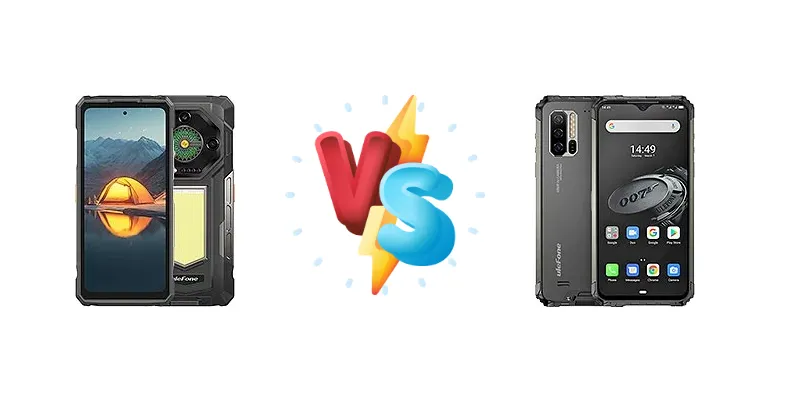
|
🏆 Quick Verdict
For most users, the Ulefone Armor 33 is the superior choice. Its Helio G100 chipset, built on a 6nm process, provides a noticeable performance uplift over the Armor 7E’s Helio P90, and the 66W charging significantly reduces downtime. While the 7E offers wireless charging, the Armor 33’s endurance and speed outweigh this convenience.
| PHONES | ||
|---|---|---|
| Phone Names | Ulefone Armor 33 | Ulefone Armor 7E |
| Network | ||
|---|---|---|
| 2G bands | GSM 850 / 900 / 1800 / 1900 | GSM 850 / 900 / 1800 / 1900 |
| 3G bands | HSDPA 800 / 850 / 900 / 1700(AWS) / 1900 / 2100 | HSDPA 850 / 900 / 1700(AWS) / 1900 / 2100 |
| 4G bands | 1, 2, 3, 4, 5, 7, 8, 12, 13, 17, 18, 19, 20, 25, 26, 28, 32, 34, 38, 39, 40, 41, 66, 71 | 1, 2, 3, 4, 5, 7, 8, 12, 13, 17, 18, 19, 20, 25, 26, 28, 34, 38, 39, 40, 41, 66, 71 |
| Speed | HSPA, LTE | HSPA 42.2/11.5 Mbps, LTE (2CA) Cat13 600/150 Mbps |
| Technology | GSM / CDMA / HSPA / CDMA2000 / LTE | GSM / CDMA / HSPA / EVDO / LTE |
| - | CDMA2000 1xEV-DO | |
| Launch | ||
|---|---|---|
| Announced | 2025, July | 2020, March 30. Released 2020, March 30 |
| Status | Available. Released 2025, August 18 | Discontinued |
| Body | ||
|---|---|---|
| Dimensions | 185.5 x 85.5 x 34 mm (7.30 x 3.37 x 1.34 in) | 165.9 x 81 x 13.6 mm (6.53 x 3.19 x 0.54 in) |
| SIM | Nano-SIM + Nano-SIM | Nano-SIM + Nano-SIM |
| Weight | 765 g (1.69 lb) | 290 g (10.23 oz) |
| - | IP68 dust/water resistant Drop-to-concrete resistance from up to 1.2m MIL-STD-810G compliant | |
| Display | ||
|---|---|---|
| Protection | Corning Gorilla Glass 5, Mohs level 4 | - |
| Resolution | 1080 x 2460 pixels (~387 ppi density) | 1080 x 2340 pixels, 19.5:9 ratio (~409 ppi density) |
| Size | 6.95 inches, 114.7 cm2 (~72.3% screen-to-body ratio) | 6.3 inches, 97.4 cm2 (~72.5% screen-to-body ratio) |
| Type | IPS LCD, 120Hz, 700 nits (peak) | IPS LCD |
| Platform | ||
|---|---|---|
| CPU | Octa-core (2x2.2 GHz Cortex-A76 & 6x2.0 GHz Cortex-A55) | Octa-core (2x2.2 GHz Cortex-A75 & 6x2.0 GHz Cortex-A55) |
| Chipset | Mediatek Helio G100 (6 nm) | Mediatek MT6779 Helio P90 (12 nm) |
| GPU | Mali-G57 MC2 | PowerVR GM9446 |
| OS | Android 15 | Android 9.0 (Pie) |
| Memory | ||
|---|---|---|
| Card slot | microSDXC (dedicated slot) | microSDXC (uses shared SIM slot) |
| Internal | 512GB 12GB RAM | 128GB 4GB RAM |
| Main Camera | ||
|---|---|---|
| Features | Quad-LED flash, HDR, panorama | 5-LED flash, HDR, panorama |
| Triple | 50 MP, f/2.0, 23mm (wide), 1/1.3", 1.2µm, multi-directional PDAF 64 MP, f/1.8, (night vision), 1/2.0", 0.7µm, 4 infrared lights 50 MP, f/2.2, 16mm, 117˚ (ultrawide), 1/2.76", 0.64µm | 48 MP, f/1.7, (wide), 1/2.0", 0.8µm, PDAF 2 MP (macro) Auxiliary lens |
| Video | 1080p@30fps, gyro-EIS | 4K@30fps, 1080p@30fps |
| Selfie camera | ||
|---|---|---|
| Single | 32 MP, f/2.5, 25mm (wide), 1/2.8", 0.8µm | 16 MP, f/2.0, (wide), 1/3.06", 1.0µm |
| Video | 1080p@30fps | 1080p@30fps |
| Sound | ||
|---|---|---|
| 3.5mm jack | - | No |
| 35mm jack | Yes | No |
| Loudspeaker | Yes, with stereo speakers (118dB) | Yes |
| Comms | ||
|---|---|---|
| Bluetooth | 5.2, A2DP, LE | 5.0, A2DP, LE |
| Infrared port | Yes | - |
| NFC | Yes | Yes |
| Positioning | GPS, GALILEO, GLONASS, QZSS, BDS | GPS, GLONASS, GALILEO, BDS |
| Radio | Wireless FM radio, RDS, recording | Stereo FM radio, RDS, recording |
| USB | USB Type-C 2.0, OTG, accessory connector pins | USB Type-C 2.0, OTG |
| WLAN | Wi-Fi 802.11 a/b/g/n/ac, dual-band | Wi-Fi 802.11 a/b/g/n/ac, dual-band, Wi-Fi Direct |
| Features | ||
|---|---|---|
| Sensors | Fingerprint (side-mounted), accelerometer, gyro, proximity, compass, barometer | Fingerprint (side-mounted), accelerometer, gyro, proximity, compass, heart rate, baroceptor, coulombmeter |
| Battery | ||
|---|---|---|
| Charging | 66W wired 10W reverse wired | 15W wired 10W wireless |
| Type | 25500 mAh | Li-Po 5500 mAh |
| Misc | ||
|---|---|---|
| Colors | Black | Black |
| Price | € 324.95 / $ 299.00 / £ 289.99 | About 250 EUR |
| EU LABEL | ||
|---|---|---|
| Battery | 381:42h endurance, 1000 cycles | - |
| Energy | Class A | - |
| Free fall | Class A (270 falls) | - |
| Repairability | Class C | - |
Ulefone Armor 33
- Significantly faster charging (66W)
- More powerful and efficient processor (Helio G100)
- Longer battery life (381h endurance)
- No wireless charging
- Potentially higher price point
Ulefone Armor 7E
- Wireless charging support
- Potentially lower price
- Established reliability within the Armor series
- Slower charging speeds (15W wired)
- Older, less powerful processor (Helio P90)
- Shorter battery life compared to Armor 33
Display Comparison
Neither device’s display specifications are provided, so a direct comparison is limited. However, given the Armor 33 is a newer model, it likely benefits from improved color accuracy and potentially higher brightness. The Armor 7E’s age suggests a potentially lower peak brightness and wider bezels. Users prioritizing media consumption should investigate independent display tests for both models.
Camera Comparison
Without detailed camera specifications beyond the chipsets, a precise comparison is difficult. However, the Armor 33’s newer chipset likely incorporates an improved image signal processor (ISP), potentially leading to better image quality, especially in low-light conditions. The Armor 7E’s P90 ISP is older and less sophisticated. It’s reasonable to assume the Armor 33 will offer more refined image processing and potentially faster capture speeds. The presence of a 2MP macro lens on either device is unlikely to significantly impact overall camera performance.
Performance
The Ulefone Armor 33’s Mediatek Helio G100 (6nm) represents a significant architectural leap over the Armor 7E’s Helio P90 (12nm). The G100 utilizes newer Cortex-A76 cores alongside A55s, offering improved single-core and multi-core performance. The 6nm fabrication process also translates to better thermal efficiency, reducing the likelihood of throttling during sustained workloads. While both CPUs feature a 2x2.2 GHz core configuration, the G100’s architecture provides a clear advantage for gaming and demanding applications. The Armor 7E’s P90, while capable, is showing its age.
Battery Life
The Ulefone Armor 33 boasts a remarkable 381-hour endurance rating, coupled with support for 66W wired charging. This allows for incredibly fast replenishment, minimizing downtime. The Armor 7E, with 15W wired charging, will take considerably longer to fully charge. While the Armor 7E offers 10W wireless charging, this is a slower method compared to the Armor 33’s 66W wired charging. The Armor 33’s 1000-cycle battery lifespan also suggests greater long-term reliability.
Buying Guide
Buy the Ulefone Armor 33 if you prioritize performance for demanding tasks like gaming or running multiple apps, and if minimizing charging time is crucial. This phone is ideal for construction workers, outdoor enthusiasts, or anyone who needs a reliable device that can keep up with a fast-paced lifestyle. Buy the Ulefone Armor 7E if you value the convenience of wireless charging and are primarily focused on basic smartphone functions, and are less concerned with peak performance or rapid charging speeds.