
Ulefone Armor 30 vs. Samsung Galaxy XCover Pro: A Deep Dive into Rugged Performance
| Phones Images | |||||
|---|---|---|---|---|---|
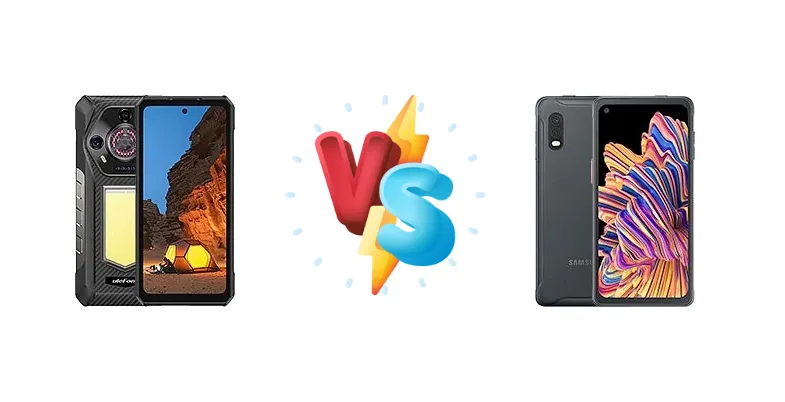
|
🏆 Quick Verdict
For users prioritizing performance and battery longevity, the Ulefone Armor 30 emerges as the stronger choice. Its Helio G100 chipset and 66W charging significantly outperform the Galaxy XCover Pro’s aging Exynos 9611 and 15W charging. However, Samsung’s software support and established brand reputation remain compelling for those valuing long-term updates and ecosystem integration.
| PHONES | ||
|---|---|---|
| Phone Names | Ulefone Armor 30 | Samsung Galaxy XCover Pro |
| Network | ||
|---|---|---|
| 2G bands | GSM 850 / 900 / 1800 / 1900 | GSM 850 / 900 / 1800 / 1900 |
| 3G bands | HSDPA 800 / 850 / 900 / 1700(AWS) / 1900 / 2100 | HSDPA 850 / 900 / 1900 / 2100 - International |
| 4G bands | 1, 2, 3, 4, 5, 7, 8, 12, 13, 17, 18, 19, 20, 25, 26, 28, 32, 34, 38, 39, 40, 41, 66, 71 | 1, 2, 3, 5, 7, 8, 20, 28, 38, 40, 41 - International |
| Speed | HSPA, LTE | HSPA 42.2/5.76 Mbps, LTE (3CA) Cat11 600/50 Mbps |
| Technology | GSM / CDMA / HSPA / CDMA2000 / LTE | GSM / HSPA / LTE |
| - | 1, 2, 3, 4, 5, 7, 12, 13, 14, 20, 29, 38, 40, 41, 66 - Canada | |
| Launch | ||
|---|---|---|
| Announced | 2025, June | 2020, January |
| Status | Available. Released 2025, June 16 | Available. Released 2020, January |
| Body | ||
|---|---|---|
| Dimensions | 181.3 x 84.9 x 21.2 mm (7.14 x 3.34 x 0.83 in) | 159.9 x 76.7 x 10 mm (6.30 x 3.02 x 0.39 in) |
| SIM | Nano-SIM + Nano-SIM | · Nano-SIM· Nano-SIM + Nano-SIM |
| Weight | 506 g (1.12 lb) | 218 g (7.69 oz) |
| - | IP68 dust/water resistant (up to 1.5m for 35 min) Drop-to-concrete resistance from up to 1.5m MIL-STD-810G compliant* *does not guarantee ruggedness or use in extreme conditions | |
| Display | ||
|---|---|---|
| Protection | Corning Gorilla Glass 5, Mohs level 4 | Corning Gorilla Glass 5 |
| Resolution | 1080 x 2460 pixels (~387 ppi density) | 1080 x 2340 pixels, 19.5:9 ratio (~409 ppi density) |
| Size | 6.95 inches, 114.7 cm2 (~74.5% screen-to-body ratio) | 6.3 inches, 97.4 cm2 (~79.4% screen-to-body ratio) |
| Type | IPS LCD, 120Hz, 700 nits (peak) | IPS LCD |
| Platform | ||
|---|---|---|
| CPU | Octa-core (2x2.2 GHz Cortex-A76 & 6x2.0 GHz Cortex-A55) | Octa-core (4x2.3 GHz Cortex-A73 & 4x1.7 GHz Cortex-A53) |
| Chipset | Mediatek Helio G100 (6 nm) | Exynos 9611 (10 nm) |
| GPU | Mali-G57 MC2 | Mali-G72 MP3 |
| OS | Android 15 | Android 10, upgradable to Android 13, One UI 5 |
| Memory | ||
|---|---|---|
| Card slot | microSDXC (dedicated slot) | microSDXC (dedicated slot) |
| Internal | 512GB 12GB RAM | 64GB 4GB RAM |
| Main Camera | ||
|---|---|---|
| Dual | - | 25 MP, f/1.7, 26mm (wide), PDAF 8 MP, f/2.2, 123˚ (ultrawide), 1/4.0", 1.12µm |
| Features | Dual-LED flash, HDR, panorama | Dual-LED flash, HDR, panorama |
| Triple | 50 MP, f/2.0, 23mm (wide), 1/1.3", 1.2µm, multi-directional PDAF 64 MP, f/1.8, (night vision), 1/2.0", 0.7µm, 4 infrared lights 50 MP, f/2.2, 16mm, 117˚ (ultrawide), 1/2.76", 0.64µm | - |
| Video | 1440p@30fps, 1080p@30fps, gyro-EIS | 1080p@30fps |
| Selfie camera | ||
|---|---|---|
| Features | - | HDR |
| Single | 32 MP, f/2.5, 25mm (wide), 1/2.8", 0.8µm | 13 MP, f/2.0, (wide), 1/3.1", 1.12µm |
| Video | 1080p@30fps | 1080p@30fps |
| Sound | ||
|---|---|---|
| 3.5mm jack | - | Yes |
| 35mm jack | Yes | Yes |
| Loudspeaker | Yes, with stereo speakers (118dB) | Yes |
| Comms | ||
|---|---|---|
| Bluetooth | 5.2, A2DP, LE | 5.0, A2DP, LE |
| Infrared port | Yes | - |
| NFC | Yes | Yes |
| Positioning | GPS, GALILEO, GLONASS, QZSS, BDS | GPS, GLONASS, GALILEO, BDS |
| Radio | Wireless FM radio, RDS, recording | FM radio (market/region dependent) |
| USB | USB Type-C 2.0, OTG, accessory connector pins | USB Type-C 2.0 |
| WLAN | Wi-Fi 802.11 a/b/g/n/ac, dual-band | Wi-Fi 802.11 a/b/g/n/ac/k/v/r, dual-band, Wi-Fi Direct |
| Features | ||
|---|---|---|
| Sensors | Fingerprint (side-mounted), accelerometer, gyro, proximity, compass, barometer | Fingerprint (side-mounted), accelerometer, gyro, proximity, compass |
| - | ANT+ | |
| Battery | ||
|---|---|---|
| Charging | 66W wired 10W reverse wired | 15W wired |
| Type | Li-Po 12800 mAh | Li-Po 4050 mAh, removable |
| Misc | ||
|---|---|---|
| Colors | Black | Black |
| Models | - | SM-G715FN/DS, SM-G715FN, SM-G715F, SM-G715W, SM-G715U, SM-G715U1 |
| Price | € 379.99 / $ 297.49 / £ 269.99 | About 120 EUR |
| SAR EU | - | 0.47 W/kg (head) 1.23 W/kg (body) |
| EU LABEL | ||
|---|---|---|
| Battery | 138:30h endurance, 1000 cycles | - |
| Energy | Class A | - |
| Free fall | Class A (270 falls) | - |
| Repairability | Class C | - |
Ulefone Armor 30
- Significantly faster charging (66W)
- More powerful and efficient chipset (Helio G100)
- Exceptional battery endurance (138:30h)
- Less established brand reputation
- Software updates may be less frequent
Samsung Galaxy XCover Pro
- Established brand and software ecosystem
- Potential for longer software support
- Familiar user interface
- Slower charging (15W)
- Older and less powerful chipset (Exynos 9611)
- Likely lower battery endurance
Display Comparison
Neither device boasts a cutting-edge display. Details on panel type and resolution are missing for both, but the focus here is clearly on durability, not visual fidelity. The lack of information prevents a detailed comparison, but we can assume both utilize hardened glass for impact resistance. The XCover Pro’s market positioning suggests a focus on practicality over premium display features.
Camera Comparison
Without detailed camera specs beyond the chipsets, a direct comparison is limited. However, the market segment suggests both phones prioritize functionality over photographic excellence. The Ulefone Armor 30 likely focuses on providing a usable camera for documentation and quick snapshots, while the XCover Pro aims for similar practicality. The absence of information regarding sensor size and image stabilization makes it difficult to assess image quality, but it’s unlikely either phone will compete with flagship camera systems.
Performance
The Ulefone Armor 30’s Mediatek Helio G100 (6nm) represents a significant architectural leap over the Samsung Galaxy XCover Pro’s Exynos 9611 (10nm). The G100’s Cortex-A76 cores, clocked at 2.2 GHz, offer a substantial performance advantage over the XCover Pro’s Cortex-A73 cores at 2.3 GHz. While clock speed isn’t everything, the newer architecture and smaller node size of the G100 translate to improved efficiency and sustained performance under load. This means the Armor 30 will likely handle demanding applications and multitasking more smoothly. The Exynos 9611, while capable, is showing its age and may struggle with modern, resource-intensive tasks.
Battery Life
The Ulefone Armor 30’s endurance rating of 138:30h is a standout feature, suggesting exceptional battery life. This, combined with the 66W wired charging, provides a compelling advantage over the Galaxy XCover Pro’s slower 15W charging. The Armor 30’s 1000 charge cycle claim also indicates a focus on long-term battery health. While the XCover Pro’s battery capacity isn’t specified, the slower charging speed suggests a longer time to full charge and potentially less overall endurance. For users who rely on their phone throughout the day and need quick top-ups, the Ulefone Armor 30 is the clear winner.
Buying Guide
Buy the Ulefone Armor 30 if you need a rugged phone that can handle demanding tasks, benefits from exceptionally fast charging, and offers superior battery endurance for extended field work. Buy the Samsung Galaxy XCover Pro if you prefer a more polished software experience, value Samsung’s ecosystem integration, and prioritize a brand with a proven track record of software updates, even if it means sacrificing some raw performance and charging speed.