
Ulefone Armor 30 vs. Doogee S96 Pro: A Deep Dive into Rugged Performance
| Phones Images | |||||
|---|---|---|---|---|---|
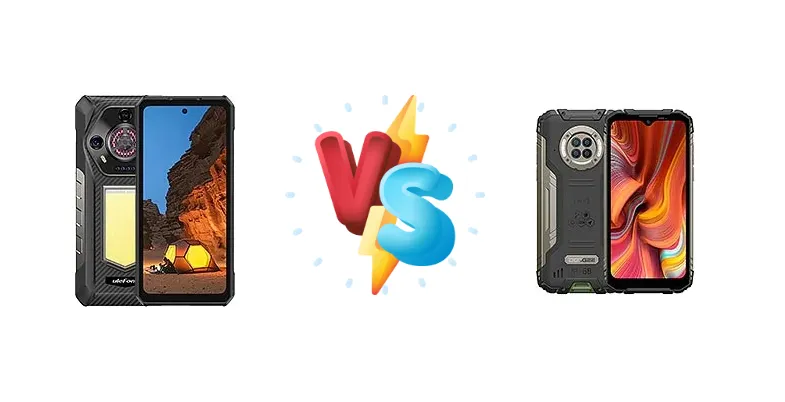
|
🏆 Quick Verdict
For most users prioritizing longevity and rapid refueling, the Ulefone Armor 30 emerges as the winner. Its Helio G100 chipset, coupled with a superior battery endurance rating of 138:30h and 66W charging, provides a significant advantage over the Doogee S96 Pro's 24W wired and 10W wireless charging. However, users valuing wireless charging will find the S96 Pro a more convenient option.
| PHONES | ||
|---|---|---|
| Phone Names | Ulefone Armor 30 | Doogee S96 Pro |
| Network | ||
|---|---|---|
| 2G bands | GSM 850 / 900 / 1800 / 1900 | GSM 850 / 900 / 1800 / 1900 |
| 3G bands | HSDPA 800 / 850 / 900 / 1700(AWS) / 1900 / 2100 | HSDPA 800 / 850 / 900 / 1700(AWS) / 1900 / 2100 |
| 4G bands | 1, 2, 3, 4, 5, 7, 8, 12, 13, 17, 18, 19, 20, 25, 26, 28, 32, 34, 38, 39, 40, 41, 66, 71 | 1, 2, 3, 4, 5, 7, 8, 12, 13, 17, 18, 19, 20, 25, 26, 28, 38, 40, 66 |
| Speed | HSPA, LTE | HSPA, LTE |
| Technology | GSM / CDMA / HSPA / CDMA2000 / LTE | GSM / CDMA / HSPA / LTE |
| Launch | ||
|---|---|---|
| Announced | 2025, June | 2020, October 26. Released 2020, November |
| Status | Available. Released 2025, June 16 | Discontinued |
| Body | ||
|---|---|---|
| Dimensions | 181.3 x 84.9 x 21.2 mm (7.14 x 3.34 x 0.83 in) | 167 x 81.4 x 15.5 mm (6.57 x 3.20 x 0.61 in) |
| SIM | Nano-SIM + Nano-SIM | Nano-SIM + Nano-SIM |
| Weight | 506 g (1.12 lb) | 310 g (10.93 oz) |
| Display | ||
|---|---|---|
| Protection | Corning Gorilla Glass 5, Mohs level 4 | Corning Gorilla Glass |
| Resolution | 1080 x 2460 pixels (~387 ppi density) | 720 x 1520 pixels, 19:9 ratio (~270 ppi density) |
| Size | 6.95 inches, 114.7 cm2 (~74.5% screen-to-body ratio) | 6.22 inches, 96.6 cm2 (~71.0% screen-to-body ratio) |
| Type | IPS LCD, 120Hz, 700 nits (peak) | IPS LCD |
| Platform | ||
|---|---|---|
| CPU | Octa-core (2x2.2 GHz Cortex-A76 & 6x2.0 GHz Cortex-A55) | Octa-core (2x2.0 GHz Cortex-A76 & 6x2.0 GHz Cortex-A55) |
| Chipset | Mediatek Helio G100 (6 nm) | Mediatek MT6785 Helio G90 (12 nm) |
| GPU | Mali-G57 MC2 | Mali-G76 MC4 |
| OS | Android 15 | Android 10 |
| Memory | ||
|---|---|---|
| Card slot | microSDXC (dedicated slot) | microSDXC (dedicated slot) |
| Internal | 512GB 12GB RAM | 128GB 8GB RAM |
| Main Camera | ||
|---|---|---|
| Features | Dual-LED flash, HDR, panorama | Quad-LED flash, HDR, panorama |
| Quad | - | 48 MP, f/1.8, (wide), PDAF 8 MP, f/2.2, 130˚, (ultrawide) 20 MP, f/2.8, (night vision), 4 infrared night vision lights 2 MP (macro) |
| Triple | 50 MP, f/2.0, 23mm (wide), 1/1.3", 1.2µm, multi-directional PDAF 64 MP, f/1.8, (night vision), 1/2.0", 0.7µm, 4 infrared lights 50 MP, f/2.2, 16mm, 117˚ (ultrawide), 1/2.76", 0.64µm | - |
| Video | 1440p@30fps, 1080p@30fps, gyro-EIS | 1080p |
| Selfie camera | ||
|---|---|---|
| Single | 32 MP, f/2.5, 25mm (wide), 1/2.8", 0.8µm | 16 MP, f/2.0, (wide) |
| Video | 1080p@30fps | 1080p |
| Sound | ||
|---|---|---|
| 35mm jack | Yes | Yes |
| Loudspeaker | Yes, with stereo speakers (118dB) | Yes |
| Comms | ||
|---|---|---|
| Bluetooth | 5.2, A2DP, LE | 5.0, A2DP, LE |
| Infrared port | Yes | - |
| NFC | Yes | Yes |
| Positioning | GPS, GALILEO, GLONASS, QZSS, BDS | GPS, GLONASS, BDS, GALILEO |
| Radio | Wireless FM radio, RDS, recording | FM radio |
| USB | USB Type-C 2.0, OTG, accessory connector pins | USB Type-C 2.0, OTG |
| WLAN | Wi-Fi 802.11 a/b/g/n/ac, dual-band | Wi-Fi 802.11 a/b/g/n/ac, dual-band |
| Features | ||
|---|---|---|
| Sensors | Fingerprint (side-mounted), accelerometer, gyro, proximity, compass, barometer | Fingerprint (side-mounted), accelerometer, gyro, proximity, compass |
| Battery | ||
|---|---|---|
| Charging | 66W wired 10W reverse wired | 24W wired 10W wireless |
| Type | Li-Po 12800 mAh | 6350 mAh |
| Misc | ||
|---|---|---|
| Colors | Black | Black, Orange, Green |
| Price | € 379.99 / $ 297.49 / £ 269.99 | About 280 EUR |
| EU LABEL | ||
|---|---|---|
| Battery | 138:30h endurance, 1000 cycles | - |
| Energy | Class A | - |
| Free fall | Class A (270 falls) | - |
| Repairability | Class C | - |
Ulefone Armor 30
- Significantly faster 66W wired charging
- Superior battery endurance (138:30h)
- More efficient Helio G100 (6nm) chipset
- Lacks wireless charging
- No display specifications provided
Doogee S96 Pro
- Convenient 10W wireless charging
- Balanced performance with Helio G90
- Potentially more readily available
- Slower 24W wired charging
- Less efficient Helio G90 (12nm) chipset
Display Comparison
Neither device provides display specifications in the provided data. However, given their market segment, we can expect both to utilize IPS LCD panels prioritizing durability over color accuracy. The absence of LTPO or high refresh rate technology is typical for rugged phones, focusing instead on visibility under direct sunlight and scratch resistance. Bezels are likely to be substantial on both models to further protect the screen.
Camera Comparison
The provided data lacks camera specifications. However, rugged phones in this price range typically prioritize practicality over photographic excellence. Expect both devices to feature a multi-camera setup with a primary sensor, an ultrawide lens, and potentially a macro lens. The quality of image processing will be a key differentiator, but without specific sensor details, it’s difficult to predict which phone will produce superior images. The inclusion of Optical Image Stabilization (OIS) on either device would be a significant advantage for capturing stable photos and videos in challenging conditions.
Performance
The Ulefone Armor 30’s Mediatek Helio G100 (6nm) represents a significant architectural advantage over the Doogee S96 Pro’s Helio G90 (12nm). The smaller 6nm process allows for greater transistor density and improved power efficiency, translating to better sustained performance and reduced thermal throttling. While both CPUs feature the same core configuration (2x2.2 GHz Cortex-A76 & 6x2.0 GHz Cortex-A55), the G100’s higher clock speed and more efficient architecture will deliver a noticeable performance boost in demanding tasks like gaming and video editing. The Armor 30 will likely maintain higher frame rates for longer periods.
Battery Life
The Ulefone Armor 30 boasts a substantial battery endurance rating of 138:30h, significantly exceeding what we’d expect from a phone with similar specifications. This suggests aggressive power management and a highly optimized software experience. Coupled with its 66W wired charging, the Armor 30 can rapidly replenish its battery, minimizing downtime. The Doogee S96 Pro, with its 24W wired and 10W wireless charging, offers slower charging speeds. While wireless charging provides convenience, it comes at the cost of efficiency and speed. The Armor 30’s faster charging is crucial for users who need to quickly get back up and running.
Buying Guide
Buy the Ulefone Armor 30 if you need extended battery life for multi-day trips, frequent use in remote locations, or require the fastest possible charging speeds. This phone is ideal for construction workers, hikers, and anyone who relies on their phone in demanding environments. Buy the Doogee S96 Pro if you prioritize the convenience of wireless charging, and are willing to trade some battery endurance and charging speed for that feature. This phone is a good fit for users who frequently use wireless charging pads at home or in the office.