
Ulefone Armor 30 vs. Cat S62 Pro: A Deep Dive into Rugged Smartphone Performance
| Phones Images | |||||
|---|---|---|---|---|---|
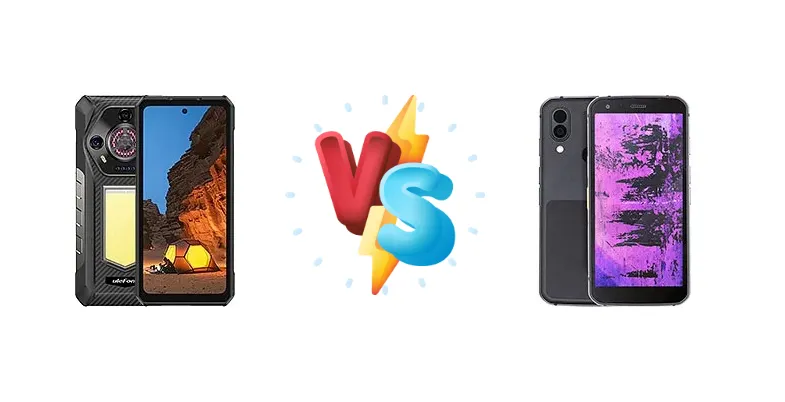
|
🏆 Quick Verdict
For the average user prioritizing performance and future-proofing, the Ulefone Armor 30 emerges as the winner. Its Mediatek Helio G100 chipset, built on a 6nm process, offers a significant architectural advantage over the Cat S62 Pro’s older Snapdragon 660, translating to smoother multitasking and better efficiency. While both are rugged, the Armor 30’s charging speed is a clear advantage.
| PHONES | ||
|---|---|---|
| Phone Names | Ulefone Armor 30 | Cat S62 Pro |
| Network | ||
|---|---|---|
| 2G bands | GSM 850 / 900 / 1800 / 1900 | GSM 850 / 900 / 1800 / 1900 |
| 3G bands | HSDPA 800 / 850 / 900 / 1700(AWS) / 1900 / 2100 | HSDPA 850 / 900 / 1700(AWS) / 1900 / 2100 |
| 4G bands | 1, 2, 3, 4, 5, 7, 8, 12, 13, 17, 18, 19, 20, 25, 26, 28, 32, 34, 38, 39, 40, 41, 66, 71 | 1, 2, 3, 4, 5, 7, 8, 20, 28, 38, 40 |
| Speed | HSPA, LTE | HSPA 42.2/5.76 Mbps, LTE (2CA) Cat13 400/150 Mbps |
| Technology | GSM / CDMA / HSPA / CDMA2000 / LTE | GSM / HSPA / LTE |
| Launch | ||
|---|---|---|
| Announced | 2025, June | 2020, June 28. Released 2020, August 17 |
| Status | Available. Released 2025, June 16 | Discontinued |
| Body | ||
|---|---|---|
| Build | - | Glass front (Gorilla Glass 6), plastic back, aluminum frame |
| Dimensions | 181.3 x 84.9 x 21.2 mm (7.14 x 3.34 x 0.83 in) | 158.5 x 76.7 x 11.9 mm (6.24 x 3.02 x 0.47 in) |
| SIM | Nano-SIM + Nano-SIM | · Nano-SIM· Nano-SIM + Nano-SIM |
| Weight | 506 g (1.12 lb) | 248 g (8.75 oz) |
| - | IP68/IP69 dust/water resistant (up to 1.5m for 35 mins) Drop-to-concrete resistance from up to 1.8m MIL-STD-810H compliant | |
| Display | ||
|---|---|---|
| Protection | Corning Gorilla Glass 5, Mohs level 4 | Corning Gorilla Glass 6 |
| Resolution | 1080 x 2460 pixels (~387 ppi density) | 1080 x 2160 pixels, 18:9 ratio (~424 ppi density) |
| Size | 6.95 inches, 114.7 cm2 (~74.5% screen-to-body ratio) | 5.7 inches, 83.8 cm2 (~69.0% screen-to-body ratio) |
| Type | IPS LCD, 120Hz, 700 nits (peak) | IPS LCD |
| Platform | ||
|---|---|---|
| CPU | Octa-core (2x2.2 GHz Cortex-A76 & 6x2.0 GHz Cortex-A55) | Octa-core (4x2.2 GHz Kryo 260 Gold & 4x1.8 GHz Kryo 260 Silver) |
| Chipset | Mediatek Helio G100 (6 nm) | Qualcomm SDM660 Snapdragon 660 (14 nm) |
| GPU | Mali-G57 MC2 | Adreno 512 |
| OS | Android 15 | Android 10 |
| Memory | ||
|---|---|---|
| Card slot | microSDXC (dedicated slot) | microSDXC (dedicated slot) |
| Internal | 512GB 12GB RAM | 128GB 6GB RAM |
| Main Camera | ||
|---|---|---|
| Dual | - | 12 MP, f/1.8, (wide), 1/2.55", 1.4µm, dual pixel PDAF FLIR thermal camera (Lepton 3.5 module) |
| Features | Dual-LED flash, HDR, panorama | Thermal imaging, heat palettes, temp. spot meter, LED flash |
| Triple | 50 MP, f/2.0, 23mm (wide), 1/1.3", 1.2µm, multi-directional PDAF 64 MP, f/1.8, (night vision), 1/2.0", 0.7µm, 4 infrared lights 50 MP, f/2.2, 16mm, 117˚ (ultrawide), 1/2.76", 0.64µm | - |
| Video | 1440p@30fps, 1080p@30fps, gyro-EIS | 1080p@30fps, gyro-EIS |
| Selfie camera | ||
|---|---|---|
| Single | 32 MP, f/2.5, 25mm (wide), 1/2.8", 0.8µm | 8 MP |
| Video | 1080p@30fps | 1080p@30fps |
| Sound | ||
|---|---|---|
| 3.5mm jack | - | No |
| 35mm jack | Yes | No |
| Loudspeaker | Yes, with stereo speakers (118dB) | Yes |
| Comms | ||
|---|---|---|
| Bluetooth | 5.2, A2DP, LE | 5.0, A2DP, LE |
| Infrared port | Yes | - |
| NFC | Yes | Yes |
| Positioning | GPS, GALILEO, GLONASS, QZSS, BDS | GPS, GLONASS, GALILEO, BDS |
| Radio | Wireless FM radio, RDS, recording | FM radio |
| USB | USB Type-C 2.0, OTG, accessory connector pins | USB Type-C 2.0, OTG |
| WLAN | Wi-Fi 802.11 a/b/g/n/ac, dual-band | Wi-Fi 802.11 a/b/g/n/ac, dual-band, Wi-Fi Direct |
| Features | ||
|---|---|---|
| Sensors | Fingerprint (side-mounted), accelerometer, gyro, proximity, compass, barometer | Fingerprint (rear-mounted), accelerometer, gyro, proximity, compass |
| Battery | ||
|---|---|---|
| Charging | 66W wired 10W reverse wired | - |
| Type | Li-Po 12800 mAh | Li-Ion 4000 mAh |
| Misc | ||
|---|---|---|
| Colors | Black | Black |
| Price | € 379.99 / $ 297.49 / £ 269.99 | About 530 EUR |
| EU LABEL | ||
|---|---|---|
| Battery | 138:30h endurance, 1000 cycles | - |
| Energy | Class A | - |
| Free fall | Class A (270 falls) | - |
| Repairability | Class C | - |
Ulefone Armor 30
- Significantly faster processor (Helio G100)
- 66W fast charging for quick power-ups
- More power-efficient chipset (6nm process)
- Brand recognition is lower than Cat
- Display specifications are unknown
Cat S62 Pro
- Established brand reputation for ruggedness
- Proven reliability in harsh environments
- Solid build quality
- Older, less powerful processor (Snapdragon 660)
- Slower charging speeds
- Less efficient chipset (14nm process)
Display Comparison
Neither device's display specifications are provided, so a direct comparison is limited. However, given the Armor 30's newer design, it likely benefits from a more modern panel with improved color accuracy and potentially higher brightness. The Cat S62 Pro, being an older model, may exhibit wider bezels and a less refined display experience. The Armor 30's potential for a higher refresh rate (though unconfirmed) would further enhance its usability.
Camera Comparison
Without detailed camera specifications, a precise comparison is difficult. However, the Armor 30’s newer chipset likely supports more advanced image processing algorithms, potentially resulting in better dynamic range and low-light performance. The Cat S62 Pro’s camera system, while functional, is likely limited by its older image signal processor (ISP). The absence of information regarding sensor sizes makes it impossible to determine which device captures more detail, but a newer chipset generally implies better image quality.
Performance
The Ulefone Armor 30’s Mediatek Helio G100 (6nm) represents a substantial leap forward compared to the Cat S62 Pro’s Qualcomm Snapdragon 660 (14nm). The 6nm process node allows for greater transistor density and improved power efficiency, meaning the G100 can deliver more performance with less heat. The Armor 30’s octa-core CPU, with its Cortex-A76 cores, will outperform the Snapdragon 660’s Kryo 260 cores in both single-core and multi-core tasks. This translates to faster app loading times, smoother multitasking, and a more responsive user experience. The older Snapdragon 660 will likely struggle with demanding games and applications.
Battery Life
The Ulefone Armor 30 boasts 66W wired charging, a significant advantage over the Cat S62 Pro’s unspecified charging speed. This allows for dramatically faster charging times, minimizing downtime. While the Armor 30’s battery capacity isn’t specified, its 138:30h endurance suggests a large battery optimized by the efficient Helio G100 chipset. The Armor 30 also features 10W reverse wired charging, a convenient feature for topping up accessories. The Cat S62 Pro’s battery life will likely be adequate for a full day of moderate use, but it will take considerably longer to recharge.
Buying Guide
Buy the Ulefone Armor 30 if you need a rugged phone with modern processing power for demanding tasks, faster charging, and a longer software support lifespan. It’s ideal for users who frequently use resource-intensive apps or require quick power-ups in the field. Buy the Cat S62 Pro if you prioritize a well-established brand reputation in the rugged space and are comfortable with a slightly older, but still capable, chipset. It’s a solid choice for basic communication and reliable operation in harsh conditions, but won't excel at demanding applications.