
Ulefone Armor 30 Pro vs. Doogee S96 Pro: A Deep Dive into Rugged Smartphone Performance
| Phones Images | |||||
|---|---|---|---|---|---|
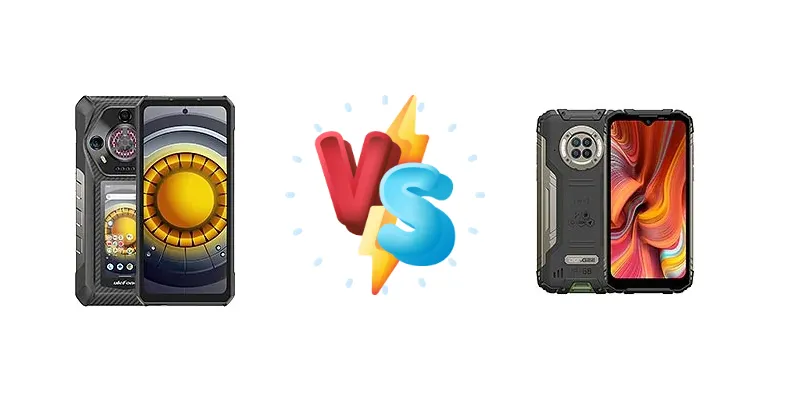
|
🏆 Quick Verdict
For most users, the Ulefone Armor 30 Pro is the superior choice. Its significantly more powerful and efficient Dimensity 7300X chipset, coupled with 66W fast charging, provides a smoother user experience and quicker power-ups compared to the Doogee S96 Pro’s Helio G90 and 24W charging. While the S96 Pro offers wireless charging, the Armor 30 Pro’s overall performance advantage is more impactful.
| PHONES | ||
|---|---|---|
| Phone Names | Ulefone Armor 30 Pro | Doogee S96 Pro |
| Network | ||
|---|---|---|
| 2G bands | GSM 850 / 900 / 1800 / 1900 | GSM 850 / 900 / 1800 / 1900 |
| 3G bands | HSDPA 800 / 850 / 900 / 1700(AWS) / 1900 / 2100 | HSDPA 800 / 850 / 900 / 1700(AWS) / 1900 / 2100 |
| 4G bands | 1, 2, 3, 4, 5, 7, 8, 12, 13, 17, 18, 19, 20, 25, 26, 28, 32, 34, 38, 39, 40, 41, 66, 71 | 1, 2, 3, 4, 5, 7, 8, 12, 13, 17, 18, 19, 20, 25, 26, 28, 38, 40, 66 |
| 5G bands | 1, 2, 3, 5, 7, 8, 20, 25, 28, 38, 40, 41, 66, 71, 77, 78, 79 SA/NSA/Sub6 | - |
| Speed | HSPA, LTE, 5G | HSPA, LTE |
| Technology | GSM / CDMA / HSPA / CDMA2000 / LTE / 5G | GSM / CDMA / HSPA / LTE |
| Launch | ||
|---|---|---|
| Announced | 2025, April 03 | 2020, October 26. Released 2020, November |
| Status | Available. Released 2025, April 03 | Discontinued |
| Body | ||
|---|---|---|
| Dimensions | 181.3 x 84.9 x 21.2 mm (7.14 x 3.34 x 0.83 in) | 167 x 81.4 x 15.5 mm (6.57 x 3.20 x 0.61 in) |
| SIM | Nano-SIM + Nano-SIM | Nano-SIM + Nano-SIM |
| Weight | 509 g (1.12 lb) | 310 g (10.93 oz) |
| Display | ||
|---|---|---|
| Protection | Corning Gorilla Glass 5, Mohs level 4 | Corning Gorilla Glass |
| Resolution | 1080 x 2460 pixels (~387 ppi density) | 720 x 1520 pixels, 19:9 ratio (~270 ppi density) |
| Size | 6.95 inches, 114.7 cm2 (~74.5% screen-to-body ratio) | 6.22 inches, 96.6 cm2 (~71.0% screen-to-body ratio) |
| Type | IPS LCD, 120Hz, 700 nits (peak) | IPS LCD |
| Platform | ||
|---|---|---|
| CPU | Octa-core (4x2.5 GHz Cortex-A78 & 4x2.0 GHz Cortex-A55) | Octa-core (2x2.0 GHz Cortex-A76 & 6x2.0 GHz Cortex-A55) |
| Chipset | Mediatek Dimensity 7300X (4 nm) | Mediatek MT6785 Helio G90 (12 nm) |
| GPU | Mali-G615 MC2 | Mali-G76 MC4 |
| OS | Android 14, planned upgrade to Android 15 | Android 10 |
| Memory | ||
|---|---|---|
| Card slot | microSDXC (dedicated slot) | microSDXC (dedicated slot) |
| Internal | 512GB 16GB RAM | 128GB 8GB RAM |
| Main Camera | ||
|---|---|---|
| Features | Dual-LED flash, HDR, panorama | Quad-LED flash, HDR, panorama |
| Quad | - | 48 MP, f/1.8, (wide), PDAF 8 MP, f/2.2, 130˚, (ultrawide) 20 MP, f/2.8, (night vision), 4 infrared night vision lights 2 MP (macro) |
| Triple | 50 MP, f/2.0, 23mm (wide), 1/1.3", 1.2µm, multi-directional PDAF 64 MP, f/1.8, (night vision), 1/2.0", 0.7µm, 4 infrared lights 50 MP, f/2.2, 16mm, 117˚ (ultrawide), 1/2.76", 0.64µm | - |
| Video | 4K@30fps, 1080p@30fps, gyro-EIS | 1080p |
| Selfie camera | ||
|---|---|---|
| Single | 32 MP, f/2.5, 25mm (wide), 1/2.8", 0.8µm | 16 MP, f/2.0, (wide) |
| Video | 1080p@30fps | 1080p |
| Sound | ||
|---|---|---|
| 35mm jack | Yes | Yes |
| Loudspeaker | Yes, with stereo speakers (118dB) | Yes |
| Comms | ||
|---|---|---|
| Bluetooth | 5.4, A2DP, LE | 5.0, A2DP, LE |
| Infrared port | Yes | - |
| NFC | Yes | Yes |
| Positioning | GPS, GALILEO, GLONASS, QZSS, BDS, NavIC | GPS, GLONASS, BDS, GALILEO |
| Radio | Wireless FM radio, RDS, recording | FM radio |
| USB | USB Type-C 2.0, OTG, accessory connector pins | USB Type-C 2.0, OTG |
| WLAN | Wi-Fi 802.11 a/b/g/n/ac/6e, dual-band | Wi-Fi 802.11 a/b/g/n/ac, dual-band |
| Features | ||
|---|---|---|
| Sensors | Fingerprint (side-mounted), accelerometer, gyro, proximity, compass, barometer | Fingerprint (side-mounted), accelerometer, gyro, proximity, compass |
| Battery | ||
|---|---|---|
| Charging | 66W wired 10W reverse wired | 24W wired 10W wireless |
| Type | Li-Po 12800 mAh | 6350 mAh |
| Misc | ||
|---|---|---|
| Colors | Black | Black, Orange, Green |
| Price | € 459.99 / $ 354.49 / £ 319.99 | About 280 EUR |
| EU LABEL | ||
|---|---|---|
| Battery | 142:00h endurance, 1000 cycles | - |
| Energy | Class A | - |
| Free fall | Class A (270 falls) | - |
| Repairability | Class C | - |
Ulefone Armor 30 Pro
- Significantly faster and more efficient processor (Dimensity 7300X)
- 66W fast charging for quicker power-ups
- Longer battery endurance (142 hours)
- Potentially better camera image processing
- May be more expensive than the Doogee S96 Pro
- Lacks wireless charging
Doogee S96 Pro
- Wireless charging support
- Potentially lower price point
- Rugged design for durability
- Acceptable performance for basic tasks
- Older and less powerful processor (Helio G90)
- Slower charging speeds (24W wired)
- Lower battery endurance
- Less efficient chipset leading to potential throttling
Display Comparison
Neither device's display specifications are provided, so a direct comparison is limited. However, given the Armor 30 Pro's focus on modern hardware, it's reasonable to expect a higher-quality panel with potentially higher peak brightness and a faster refresh rate. The S96 Pro, being an older model, likely utilizes a standard 60Hz LCD. The absence of details like resolution and panel type makes a definitive statement impossible, but the Armor 30 Pro likely offers a more visually appealing experience.
Camera Comparison
Without specific camera sensor details, a detailed comparison is challenging. However, the Armor 30 Pro’s modern chipset likely supports more advanced image signal processing (ISP) capabilities, potentially leading to better dynamic range and low-light performance. The S96 Pro’s older chipset may struggle to keep up with complex image processing algorithms. It's safe to assume both phones will include a standard set of lenses, but the Armor 30 Pro’s ISP will likely extract more detail and clarity from the available hardware.
Performance
The performance gap between these two devices is substantial. The Ulefone Armor 30 Pro’s Mediatek Dimensity 7300X (4nm) is a modern chipset featuring an octa-core configuration with 4x2.5 GHz Cortex-A78 and 4x2.0 GHz Cortex-A55 cores. This contrasts sharply with the Doogee S96 Pro’s older Mediatek MT6785 Helio G90 (12nm) which has 2x2.0 GHz Cortex-A76 and 6x2.0 GHz Cortex-A55 cores. The 4nm process node of the Dimensity 7300X translates to significantly improved power efficiency and thermal management, meaning sustained performance under load will be far superior. The Cortex-A78 cores in the Armor 30 Pro also offer a performance uplift over the A76 cores in the S96 Pro. This difference will be noticeable in everything from app launch speeds to multitasking and gaming.
Battery Life
The Ulefone Armor 30 Pro boasts a remarkable 142-hour endurance rating and supports 66W wired charging, while the Doogee S96 Pro offers 24W wired and 10W wireless charging. While the exact battery capacity isn't specified, the Armor 30 Pro’s endurance suggests a large battery combined with the efficiency of the Dimensity 7300X. The 66W charging will significantly reduce charging times compared to the S96 Pro’s 24W wired charging. The S96 Pro’s 10W wireless charging is a convenience feature, but it’s considerably slower than either of the Armor 30 Pro’s charging options. The Armor 30 Pro also claims 1000 charge cycles, suggesting a longer battery lifespan.
Buying Guide
Buy the Ulefone Armor 30 Pro if you prioritize performance for demanding tasks like gaming or professional applications, and value faster charging speeds for minimal downtime. Buy the Doogee S96 Pro if you prefer the convenience of wireless charging and are primarily focused on basic smartphone functions without needing cutting-edge processing power. The S96 Pro is a more budget-conscious option for those who don't require top-tier performance.