
Ulefone Armor 29 Pro vs. Xiaomi 12 Lite: A Deep Dive into Rugged Power and Refined Design
| Phones Images | |||||
|---|---|---|---|---|---|
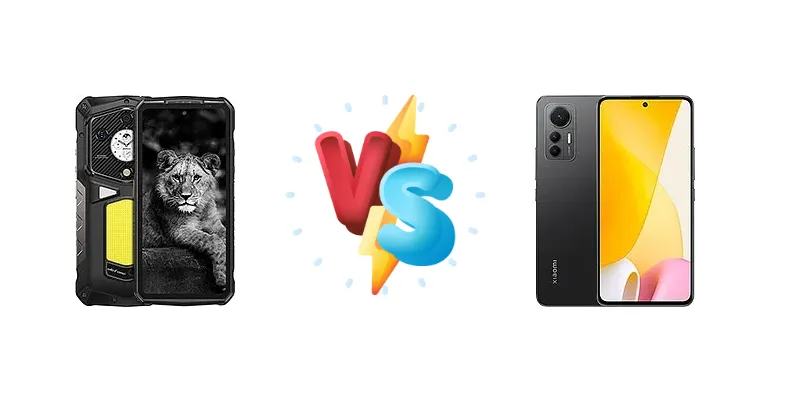
|
🏆 Quick Verdict
For users prioritizing durability and demanding performance, the Ulefone Armor 29 Pro is the clear winner. Its 120W charging and newer Dimensity 7400 chipset offer significant advantages. However, the Xiaomi 12 Lite remains a compelling option for those valuing a lighter design and a more polished software experience.
| PHONES | ||
|---|---|---|
| Phone Names | Ulefone Armor 29 Pro | Xiaomi 12 Lite |
| Network | ||
|---|---|---|
| 2G bands | GSM 850 / 900 / 1800 / 1900 | GSM 850 / 900 / 1800 / 1900 |
| 3G bands | HSDPA 800 / 850 / 900 / 1700(AWS) / 1900 / 2100 | HSDPA 850 / 900 / 1700(AWS) / 1900 / 2100 |
| 4G bands | 1, 2, 3, 4, 5, 7, 8, 12, 13, 17, 18, 19, 20, 25, 26, 28, 32, 34, 38, 39, 40, 41, 66, 71 | 1, 2, 3, 4, 5, 7, 8, 12, 13, 17, 18, 19, 20, 26, 28, 32, 38, 40, 41, 42, 48, 66 |
| 5G bands | 1, 2, 3, 5, 7, 8, 20, 25, 28, 38, 40, 41, 66, 71, 77, 78, 79 SA/NSA/Sub6 | 1, 3, 5, 7, 8, 20, 28, 38, 40, 41, 66, 77, 78 SA/NSA |
| Speed | HSPA, LTE, 5G | HSPA, LTE, 5G |
| Technology | GSM / CDMA / HSPA / CDMA2000 / LTE / 5G | GSM / HSPA / LTE / 5G |
| Launch | ||
|---|---|---|
| Announced | 2025, August 14 | 2022, July 09 |
| Status | Available. Released 2025, September 15 | Available. Released 2022, July 11 |
| Body | ||
|---|---|---|
| Build | - | Glass front (Gorilla Glass 5), glass back, plastic frame |
| Dimensions | 177.4 x 85.6 x 33.8 mm (6.98 x 3.37 x 1.33 in) | 159.3 x 73.7 x 7.3 mm (6.27 x 2.90 x 0.29 in) |
| SIM | Nano-SIM + Nano-SIM | Nano-SIM + Nano-SIM |
| Weight | 688 g (1.52 lb) | 173 g (6.10 oz) |
| Display | ||
|---|---|---|
| Protection | Corning Gorilla Glass 3 | Corning Gorilla Glass 5 |
| Resolution | 1080 x 2400 pixels, 20:9 ratio (~395 ppi density) | 1080 x 2400 pixels, 20:9 ratio (~402 ppi density) |
| Size | 6.67 inches, 107.4 cm2 (~70.7% screen-to-body ratio) | 6.55 inches, 103.6 cm2 (~88.2% screen-to-body ratio) |
| Type | AMOLED, 1B colors, 120Hz, 2200 nits (peak) | AMOLED, 68B colors, 120Hz, Dolby Vision, HDR10+, 950 nits (peak) |
| Platform | ||
|---|---|---|
| CPU | Octa-core (4x2.6 GHz Cortex-A78 & 4x2.0 GHz Cortex-A55) | Octa-core (1x2.4 GHz Cortex-A78 & 3x2.2 GHz Cortex-A78 & 4x1.9 GHz Cortex-A55) |
| Chipset | Mediatek Dimensity 7400 (4 nm) | Qualcomm SM7325 Snapdragon 778G 5G (6 nm) |
| GPU | Mali-G615 MC2 | Adreno 642L |
| OS | Android 15 | Android 12, upgradable to Android 14, HyperOS |
| Memory | ||
|---|---|---|
| Card slot | microSDXC (dedicated slot) | No |
| Internal | 512GB 16GB RAM | 128GB 6GB RAM, 128GB 8GB RAM, 256GB 8GB RAM |
| - | UFS 2.2 | |
| Main Camera | ||
|---|---|---|
| Features | Quad-LED flash, HDR, panorama | Dual-LED dual-tone flash, HDR, panorama |
| Single | - | 32 MP, f/2.5, (wide), 1/2.8", 0.8µm, AF |
| Triple | 50 MP, f/2.0, 23mm (wide), 1/1.31", 1.2µm, PDAF 64 MP, f/1.8, 26mm (night vision), 1/2.0", 0.7µm, 4 infrared lights 50 MP, f/2.2, 16mm, 117˚ (ultrawide), 1/2.76", 0.64µm | 108 MP, f/1.9, 26mm (wide), 1/1.52", 0.7µm, PDAF 8 MP, f/2.2, 120˚ (ultrawide), 1/4.0", 1.12µm 2 MP (macro) |
| Video | 4K@30fps, 1080p@30/60fps, gyro-EIS | 4K@30fps, 1080p@30/60/120fps; gyro-EIS |
| Selfie camera | ||
|---|---|---|
| Features | - | HDR, panorama |
| Single | 50 MP, f/2.5, 25mm (wide), 1/2.76", 0.64µm | 32 MP, f/2.5, (wide), 1/2.8", 0.8µm, AF |
| Video | 1080p@30fps | 1080p@30/60fps, 720p@120fps |
| Sound | ||
|---|---|---|
| 3.5mm jack | - | No |
| 35mm jack | Yes | No |
| Loudspeaker | Yes | Yes, with dual speakers |
| - | 24-bit/192kHz audio | |
| Comms | ||
|---|---|---|
| Bluetooth | 5.4, A2DP, LE | 5.2, A2DP, LE, aptX HD, aptX Adaptive |
| Infrared port | Yes | Yes |
| NFC | Yes | Yes (market/region dependent) |
| Positioning | GPS, GALILEO, GLONASS, QZSS, BDS, NavIC | GPS (L1), GLONASS (G1), BDS (B1I+B1c), GALILEO (E1), QZSS (L1) |
| Radio | Wireless FM radio, RDS, recording | No |
| USB | USB Type-C 2.0, OTG, accessory connector pins | USB Type-C 2.0, OTG |
| WLAN | Wi-Fi 802.11 a/b/g/n/ac/6e, tri-band | Wi-Fi 802.11 a/b/g/n/ac/6, dual-band, Wi-Fi Direct |
| Features | ||
|---|---|---|
| Sensors | Fingerprint (side-mounted), accelerometer, gyro, proximity, compass, barometer | Fingerprint (under display, optical), accelerometer, gyro, compass |
| - | Virtual proximity sensing | |
| Battery | ||
|---|---|---|
| Charging | 120W wired, PPS, 20% in 10 min 10W reverse wired | 67W wired, PD3.0, QC4, 50% in 13 min |
| Type | Li-Ion 21200 mAh | Li-Po 4300 mAh |
| Misc | ||
|---|---|---|
| Colors | Black | Black, Lite Green, Lite Pink |
| Models | - | 2203129G |
| Price | € 479.99 / $ 459.99 / £ 369.99 | € 119.80 / $ 269.00 / £ 121.15 |
| SAR | - | 1.09 W/kg (head) 0.73 W/kg (body) |
| SAR EU | - | 0.60 W/kg (head) 1.00 W/kg (body) |
| Tests | ||
|---|---|---|
| Battery life | - | Endurance rating 100h |
| Camera | - | Photo / Video |
| Display | - | Contrast ratio: Infinite (nominal) |
| Loudspeaker | - | -25.2 LUFS (Very good) |
| Performance | - | AnTuTu: 528905 (v9) GeekBench: 2943 (v5.1) GFXBench: 29fps (ES 3.1 onscreen) |
Ulefone Armor 29 Pro
- Significantly faster 120W charging
- More powerful Dimensity 7400 chipset
- Ruggedized design for enhanced durability
- Likely bulkier and heavier design
- Display quality potentially lower than Xiaomi 12 Lite
Xiaomi 12 Lite
- Sleek and lightweight design
- Bright and vibrant AMOLED display
- Refined software experience
- Slower 67W charging
- Less powerful Snapdragon 778G chipset
- Less durable build quality
Display Comparison
The Xiaomi 12 Lite boasts a measured peak brightness of 824 nits, providing excellent visibility in most conditions. While the Ulefone Armor 29 Pro’s display specs are not provided, rugged phones often prioritize durability over display quality. The Xiaomi’s ‘Infinite’ contrast ratio (nominal) suggests a typical AMOLED panel, offering deep blacks and vibrant colors. The Armor 29 Pro, being a rugged device, likely features a more utilitarian display focused on readability under direct sunlight, potentially sacrificing some color accuracy for robustness.
Camera Comparison
Both devices feature photo and video capabilities, but detailed camera specifications are limited for the Ulefone. The Xiaomi 12 Lite likely benefits from Qualcomm’s image signal processor (ISP) for optimized image processing. Without knowing the sensor size or aperture of the Ulefone’s camera, it’s difficult to make a direct comparison. However, rugged phones often prioritize practicality over camera excellence. The Xiaomi 12 Lite is likely to deliver more consistently high-quality photos and videos in a wider range of conditions.
Performance
The Ulefone Armor 29 Pro’s Mediatek Dimensity 7400 (4nm) chipset represents a significant generational leap over the Xiaomi 12 Lite’s Qualcomm Snapdragon 778G 5G (6nm). The 4nm process node inherently offers better power efficiency and thermal management, translating to sustained performance under load. While the Snapdragon 778G’s CPU configuration includes a single high-performance Cortex-A78 core at 2.4 GHz, the Dimensity 7400 utilizes four Cortex-A78 cores clocked at 2.6 GHz, suggesting superior multi-core performance. This difference will be most noticeable in demanding applications like video editing and gaming. The Armor 29 Pro is likely to exhibit less throttling during extended gaming sessions.
Battery Life
Both phones achieve an endurance rating of 100 hours, indicating similar overall battery life despite potentially different battery capacities. However, the Ulefone Armor 29 Pro’s 120W wired charging with PPS support is a game-changer. Achieving 20% charge in just 10 minutes is significantly faster than the Xiaomi 12 Lite’s 67W charging, which takes 13 minutes to reach 50%. The Armor 29 Pro also offers 10W reverse wired charging, a feature absent in the Xiaomi 12 Lite, allowing it to top up other devices.
Buying Guide
Buy the Ulefone Armor 29 Pro if you need a phone that can withstand harsh conditions, require fast charging, and prioritize raw processing power for demanding tasks. Buy the Xiaomi 12 Lite if you prefer a lightweight, stylish device with a vibrant display and a more refined software experience, and aren't as concerned with extreme durability or peak performance.