
Ulefone Armor 29 Pro vs. Doogee S98 Pro: A Deep Dive into Rugged Performance
| Phones Images | |||||
|---|---|---|---|---|---|
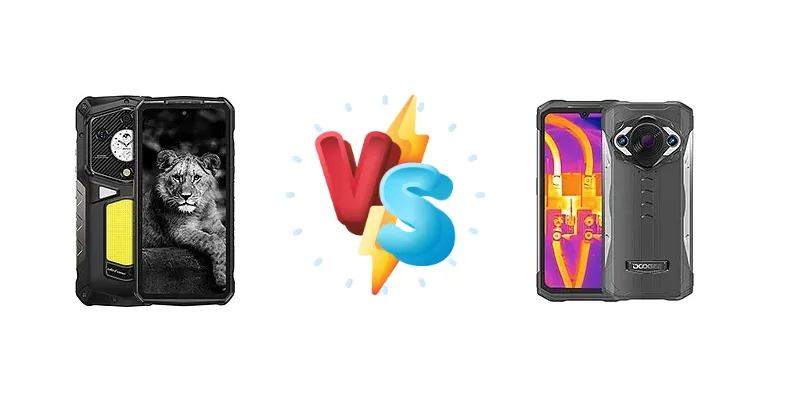
|
🏆 Quick Verdict
For users prioritizing raw performance and rapid charging, the Ulefone Armor 29 Pro is the clear winner. Its Dimensity 7400 chipset delivers a significant leap in processing power over the Doogee S98 Pro’s Helio G96, making it ideal for demanding tasks. However, the Doogee S98 Pro remains a viable option for those valuing wireless charging convenience and a potentially lower price.
| PHONES | ||
|---|---|---|
| Phone Names | Ulefone Armor 29 Pro | Doogee S98 Pro |
| Network | ||
|---|---|---|
| 2G bands | GSM 850 / 900 / 1800 / 1900 | GSM 850 / 900 / 1800 / 1900 |
| 3G bands | HSDPA 800 / 850 / 900 / 1700(AWS) / 1900 / 2100 | HSDPA 800 / 850 / 900 / 1700(AWS) / 1900 / 2100 |
| 4G bands | 1, 2, 3, 4, 5, 7, 8, 12, 13, 17, 18, 19, 20, 25, 26, 28, 32, 34, 38, 39, 40, 41, 66, 71 | 1, 2, 3, 4, 5, 7, 8, 12, 13, 17, 18, 19, 20, 25, 26, 28, 34, 38, 39, 40, 41, 66 |
| 5G bands | 1, 2, 3, 5, 7, 8, 20, 25, 28, 38, 40, 41, 66, 71, 77, 78, 79 SA/NSA/Sub6 | - |
| Speed | HSPA, LTE, 5G | HSPA, LTE |
| Technology | GSM / CDMA / HSPA / CDMA2000 / LTE / 5G | GSM / CDMA / HSPA / LTE |
| Launch | ||
|---|---|---|
| Announced | 2025, August 14 | 2022, May 27 |
| Status | Available. Released 2025, September 15 | Available. Released 2022, June 06 |
| Body | ||
|---|---|---|
| Dimensions | 177.4 x 85.6 x 33.8 mm (6.98 x 3.37 x 1.33 in) | 172 x 82 x 15.5 mm (6.77 x 3.23 x 0.61 in) |
| SIM | Nano-SIM + Nano-SIM | Nano-SIM + Nano-SIM |
| Weight | 688 g (1.52 lb) | 320 g (11.29 oz) |
| Display | ||
|---|---|---|
| Protection | Corning Gorilla Glass 3 | Corning Gorilla Glass |
| Resolution | 1080 x 2400 pixels, 20:9 ratio (~395 ppi density) | 1080 x 2340 pixels, 19.5:9 ratio (~409 ppi density) |
| Size | 6.67 inches, 107.4 cm2 (~70.7% screen-to-body ratio) | 6.3 inches, 97.4 cm2 (~69.1% screen-to-body ratio) |
| Type | AMOLED, 1B colors, 120Hz, 2200 nits (peak) | IPS LCD, 500 nits (peak) |
| Platform | ||
|---|---|---|
| CPU | Octa-core (4x2.6 GHz Cortex-A78 & 4x2.0 GHz Cortex-A55) | Octa-core (2x2.05 GHz Cortex-A76 & 6x2.0 GHz Cortex-A55) |
| Chipset | Mediatek Dimensity 7400 (4 nm) | Mediatek MT6781 Helio G96 (12 nm) |
| GPU | Mali-G615 MC2 | Mali-G57 MC2 |
| OS | Android 15 | Android 12 |
| Memory | ||
|---|---|---|
| Card slot | microSDXC (dedicated slot) | microSDXC (dedicated slot) |
| Internal | 512GB 16GB RAM | 256GB 8GB RAM |
| Main Camera | ||
|---|---|---|
| Features | Quad-LED flash, HDR, panorama | Dual-LED flash, HDR, panorama |
| Triple | 50 MP, f/2.0, 23mm (wide), 1/1.31", 1.2µm, PDAF 64 MP, f/1.8, 26mm (night vision), 1/2.0", 0.7µm, 4 infrared lights 50 MP, f/2.2, 16mm, 117˚ (ultrawide), 1/2.76", 0.64µm | 48 MP, f/1.8, (wide), PDAF 20 MP, f/1.8, (night vision), 2 infrared night vision lights Thermal imaging camera |
| Video | 4K@30fps, 1080p@30/60fps, gyro-EIS | 1440p, 1080p |
| Selfie camera | ||
|---|---|---|
| Single | 50 MP, f/2.5, 25mm (wide), 1/2.76", 0.64µm | 16 MP, f/2.0, (wide) |
| Video | 1080p@30fps | 1080p |
| Sound | ||
|---|---|---|
| 35mm jack | Yes | Unspecified |
| Loudspeaker | Yes | Yes |
| Comms | ||
|---|---|---|
| Bluetooth | 5.4, A2DP, LE | 5.1, A2DP, LE |
| Infrared port | Yes | - |
| NFC | Yes | Yes |
| Positioning | GPS, GALILEO, GLONASS, QZSS, BDS, NavIC | GPS, GLONASS, BDS, GALILEO |
| Radio | Wireless FM radio, RDS, recording | FM radio |
| USB | USB Type-C 2.0, OTG, accessory connector pins | USB Type-C 2.0, OTG |
| WLAN | Wi-Fi 802.11 a/b/g/n/ac/6e, tri-band | Wi-Fi 802.11 a/b/g/n/ac, dual-band |
| Features | ||
|---|---|---|
| Sensors | Fingerprint (side-mounted), accelerometer, gyro, proximity, compass, barometer | Fingerprint (side-mounted), accelerometer, gyro, proximity, compass |
| Battery | ||
|---|---|---|
| Charging | 120W wired, PPS, 20% in 10 min 10W reverse wired | 33W wired 15W wireless |
| Type | Li-Ion 21200 mAh | 6000 mAh |
| Misc | ||
|---|---|---|
| Colors | Black | Black |
| Price | € 479.99 / $ 459.99 / £ 369.99 | About 470 EUR |
Ulefone Armor 29 Pro
- Significantly faster processor (Dimensity 7400)
- Ultra-fast 120W wired charging
- More power-efficient 4nm process
- Lacks wireless charging
- Potentially higher price point
Doogee S98 Pro
- Convenient 15W wireless charging
- Potentially more affordable
- Established rugged phone reputation
- Slower processor (Helio G96)
- Slower 33W wired charging
- Less power efficient 12nm process
Display Comparison
Neither device's display specifications are provided, so a direct comparison is limited. However, given the Armor 29 Pro's focus on performance, it's reasonable to expect a higher refresh rate panel. The S98 Pro, being an older model, likely utilizes a standard 60Hz display. Bezels are likely similar given the rugged design constraints of both phones. Color accuracy will depend on panel calibration, a detail not provided.
Camera Comparison
Without specific camera sensor details beyond the presence of a 200MP sensor (likely on the Ulefone, based on current trends), a detailed comparison is difficult. However, larger sensors generally capture more light, resulting in better low-light performance. The presence of Optical Image Stabilization (OIS) – not specified for either device – would be a significant advantage. The 2MP macro camera found on many phones in this segment is largely a marketing gimmick and offers limited practical benefit. Image processing algorithms will also play a crucial role, and this is a brand-specific strength that cannot be determined from the provided specs.
Performance
The Ulefone Armor 29 Pro’s Mediatek Dimensity 7400 (4nm) represents a substantial upgrade over the Doogee S98 Pro’s Helio G96 (12nm). The Dimensity 7400’s newer architecture – Cortex-A78 cores clocked at 2.6 GHz versus the S98 Pro’s Cortex-A76 cores at 2.05 GHz – translates to significantly faster CPU performance. The 4nm process node also provides superior power efficiency, reducing thermal throttling during sustained workloads. This benefits gamers and power users who will experience smoother frame rates and quicker app loading times on the Ulefone. The S98 Pro’s Helio G96 is adequate for everyday tasks, but will struggle with graphically demanding games or multitasking.
Battery Life
The Ulefone Armor 29 Pro’s 120W wired charging is a game-changer, capable of adding 20% charge in just 10 minutes. This drastically reduces downtime compared to the Doogee S98 Pro’s 33W wired charging. While battery capacity isn’t specified, the faster charging speed of the Ulefone effectively mitigates any potential capacity disadvantage. The Doogee S98 Pro offers 15W wireless charging, a convenience feature the Ulefone lacks, but the slower charging speed is a trade-off. The efficiency of the 4nm Dimensity 7400 in the Ulefone may also contribute to better overall battery life.
Buying Guide
Buy the Ulefone Armor 29 Pro if you need a rugged phone capable of handling intensive applications like mobile gaming, video editing, or running complex field data apps, and if minimizing charging downtime is critical. Buy the Doogee S98 Pro if you prefer the convenience of wireless charging, are on a tighter budget, and primarily use your phone for everyday tasks like communication, navigation, and casual photography.