
Ulefone Armor 29 Pro vs. Blackview BV9200: A Deep Dive into Rugged Performance
| Phones Images | |||||
|---|---|---|---|---|---|
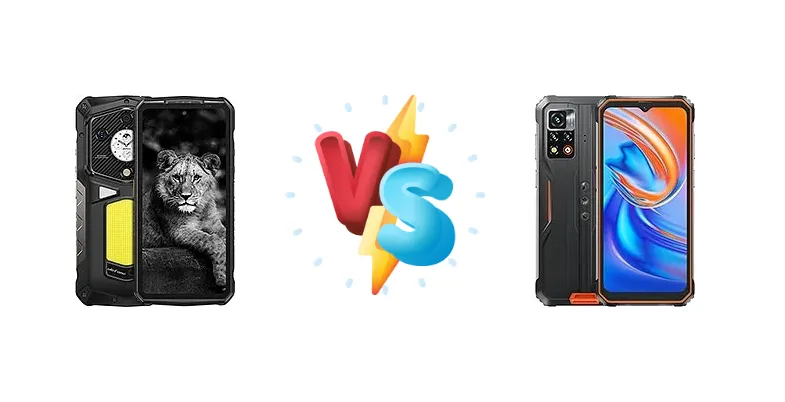
|
🏆 Quick Verdict
For users prioritizing raw performance and rapid charging, the Ulefone Armor 29 Pro is the clear winner. Its Dimensity 7400 chipset offers a significant leap in processing power over the Blackview BV9200’s Helio G96, making it ideal for gaming and demanding applications. However, the BV9200’s wireless charging and potentially more refined software experience make it a viable option for those valuing convenience.
| PHONES | ||
|---|---|---|
| Phone Names | Ulefone Armor 29 Pro | Blackview BV9200 |
| Network | ||
|---|---|---|
| 2G bands | GSM 850 / 900 / 1800 / 1900 | GSM 850 / 900 / 1800 / 1900 |
| 3G bands | HSDPA 800 / 850 / 900 / 1700(AWS) / 1900 / 2100 | HSDPA 850 / 900 / 1700(AWS) / 1900 / 2100 |
| 4G bands | 1, 2, 3, 4, 5, 7, 8, 12, 13, 17, 18, 19, 20, 25, 26, 28, 32, 34, 38, 39, 40, 41, 66, 71 | 1, 2, 3, 4, 5, 7, 8, 12, 13, 17, 18, 19, 20, 25, 26, 28, 34, 38, 39, 40, 41, 66 |
| 5G bands | 1, 2, 3, 5, 7, 8, 20, 25, 28, 38, 40, 41, 66, 71, 77, 78, 79 SA/NSA/Sub6 | - |
| Speed | HSPA, LTE, 5G | HSPA, LTE |
| Technology | GSM / CDMA / HSPA / CDMA2000 / LTE / 5G | GSM / CDMA / HSPA / LTE |
| - | CDMA 800 / 1900 | |
| Launch | ||
|---|---|---|
| Announced | 2025, August 14 | 2022, December 28 |
| Status | Available. Released 2025, September 15 | Available. Released 2023, January 09 |
| Body | ||
|---|---|---|
| Dimensions | 177.4 x 85.6 x 33.8 mm (6.98 x 3.37 x 1.33 in) | 174.5 x 81.8 x 13.6 mm (6.87 x 3.22 x 0.54 in) |
| SIM | Nano-SIM + Nano-SIM | Nano-SIM + Nano-SIM |
| Weight | 688 g (1.52 lb) | 310 g (10.93 oz) |
| - | IP68/IP69K dust/water resistant (up to 1.5m for 30 min) Drop-to-concrete resistance from up to 1.8m MIL-STD-810H compliant | |
| Display | ||
|---|---|---|
| Protection | Corning Gorilla Glass 3 | Corning Gorilla Glass 5 |
| Resolution | 1080 x 2400 pixels, 20:9 ratio (~395 ppi density) | 1080 x 2408 pixels, 20:9 ratio (~400 ppi density) |
| Size | 6.67 inches, 107.4 cm2 (~70.7% screen-to-body ratio) | 6.6 inches, 104.9 cm2 (~73.5% screen-to-body ratio) |
| Type | AMOLED, 1B colors, 120Hz, 2200 nits (peak) | IPS LCD, 120Hz |
| Platform | ||
|---|---|---|
| CPU | Octa-core (4x2.6 GHz Cortex-A78 & 4x2.0 GHz Cortex-A55) | Octa-core (2x2.05 GHz Cortex-A76 & 6x2.0 GHz Cortex-A55) |
| Chipset | Mediatek Dimensity 7400 (4 nm) | Mediatek MT6781 Helio G96 (12 nm) |
| GPU | Mali-G615 MC2 | Mali-G52 MC2 |
| OS | Android 15 | Android 12, Doke-OS 3.1 |
| Memory | ||
|---|---|---|
| Card slot | microSDXC (dedicated slot) | microSDXC (dedicated slot) |
| Internal | 512GB 16GB RAM | 256GB 8GB RAM |
| - | UFS 2.1 | |
| Main Camera | ||
|---|---|---|
| Features | Quad-LED flash, HDR, panorama | LED flash, HDR, panorama |
| Single | - | 16 MP, (wide), 1/3", 1.0µm |
| Triple | 50 MP, f/2.0, 23mm (wide), 1/1.31", 1.2µm, PDAF 64 MP, f/1.8, 26mm (night vision), 1/2.0", 0.7µm, 4 infrared lights 50 MP, f/2.2, 16mm, 117˚ (ultrawide), 1/2.76", 0.64µm | 50 MP, f/1.8, (wide), 1/2.76", 0.64µm, PDAF 8 MP, f/1.8, 120˚, (ultrawide), AF Auxiliary lens |
| Video | 4K@30fps, 1080p@30/60fps, gyro-EIS | 1440p@30fps, 1080p@30fps |
| Selfie camera | ||
|---|---|---|
| Single | 50 MP, f/2.5, 25mm (wide), 1/2.76", 0.64µm | 16 MP, f/2.0, (wide), 1/3", 1.0µm |
| Video | 1080p@30fps | 1080p |
| Sound | ||
|---|---|---|
| 3.5mm jack | - | No |
| 35mm jack | Yes | No |
| Loudspeaker | Yes | Yes, with dual speakers |
| Comms | ||
|---|---|---|
| Bluetooth | 5.4, A2DP, LE | 5.2, A2DP, LE |
| Infrared port | Yes | - |
| NFC | Yes | Yes |
| Positioning | GPS, GALILEO, GLONASS, QZSS, BDS, NavIC | GPS, GLONASS, GALILEO, BDS |
| Radio | Wireless FM radio, RDS, recording | FM radio |
| USB | USB Type-C 2.0, OTG, accessory connector pins | USB Type-C, OTG |
| WLAN | Wi-Fi 802.11 a/b/g/n/ac/6e, tri-band | Wi-Fi 802.11 a/b/g/n/ac, dual-band |
| Features | ||
|---|---|---|
| Sensors | Fingerprint (side-mounted), accelerometer, gyro, proximity, compass, barometer | Fingerprint (side-mounted), accelerometer, gyro, proximity, compass, barometer |
| Battery | ||
|---|---|---|
| Charging | 120W wired, PPS, 20% in 10 min 10W reverse wired | 66W wired 30W wireless |
| Type | Li-Ion 21200 mAh | 5000 mAh |
| Misc | ||
|---|---|---|
| Colors | Black | Black, Orange, Green |
| Price | € 479.99 / $ 459.99 / £ 369.99 | About 200 EUR |
Ulefone Armor 29 Pro
- Significantly faster 120W charging
- More powerful Dimensity 7400 chipset
- Potentially better thermal management due to 4nm process
- Display specifications currently unknown
- May be more expensive than the BV9200
Blackview BV9200
- Convenient 30W wireless charging
- Measured display brightness and contrast ratio available
- Potentially more refined software experience
- Slower Helio G96 chipset
- Slower 66W wired charging
- Less efficient 12nm process
Display Comparison
The Blackview BV9200 provides a measured peak brightness of 481 nits and a 1423:1 contrast ratio, offering a reasonably viewable experience. However, the Ulefone Armor 29 Pro’s display specifications are currently unavailable, making a direct comparison difficult. Given Ulefone’s recent focus on display quality, it’s reasonable to expect a comparable or superior panel. The BV9200’s contrast ratio suggests a standard IPS LCD, while the Armor 29 Pro may incorporate newer technologies for improved color accuracy and viewing angles. The lack of refresh rate information for both devices is a notable omission.
Camera Comparison
Without detailed camera specifications for either device beyond the main sensor, a comprehensive comparison is limited. However, the rugged phone market often prioritizes durability over camera innovation. Both devices likely feature similar image processing pipelines geared towards outdoor photography. The absence of information regarding sensor size, OIS, and lens apertures makes it difficult to assess image quality. It’s safe to assume that both phones will perform adequately in good lighting conditions, but low-light performance will likely be a weak point. The inclusion of a 2MP macro camera on either device is likely a marketing gimmick with limited practical value.
Performance
The Ulefone Armor 29 Pro’s Mediatek Dimensity 7400 (4nm) represents a substantial upgrade over the Blackview BV9200’s Helio G96 (12nm). The Dimensity 7400’s Cortex-A78 cores, clocked at 2.6 GHz, deliver significantly higher single-core performance than the BV9200’s 2.05 GHz Cortex-A76 cores. The 4nm process node also translates to improved power efficiency and reduced thermal throttling, crucial for sustained performance. The BV9200’s Helio G96 is a capable mid-range chip, but it will struggle with demanding games and multitasking compared to the Armor 29 Pro. The Armor 29 Pro’s architecture is designed for modern workloads, offering a smoother and more responsive user experience.
Battery Life
The Ulefone Armor 29 Pro’s 120W wired charging is a game-changer, promising a 20% charge in just 10 minutes. This is significantly faster than the Blackview BV9200’s 66W wired charging. While the BV9200 compensates with 30W wireless charging, the Armor 29 Pro’s speed is unmatched for those prioritizing quick top-ups. Battery capacity is not specified for either device, but the faster charging of the Armor 29 Pro mitigates the impact of a potentially smaller battery. The Armor 29 Pro also offers 10W reverse wired charging, allowing it to charge other devices, a feature absent on the BV9200.
Buying Guide
Buy the Ulefone Armor 29 Pro if you need uncompromising performance for mobile gaming, video editing, or running resource-intensive applications, and if minimizing charging downtime is critical. Buy the Blackview BV9200 if you prioritize wireless charging convenience, a potentially more polished software experience, and are willing to trade some processing power for a more balanced feature set. The BV9200 is better suited for everyday tasks and moderate usage.