
Ulefone Armor 28 Ultra Thermal vs Cubot KingKong Star 2: A Rugged Flagship Face-Off
| Phones Images | |||||
|---|---|---|---|---|---|
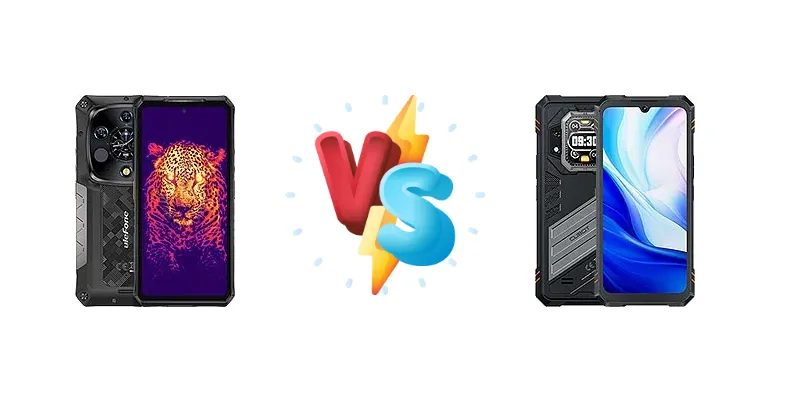
|
🏆 Quick Verdict
For users prioritizing raw power and cutting-edge technology, the Ulefone Armor 28 Ultra Thermal is the clear winner. Its Dimensity 9300+ chipset delivers significantly faster processing speeds. However, the Cubot KingKong Star 2 is a compelling choice for those who value exceptional battery life and long-term reliability above all else.
| PHONES | ||
|---|---|---|
| Phone Names | Ulefone Armor 28 Ultra Thermal | Cubot KingKong Star 2 |
| Network | ||
|---|---|---|
| 2G bands | GSM 850 / 900 / 1800 / 1900 | GSM 850 / 900 / 1800 / 1900 |
| 3G bands | HSDPA 800 / 850 / 900 / 1700(AWS) / 1900 / 2100 | HSDPA 800 / 850 / 900 / 1700(AWS) / 1900 / 2100 |
| 4G bands | 1, 2, 3, 4, 5, 7, 8, 12, 13, 17, 18, 19, 20, 25, 26, 28, 34, 38, 39, 40, 41, 66, 71 | 1, 2, 3, 4, 5, 7, 8, 12, 13, 17, 18, 19, 20, 25, 26, 28, 34, 38, 39, 40, 41, 66, 71 |
| 5G bands | 1, 2, 3, 5, 7, 8, 20, 25, 28, 38, 40, 41, 66, 71, 77, 78, 79 SA/NSA/Sub6 | 1, 2, 3, 5, 7, 8, , 20, 25, 28, 38, 40, 41, 66, 77, 78 SA/NSA |
| Speed | HSPA, LTE, 5G | HSPA, LTE, 5G |
| Technology | GSM / CDMA / HSPA / CDMA2000 / LTE / 5G | GSM / HSPA / LTE / 5G |
| Launch | ||
|---|---|---|
| Announced | 2024, September 03 | 2024, September 30 |
| Status | Available. Released 2025, March 17 | Available. Released 2024, October |
| Body | ||
|---|---|---|
| Dimensions | 174.2 x 83.6 x 19.4 mm (6.86 x 3.29 x 0.76 in) | 177.7 x 81.8 x 13.5 mm (7.00 x 3.22 x 0.53 in) |
| SIM | Nano-SIM + Nano-SIM | Nano-SIM + Nano-SIM |
| Weight | 450 g (0.99 lb) | 305 g (10.76 oz) |
| Display | ||
|---|---|---|
| Protection | Corning Gorilla Glass Victus | Corning Gorilla Glass, Mohs level 6 |
| Resolution | 1080 x 2460 pixels (~395 ppi density) | 1080 x 2400 pixels, 20:9 ratio (~392 ppi density) |
| Size | 6.67 inches, 110.0 cm2 (~75.5% screen-to-body ratio) | 6.72 inches, 109.0 cm2 (~75.0% screen-to-body ratio) |
| Type | AMOLED, 1B colors, 120Hz, 900 nits (HBM), 2200 nits (peak) | IPS LCD, 144Hz, 1500 nits (peak) |
| Platform | ||
|---|---|---|
| CPU | Octa-core (1x3.25 GHz Cortex-X4 & 3x2.85 GHz Cortex-X4 & 4x2.0 GHz Cortex-A720) | Octa-core (1x3.1 GHz Cortex-A78 & 3x3.0 GHz Cortex-A78 & 4x2.0 GHz Cortex-A55) |
| Chipset | Mediatek Dimensity 9300+ (4 nm) | Mediatek Dimensity 8200 (4 nm) |
| GPU | Immortalis-G720 MC12 | Mali-G610 MC6 |
| OS | Android 15 | Android 14 |
| Memory | ||
|---|---|---|
| Card slot | microSDXC (dedicated slot) | microSDXC (uses shared SIM slot) |
| Internal | 1TB 16GB RAM | 256GB 12GB RAM |
| Main Camera | ||
|---|---|---|
| Dual | - | 100 MP, (wide), PDAF 5 MP (macro), AF |
| Features | Quad-LED flash, HDR, panorama | LED flash |
| Quad | 50 MP, f/1.9, (wide), 1.0"-type, 1.6µm, dual pixel PDAF 64 MP, f/1.8, (night vision), 1/2", 0.7µm, 4 infrared lights 50 MP, f/2.2, 117˚ (ultrawide), 1/2.76", 0.64µm Thermal camera by ThermoVue T2, 640x512 px | - |
| Video | 8K@30fps, 4K@30/60fps, 1080p@30/60fps, gyro-EIS | Yes |
| Selfie camera | ||
|---|---|---|
| Single | 50 MP, f/2.5, (wide), 1/2.76", 0.64µm | 32 MP |
| Video | 1080p@30fps | Yes |
| Sound | ||
|---|---|---|
| 35mm jack | Yes | No |
| Loudspeaker | Yes | Yes |
| Comms | ||
|---|---|---|
| Bluetooth | 5.4, A2DP, LE | 5.3, A2DP, LE |
| Infrared port | Yes | - |
| NFC | Yes | Yes |
| Positioning | GPS, GALILEO, GLONASS, QZSS, BDS, NavIC | GPS (L1+L5), GALILEO, GLONASS, BDS |
| Radio | Wireless FM radio, RDS, recording | Unspecified |
| USB | USB Type-C 3.2 Gen2, Display Port 1.4, OTG, accessory connector pins | USB Type-C, OTG |
| WLAN | Wi-Fi 802.11 a/b/g/n/ac/6/7, tri-band | Wi-Fi 802.11 a/b/g/n/ac/6, dual-band |
| Features | ||
|---|---|---|
| Sensors | Fingerprint (side-mounted), accelerometer, gyro, proximity, compass, barometer | Fingerprint (side-mounted), accelerometer, gyro, proximity, compass |
| Battery | ||
|---|---|---|
| Charging | 120W wired, PPS, 40% in 10 min 50W wireless, 35% in 30 min 10W reverse wired Reverse wireless | 33W wired |
| Type | Li-Ion 10600 mAh | 5100 mAh |
| Misc | ||
|---|---|---|
| Colors | Black | Black |
| Price | $ 899.80 | About 250 EUR |
| EU LABEL | ||
|---|---|---|
| Battery | - | 43:41h endurance, 900 cycles |
| Energy | - | Class C |
| Free fall | - | Class A (270 falls) |
| Repairability | - | Class C |
Ulefone Armor 28 Ultra Thermal
- Significantly faster processor with Dimensity 9300+
- Ultra-fast 120W wired and 50W wireless charging
- Potential for superior camera processing due to chipset power
- Battery life likely shorter than Cubot KingKong Star 2
- Higher price point expected due to flagship components
Cubot KingKong Star 2
- Exceptional battery life (43:41 hours)
- High battery cycle count (900 cycles) for long-term reliability
- More affordable price point
- Slower processor compared to Dimensity 9300+
- Slower 33W wired charging
Display Comparison
Display specifications are absent from the provided data, but given the 'Ultra' branding of the Ulefone, we can anticipate a higher resolution and potentially brighter panel than the Cubot. The Ulefone likely targets a smoother experience with a higher refresh rate. The Cubot, focusing on efficiency, may prioritize battery life over display extravagance. Bezels and color accuracy will be key differentiators, but require further testing.
Camera Comparison
Camera details are missing, but the rugged phone segment often prioritizes durability over cutting-edge camera tech. We can assume both devices will feature multiple lenses, but sensor size and image processing algorithms will be crucial. The Ulefone, positioned as the 'Ultra' model, may incorporate a larger main sensor for better low-light performance. The absence of information prevents a detailed comparison, but the Ulefone’s higher processing power could enable more sophisticated computational photography features.
Performance
The Ulefone Armor 28 Ultra Thermal’s Dimensity 9300+ is the star here. Built on a 4nm process, it features a unique CPU configuration – 1x3.25 GHz Cortex-X4, 3x2.85 GHz Cortex-X4, and 4x2.0 GHz Cortex-A720 – designed for peak performance. This contrasts with the Cubot KingKong Star 2’s Dimensity 8200 (also 4nm) with its 1x3.1 GHz Cortex-A78, 3x3.0 GHz Cortex-A78, and 4x2.0 GHz Cortex-A55. The Cortex-X4 cores in the Ulefone represent a significant architectural leap, offering substantially improved single-core performance. While both chips are 4nm, the Ulefone’s architecture will translate to faster app loading, smoother multitasking, and superior gaming performance. The Cubot’s Dimensity 8200 remains a capable performer, but it’s a generation behind.
Battery Life
The Cubot KingKong Star 2’s 43:41 hour endurance and 900 charge cycles are its strongest assets. This suggests a large battery capacity and optimized power management. The Ulefone Armor 28 Ultra Thermal counters with impressive charging speeds: 120W wired (40% in 10 minutes), 50W wireless (35% in 30 minutes), and even reverse charging capabilities. While the Ulefone’s battery capacity is unknown, its faster charging mitigates potential range anxiety. The 120W charging is a significant advantage for users who need a quick power boost, while the Cubot prioritizes longevity and minimizing charge cycles.
Buying Guide
Buy the Ulefone Armor 28 Ultra Thermal if you need a rugged phone capable of handling demanding tasks like gaming, video editing, or running complex applications. Its superior chipset and faster charging will keep you productive on the go. Buy the Cubot KingKong Star 2 if you prefer a device that can last for days on a single charge, and you prioritize long-term battery health over peak performance. It’s ideal for outdoor workers or anyone who frequently finds themselves away from a power outlet.