
Ulefone Armor 28 Pro vs. Cubot KingKong Star 2: A Rugged Smartphone Battle
| Phones Images | |||||
|---|---|---|---|---|---|
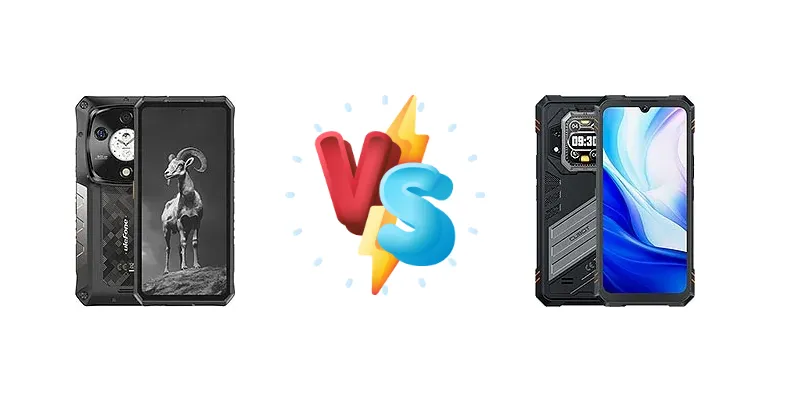
|
🏆 Quick Verdict
For the average user prioritizing battery life and charging speed, the Ulefone Armor 28 Pro emerges as the winner. Its 111:30h endurance and 120W charging significantly outperform the KingKong Star 2, despite the latter’s more powerful chipset. However, users focused on raw processing power may find the Star 2 a better fit.
| PHONES | ||
|---|---|---|
| Phone Names | Ulefone Armor 28 Pro | Cubot KingKong Star 2 |
| Network | ||
|---|---|---|
| 2G bands | GSM 850 / 900 / 1800 / 1900 | GSM 850 / 900 / 1800 / 1900 |
| 3G bands | HSDPA 800 / 850 / 900 / 1700(AWS) / 1900 / 2100 | HSDPA 800 / 850 / 900 / 1700(AWS) / 1900 / 2100 |
| 4G bands | 1, 2, 3, 4, 5, 7, 8, 12, 13, 17, 18, 19, 20, 25, 26, 28, 32, 34, 38, 39, 40, 41, 66, 71 | 1, 2, 3, 4, 5, 7, 8, 12, 13, 17, 18, 19, 20, 25, 26, 28, 34, 38, 39, 40, 41, 66, 71 |
| 5G bands | 1, 2, 3, 5, 7, 8, 20, 25, 28, 38, 40, 41, 66, 71, 77, 78, 79 SA/NSA/Sub6 | 1, 2, 3, 5, 7, 8, , 20, 25, 28, 38, 40, 41, 66, 77, 78 SA/NSA |
| Speed | HSPA, LTE, 5G | HSPA, LTE, 5G |
| Technology | GSM / CDMA / HSPA / CDMA2000 / LTE / 5G | GSM / HSPA / LTE / 5G |
| Launch | ||
|---|---|---|
| Announced | 2025, May | 2024, September 30 |
| Status | Available. Released 2025, May 12 | Available. Released 2024, October |
| Body | ||
|---|---|---|
| Dimensions | 174.2 x 83.6 x 19.4 mm (6.86 x 3.29 x 0.76 in) | 177.7 x 81.8 x 13.5 mm (7.00 x 3.22 x 0.53 in) |
| SIM | Nano-SIM + Nano-SIM | Nano-SIM + Nano-SIM |
| Weight | 450 g (0.99 lb) | 305 g (10.76 oz) |
| Display | ||
|---|---|---|
| Protection | Corning Gorilla Glass Victus, Mohs level 4 | Corning Gorilla Glass, Mohs level 6 |
| Resolution | 1080 x 2400 pixels, 20:9 ratio (~395 ppi density) | 1080 x 2400 pixels, 20:9 ratio (~392 ppi density) |
| Size | 6.67 inches, 107.4 cm2 (~73.8% screen-to-body ratio) | 6.72 inches, 109.0 cm2 (~75.0% screen-to-body ratio) |
| Type | AMOLED, 1B colors, 120Hz, 2200 nits (peak) | IPS LCD, 144Hz, 1500 nits (peak) |
| Platform | ||
|---|---|---|
| CPU | Octa-core (4x2.5 GHz Cortex-A78 & 4x2.0 GHz Cortex-A55) | Octa-core (1x3.1 GHz Cortex-A78 & 3x3.0 GHz Cortex-A78 & 4x2.0 GHz Cortex-A55) |
| Chipset | Mediatek Dimensity 7300 (4 nm) | Mediatek Dimensity 8200 (4 nm) |
| GPU | Mali-G615 MC2 | Mali-G610 MC6 |
| OS | Android 15 | Android 14 |
| Memory | ||
|---|---|---|
| Card slot | microSDXC (dedicated slot) | microSDXC (uses shared SIM slot) |
| Internal | 512GB 16GB RAM | 256GB 12GB RAM |
| Main Camera | ||
|---|---|---|
| Dual | - | 100 MP, (wide), PDAF 5 MP (macro), AF |
| Features | Quad-LED flash, HDR, panorama | LED flash |
| Triple | 50 MP, f/1.9, (wide), 1.0"-type, 1.6µm, dual pixel PDAF 64 MP, f/1.8, (night vision), 1/2.0", 0.7µm, 4 infrared lights 50 MP, f/2.2, 117˚ (ultrawide), 1/2.76", 0.64µm | - |
| Video | 4K@30fps, 1080p@30/60fps | Yes |
| Selfie camera | ||
|---|---|---|
| Single | 50 MP, f/2.5, (wide), 1/2.76", 0.64µm | 32 MP |
| Video | 1080p@30fps | Yes |
| Sound | ||
|---|---|---|
| 35mm jack | Yes | No |
| Loudspeaker | Yes | Yes |
| Comms | ||
|---|---|---|
| Bluetooth | 5.4, A2DP, LE | 5.3, A2DP, LE |
| Infrared port | Yes | - |
| NFC | Yes | Yes |
| Positioning | GPS, GALILEO, GLONASS, QZSS, BDS, NavIC | GPS (L1+L5), GALILEO, GLONASS, BDS |
| Radio | Wireless FM radio | Unspecified |
| USB | USB Type-C 2.0, OTG, accessory connector pins | USB Type-C, OTG |
| WLAN | Wi-Fi 802.11 a/b/g/n/ac/6/7, tri-band | Wi-Fi 802.11 a/b/g/n/ac/6, dual-band |
| Features | ||
|---|---|---|
| Sensors | Fingerprint (side-mounted), accelerometer, gyro, proximity, compass, barometer | Fingerprint (side-mounted), accelerometer, gyro, proximity, compass |
| Battery | ||
|---|---|---|
| Charging | 120W wired, PPS, 40% in 10 min 50W wireless, 35% in 30 min 10W reverse wired 5W reverse wireless | 33W wired |
| Type | Li-Ion 10600 mAh | 5100 mAh |
| Misc | ||
|---|---|---|
| Colors | Black | Black |
| Price | $ 399.99 / € 492.56 | About 250 EUR |
| EU LABEL | ||
|---|---|---|
| Battery | 111:30h endurance, 1000 cycles | 43:41h endurance, 900 cycles |
| Energy | Class A | Class C |
| Free fall | Class A (270 falls) | Class A (270 falls) |
| Repairability | Class B | Class C |
Ulefone Armor 28 Pro
- Exceptional battery life (111:30h endurance)
- Ultra-fast 120W wired charging
- Convenient 50W wireless charging
- Potentially lower peak CPU performance compared to the Star 2
- Camera specs not detailed, potential for average image quality
Cubot KingKong Star 2
- Powerful Dimensity 8200 chipset for demanding tasks
- Potentially higher single-core performance
- Likely capable of higher refresh rate display
- Significantly shorter battery life (43:41h endurance)
- Slow 33W wired charging
- No wireless charging support
Display Comparison
While both devices likely feature durable displays given their rugged nature, the context data doesn't provide specifics. However, the chipset choice suggests the KingKong Star 2 may be capable of driving a higher refresh rate panel. The Armor 28 Pro’s focus on endurance suggests a potentially more power-efficient display technology, prioritizing longevity over visual flourish. Bezels are likely similar, given the rugged design constraints.
Camera Comparison
The provided data doesn't detail camera specifications. Given the market segment, both phones likely feature a multi-camera setup with a primary sensor. However, without sensor size or aperture information, a direct comparison is impossible. The inclusion of OIS (Optical Image Stabilization) would be a significant advantage, but is not specified for either device. We can assume both will include standard wide, ultrawide, and potentially macro lenses, but the image processing algorithms will likely differentiate the final image quality.
Performance
The Cubot KingKong Star 2 leverages the Dimensity 8200, featuring a 3.1 GHz Cortex-A78 prime core alongside three additional Cortex-A78 cores, offering a theoretical edge in single-core performance. However, the Ulefone Armor 28 Pro’s Dimensity 7300, built on a more efficient 4nm process, utilizes four Cortex-A78 cores clocked at 2.5 GHz. This suggests the 7300 may offer better sustained performance due to improved thermal management. The 4nm node of the 7300 will likely result in lower power consumption during intensive tasks. Both devices utilize LPDDR5x RAM, but the Armor 28 Pro’s chipset efficiency could translate to smoother multitasking.
Battery Life
The Ulefone Armor 28 Pro’s 111:30h endurance is a standout feature, dwarfing the Cubot KingKong Star 2’s 43:41h. This difference is substantial and translates to significantly longer usage between charges. The Armor 28 Pro’s charging capabilities are equally impressive: 120W wired charging promises a 40% charge in just 10 minutes, while 50W wireless charging offers 35% in 30 minutes. The KingKong Star 2’s 33W wired charging is comparatively slow. The Armor 28 Pro also includes 10W reverse wired and 5W reverse wireless charging, adding to its versatility.
Buying Guide
Buy the Ulefone Armor 28 Pro if you need exceptional battery life for extended fieldwork, frequent fast charging to minimize downtime, and appreciate the convenience of wireless charging. Buy the Cubot KingKong Star 2 if you prioritize maximum processing power for demanding applications, gaming, or video editing, and are willing to compromise on battery endurance and charging speed.