
Ulefone Armor 27T vs. Motorola Defy 2: A Deep Dive into Rugged Smartphone Choices
| Phones Images | |||||
|---|---|---|---|---|---|
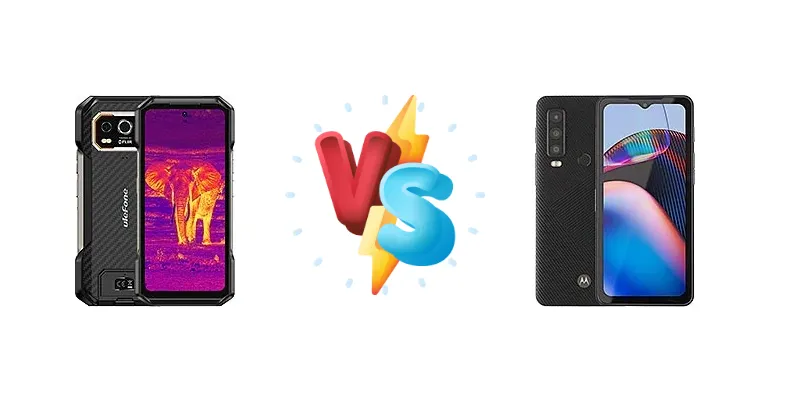
|
🏆 Quick Verdict
For the average user prioritizing longevity and wireless charging convenience, the Ulefone Armor 27T is the better choice. Its exceptional 112-hour endurance and 33W wireless charging capabilities outweigh the Motorola Defy 2’s faster processor in everyday use. However, power users demanding peak performance will find the Defy 2 more appealing.
| PHONES | ||
|---|---|---|
| Phone Names | Ulefone Armor 27T | Motorola Defy 2 |
| Network | ||
|---|---|---|
| 2G bands | GSM 850 / 900 / 1800 / 1900 | GSM 850 / 900 / 1800 / 1900 |
| 3G bands | HSDPA 800 / 850 / 900 / 1700(AWS) / 1900 / 2100 | HSDPA 850 / 900 / 1700(AWS) / 1900 / 2100 |
| 4G bands | 1, 2, 3, 4, 5, 7, 8, 12, 13, 17, 18, 19, 20, 25, 26, 28, 34, 38, 39, 40, 41, 66, 71 | 1, 2, 3, 4, 5, 7, 8, 12, 13, 14, 17, 20, 25, 26, 28, 30, 38, 40, 41, 46, 48, 66, 71 |
| 5G bands | - | 2, 5, 23, 25, 26, 28, 38, 41, 48, 66, 70, 71, 77, 78, 255, 256 SA/NSA/Sub6/mmWave |
| Speed | HSPA, LTE | HSPA, LTE, 5G |
| Technology | GSM / CDMA / HSPA / LTE | GSM / HSPA / LTE / 5G |
| Launch | ||
|---|---|---|
| Announced | 2024, November | 2023, February 24 |
| Status | Available. Released 2024, November | Available. Released 2023, October |
| Body | ||
|---|---|---|
| Build | - | Glass front (Gorilla Glass Victus), plastic back, aluminum frame |
| Dimensions | 182.8 x 86.8 x 18.5 mm (7.20 x 3.42 x 0.73 in) | 171 x 80 x 11.9 mm (6.73 x 3.15 x 0.47 in) |
| SIM | Nano-SIM + Nano-SIM | Nano-SIM + Nano-SIM |
| Weight | 441 g (15.56 oz) | 268 g (9.45 oz) |
| - | IP68/IP69 dust/water resistant (up to 5m for 35 min) Drop-to-concrete resistance from up to 1.8m MIL-STD-810H compliant | |
| Display | ||
|---|---|---|
| Protection | Corning Gorilla Glass Victus, Mohs level 4 | Corning Gorilla Glass Victus |
| Resolution | 1080 x 2460 pixels (~396 ppi density) | 1080 x 2408 pixels, 20:9 ratio (~400 ppi density) |
| Size | 6.78 inches, 109.2 cm2 (~68.8% screen-to-body ratio) | 6.6 inches, 104.9 cm2 (~76.7% screen-to-body ratio) |
| Type | IPS LCD, 120Hz | IPS LCD, 120Hz |
| Platform | ||
|---|---|---|
| CPU | Octa-core (2x2.2 GHz Cortex-A76 & 6x2.0 GHz Cortex-A55) | Octa-core (2x2.2 GHz Cortex-A78 & 6x2.0 GHz Cortex-A55) |
| Chipset | Mediatek Helio G99 (6 nm) | Mediatek Dimensity 930 (6 nm) |
| GPU | Mali-G57 MC2 | IMG BXM-8-256 |
| OS | Android 14 | Android 12 |
| Memory | ||
|---|---|---|
| Card slot | microSDXC (dedicated slot) | microSDXC (uses shared SIM slot) |
| Internal | 256GB 12GB RAM | 128GB 6GB RAM |
| Main Camera | ||
|---|---|---|
| Features | Dual-LED flash, HDR, panorama | Dual-LED flash, HDR, panorama |
| Triple | 50 MP, f/2.0, (wide), 1/1.31", 1.2µm, PDAF 64 MP, f/1.8, (night vision), 2 infrared lights Thermal camera by Flir, 80x60 px, 9Hz, 17μm | 50 MP, f/1.8, (wide), PDAF 8 MP, f/2.2, (ultrawide) 2 MP (macro) |
| Video | 1440p@30fps, 1080p@30fps | 1080p@30fps |
| Selfie camera | ||
|---|---|---|
| Single | 32 MP, f/2.5, (wide), 0.8µm | 8 MP, f/2.0, (wide) |
| Video | Yes | 1080p@30fps |
| Sound | ||
|---|---|---|
| 3.5mm jack | - | No |
| 35mm jack | Yes | No |
| Loudspeaker | Yes | Yes |
| Comms | ||
|---|---|---|
| Bluetooth | 5.2, A2DP, LE | 5.1, A2DP, LE |
| Infrared port | Yes | - |
| NFC | Yes | Yes |
| Positioning | GPS, GLONASS, GALILEO, BDS | GPS (L1+L5), GLONASS, GALILEO, BDS |
| Radio | Wireless FM radio, RDS, recording | Unspecified |
| USB | USB Type-C 2.0, OTG | USB Type-C 2.0, OTG |
| WLAN | Wi-Fi 802.11 a/b/g/n/ac, dual-band | Wi-Fi 802.11 a/b/g/n/ac, dual-band |
| Features | ||
|---|---|---|
| Sensors | Fingerprint (side-mounted), accelerometer, gyro, proximity, compass, barometer | Fingerprint (rear-mounted), accelerometer, gyro, proximity, compass |
| - | Emergency SOS via satellite (Bullitt Satellite Connect service) | |
| Battery | ||
|---|---|---|
| Charging | 33W wired 30W wireless 5W reverse wireless | 15W wireless |
| Type | Li-Po 10600 mAh | Li-Po 5000 mAh |
| Misc | ||
|---|---|---|
| Colors | Black | Black |
| Models | - | BM1S1B |
| Price | About 420 EUR | About 570 EUR |
| EU LABEL | ||
|---|---|---|
| Battery | 112:15h endurance, 1000 cycles | - |
| Energy | Class A | - |
| Free fall | Class A (270 falls) | - |
| Repairability | Class C | - |
Ulefone Armor 27T
- Exceptional battery life (112h endurance)
- 33W wired and 30W wireless charging
- 5W reverse wireless charging
- Less powerful processor than the Defy 2
- Camera performance likely inferior to the Defy 2
Motorola Defy 2
- More powerful Mediatek Dimensity 930 chipset
- Faster processing for demanding tasks
- Potentially better camera image processing
- Significantly shorter battery life
- Slower 15W wireless charging
Display Comparison
Neither device provides display specifications, but given their rugged focus, expect durable, though likely not cutting-edge, panels. The absence of LTPO or high refresh rate information suggests both prioritize robustness over visual fidelity. The real difference will likely be in peak brightness, which is not specified, and color accuracy, which is also unknown. However, the Armor 27T’s focus on endurance suggests a potentially more power-efficient display.
Camera Comparison
Without detailed camera specifications, a direct comparison is difficult. However, the market positioning of these devices suggests the Motorola Defy 2 will likely offer a more refined camera experience. While both will likely feature multiple lenses, the Defy 2’s more powerful chipset allows for more sophisticated image processing. The Armor 27T will likely focus on practicality and durability in its camera module, rather than image quality. We can assume both will have a standard wide and ultrawide, but details on sensor size and aperture are crucial for a proper assessment.
Performance
The Motorola Defy 2 holds a clear advantage in raw processing power thanks to its Mediatek Dimensity 930 chipset. Its octa-core CPU, featuring 2x2.2 GHz Cortex-A78 cores, offers superior performance compared to the Ulefone Armor 27T’s Helio G99, which utilizes 2x2.2 GHz Cortex-A76 cores. While both are 6nm chips, the Cortex-A78 architecture is a generation ahead, translating to faster single-core and multi-core performance. This difference will be most noticeable in demanding applications and gaming. However, the G99’s efficiency could lead to better sustained performance under load, mitigating some of the Dimensity 930’s advantage.
Battery Life
The Ulefone Armor 27T dominates in battery endurance with a claimed 112 hours, coupled with a 1000-cycle lifespan, indicating long-term reliability. While the Armor 27T charges at 33W wired and 30W wireless, the Defy 2 is limited to 15W wireless charging. This difference is significant for users who rely on wireless charging. The Armor 27T also offers 5W reverse wireless charging, a feature absent on the Defy 2, allowing it to charge accessories like earbuds. The Armor 27T’s superior charging speeds and reverse wireless capabilities, combined with its exceptional endurance, make it the clear winner in this category.
Buying Guide
Buy the Ulefone Armor 27T if you need a phone that can genuinely last for days on a single charge, especially if you frequently work outdoors or travel. Its robust build and wireless charging are ideal for those prioritizing practicality. Buy the Motorola Defy 2 if you prefer a smoother, more responsive experience for demanding tasks like gaming or video editing, and are willing to compromise on battery life and wireless charging speed.