
Ulefone Armor 27T vs. Blackview BV9200: A Rugged Showdown of Battery and Speed
| Phones Images | |||||
|---|---|---|---|---|---|
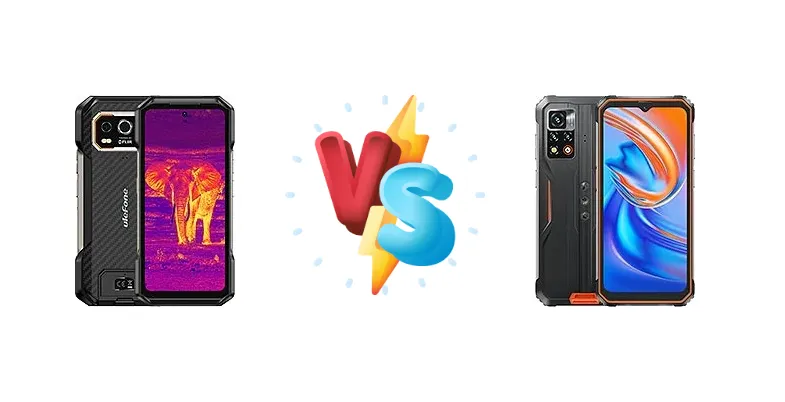
|
🏆 Quick Verdict
For users prioritizing all-day (and multi-day) battery life and long-term reliability, the Ulefone Armor 27T is the clear winner. Its Helio G99 chipset and impressive 112-hour endurance rating outweigh the Blackview BV9200’s faster charging, especially considering the BV9200’s older, less efficient chipset.
| PHONES | ||
|---|---|---|
| Phone Names | Ulefone Armor 27T | Blackview BV9200 |
| Network | ||
|---|---|---|
| 2G bands | GSM 850 / 900 / 1800 / 1900 | GSM 850 / 900 / 1800 / 1900 |
| 3G bands | HSDPA 800 / 850 / 900 / 1700(AWS) / 1900 / 2100 | HSDPA 850 / 900 / 1700(AWS) / 1900 / 2100 |
| 4G bands | 1, 2, 3, 4, 5, 7, 8, 12, 13, 17, 18, 19, 20, 25, 26, 28, 34, 38, 39, 40, 41, 66, 71 | 1, 2, 3, 4, 5, 7, 8, 12, 13, 17, 18, 19, 20, 25, 26, 28, 34, 38, 39, 40, 41, 66 |
| Speed | HSPA, LTE | HSPA, LTE |
| Technology | GSM / CDMA / HSPA / LTE | GSM / CDMA / HSPA / LTE |
| - | CDMA 800 / 1900 | |
| Launch | ||
|---|---|---|
| Announced | 2024, November | 2022, December 28 |
| Status | Available. Released 2024, November | Available. Released 2023, January 09 |
| Body | ||
|---|---|---|
| Dimensions | 182.8 x 86.8 x 18.5 mm (7.20 x 3.42 x 0.73 in) | 174.5 x 81.8 x 13.6 mm (6.87 x 3.22 x 0.54 in) |
| SIM | Nano-SIM + Nano-SIM | Nano-SIM + Nano-SIM |
| Weight | 441 g (15.56 oz) | 310 g (10.93 oz) |
| - | IP68/IP69K dust/water resistant (up to 1.5m for 30 min) Drop-to-concrete resistance from up to 1.8m MIL-STD-810H compliant | |
| Display | ||
|---|---|---|
| Protection | Corning Gorilla Glass Victus, Mohs level 4 | Corning Gorilla Glass 5 |
| Resolution | 1080 x 2460 pixels (~396 ppi density) | 1080 x 2408 pixels, 20:9 ratio (~400 ppi density) |
| Size | 6.78 inches, 109.2 cm2 (~68.8% screen-to-body ratio) | 6.6 inches, 104.9 cm2 (~73.5% screen-to-body ratio) |
| Type | IPS LCD, 120Hz | IPS LCD, 120Hz |
| Platform | ||
|---|---|---|
| CPU | Octa-core (2x2.2 GHz Cortex-A76 & 6x2.0 GHz Cortex-A55) | Octa-core (2x2.05 GHz Cortex-A76 & 6x2.0 GHz Cortex-A55) |
| Chipset | Mediatek Helio G99 (6 nm) | Mediatek MT6781 Helio G96 (12 nm) |
| GPU | Mali-G57 MC2 | Mali-G52 MC2 |
| OS | Android 14 | Android 12, Doke-OS 3.1 |
| Memory | ||
|---|---|---|
| Card slot | microSDXC (dedicated slot) | microSDXC (dedicated slot) |
| Internal | 256GB 12GB RAM | 256GB 8GB RAM |
| - | UFS 2.1 | |
| Main Camera | ||
|---|---|---|
| Features | Dual-LED flash, HDR, panorama | LED flash, HDR, panorama |
| Single | - | 16 MP, (wide), 1/3", 1.0µm |
| Triple | 50 MP, f/2.0, (wide), 1/1.31", 1.2µm, PDAF 64 MP, f/1.8, (night vision), 2 infrared lights Thermal camera by Flir, 80x60 px, 9Hz, 17μm | 50 MP, f/1.8, (wide), 1/2.76", 0.64µm, PDAF 8 MP, f/1.8, 120˚, (ultrawide), AF Auxiliary lens |
| Video | 1440p@30fps, 1080p@30fps | 1440p@30fps, 1080p@30fps |
| Selfie camera | ||
|---|---|---|
| Single | 32 MP, f/2.5, (wide), 0.8µm | 16 MP, f/2.0, (wide), 1/3", 1.0µm |
| Video | Yes | 1080p |
| Sound | ||
|---|---|---|
| 3.5mm jack | - | No |
| 35mm jack | Yes | No |
| Loudspeaker | Yes | Yes, with dual speakers |
| Comms | ||
|---|---|---|
| Bluetooth | 5.2, A2DP, LE | 5.2, A2DP, LE |
| Infrared port | Yes | - |
| NFC | Yes | Yes |
| Positioning | GPS, GLONASS, GALILEO, BDS | GPS, GLONASS, GALILEO, BDS |
| Radio | Wireless FM radio, RDS, recording | FM radio |
| USB | USB Type-C 2.0, OTG | USB Type-C, OTG |
| WLAN | Wi-Fi 802.11 a/b/g/n/ac, dual-band | Wi-Fi 802.11 a/b/g/n/ac, dual-band |
| Features | ||
|---|---|---|
| Sensors | Fingerprint (side-mounted), accelerometer, gyro, proximity, compass, barometer | Fingerprint (side-mounted), accelerometer, gyro, proximity, compass, barometer |
| Battery | ||
|---|---|---|
| Charging | 33W wired 30W wireless 5W reverse wireless | 66W wired 30W wireless |
| Type | Li-Po 10600 mAh | 5000 mAh |
| Misc | ||
|---|---|---|
| Colors | Black | Black, Orange, Green |
| Price | About 420 EUR | About 200 EUR |
| EU LABEL | ||
|---|---|---|
| Battery | 112:15h endurance, 1000 cycles | - |
| Energy | Class A | - |
| Free fall | Class A (270 falls) | - |
| Repairability | Class C | - |
Ulefone Armor 27T
- Exceptional battery life (112h endurance)
- More efficient Helio G99 chipset
- 1000 battery charge cycles for long-term reliability
- Slower wired charging (33W)
- Display specifications are unknown
Blackview BV9200
- Faster 66W wired charging
- Brighter display (481 nits)
- Higher contrast ratio (1423:1)
- Less efficient Helio G96 chipset
- Shorter battery life compared to Ulefone
Display Comparison
The Blackview BV9200 boasts a measured peak brightness of 481 nits and a 1423:1 contrast ratio, suggesting superior outdoor visibility and image pop compared to the Ulefone Armor 27T, which lacks published display specs. While the Ulefone doesn't detail its display characteristics, the Blackview’s higher brightness is a tangible advantage for users in direct sunlight. However, without knowing the Ulefone’s panel type or PWM dimming frequency, it’s impossible to assess potential eye strain concerns.
Camera Comparison
Neither device is positioned as a photography powerhouse, and detailed camera specs are limited. Without sensor size or aperture information, a direct comparison is difficult. However, focusing on practical use, the absence of detailed camera information suggests both phones will deliver adequate, but not exceptional, image quality. The presence of a 2MP macro lens on the BV9200 is likely a marketing feature with limited real-world benefit, given the inherent limitations of such small sensors.
Performance
Both phones utilize Mediatek’s Cortex-A76 based CPUs, but the Ulefone Armor 27T’s Helio G99 (6nm) holds a clear architectural advantage over the Blackview BV9200’s Helio G96 (12nm). The smaller 6nm process node translates to improved power efficiency and potentially better sustained performance under load, reducing thermal throttling during extended gaming or demanding tasks. While the CPU clock speeds are similar (2.2 GHz vs 2.05 GHz), the G99’s newer architecture and efficiency gains give it the edge. The Ulefone will likely offer a smoother experience in graphically intensive applications.
Battery Life
The Ulefone Armor 27T’s standout feature is its exceptional battery endurance, rated at 112 hours. This is significantly higher than what’s typically seen in this price segment. While the Blackview BV9200 offers 66W wired charging – substantially faster than the Ulefone’s 33W – the Ulefone compensates with a longer-lasting battery and 1000 charge cycles, promising longevity. The BV9200’s faster charging (potentially 0-100% in under an hour) is convenient, but the Ulefone’s extended runtime reduces the need for frequent top-ups. Both support 30W wireless charging and 5W reverse wireless charging.
Buying Guide
Buy the Ulefone Armor 27T if you need a phone that can genuinely last for days on a single charge, are frequently away from power outlets, or value the longevity promised by 1000 battery cycles. Buy the Blackview BV9200 if you prioritize a brighter screen for outdoor visibility and want the convenience of significantly faster wired charging, even if it comes at the expense of overall battery endurance.