
Ulefone Armor 27 vs Cubot KingKong Power 3: A Deep Dive into Rugged Performance and Battery Life
| Phones Images | |||||
|---|---|---|---|---|---|
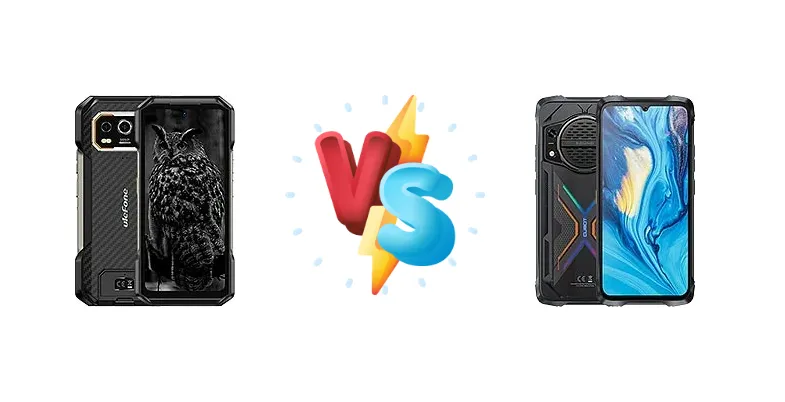
|
🏆 Quick Verdict
For users prioritizing raw performance and faster charging, the Ulefone Armor 27 is the better choice. However, the Cubot KingKong Power 3’s significantly higher battery cycle count (1400 vs 1000) makes it ideal for those who demand long-term battery health and aren't as concerned with peak speed.
| PHONES | ||
|---|---|---|
| Phone Names | Ulefone Armor 27 | Cubot KingKong Power 3 |
| Network | ||
|---|---|---|
| 2G bands | GSM 850 / 900 / 1800 / 1900 | GSM 850 / 900 / 1800 / 1900 |
| 3G bands | HSDPA 800 / 850 / 900 / 1700(AWS) / 1900 / 2100 | HSDPA 800 / 850 / 900 / 1700(AWS) / 1900 / 2100 |
| 4G bands | 1, 2, 3, 4, 5, 7, 8, 12, 13, 17, 18, 19, 20, 25, 26, 28, 34, 38, 39, 40, 41, 66, 71 | 1, 2, 3, 4, 5, 7, 8, 12, 13, 17, 18, 19, 20, 28, 38, 40, 41, 66 |
| Speed | HSPA, LTE | HSPA, LTE |
| Technology | GSM / CDMA / HSPA / LTE | GSM / HSPA / LTE |
| Launch | ||
|---|---|---|
| Announced | 2024, November | 2024, September |
| Status | Available. Released 2024, November | Available. Released 2024, October |
| Body | ||
|---|---|---|
| Dimensions | 182.8 x 86.8 x 18.5 mm (7.20 x 3.42 x 0.73 in) | 175.3 x 82.7 x 20 mm (6.90 x 3.26 x 0.79 in) |
| SIM | Nano-SIM + Nano-SIM | Nano-SIM + Nano-SIM |
| Weight | 441 g (15.56 oz) | 425 g (14.99 oz) |
| Display | ||
|---|---|---|
| Protection | Corning Gorilla Glass Victus, Mohs level 4 | Mohs level 6 |
| Resolution | 1080 x 2460 pixels (~396 ppi density) | 1080 x 2408 pixels, 20:9 ratio (~393 ppi density) |
| Size | 6.78 inches, 109.2 cm2 (~68.8% screen-to-body ratio) | 6.72 inches, 108.8 cm2 (~75.0% screen-to-body ratio) |
| Type | IPS LCD, 120Hz | IPS LCD, 120Hz |
| Platform | ||
|---|---|---|
| CPU | Octa-core (2x2.2 GHz Cortex-A76 & 6x2.0 GHz Cortex-A55) | - |
| Chipset | Mediatek Helio G99 (6 nm) | Mediatek MT8781 |
| GPU | Mali-G57 MC2 | - |
| OS | Android 14 | Android 14 |
| Memory | ||
|---|---|---|
| Card slot | microSDXC (dedicated slot) | microSDXC (uses shared SIM slot) |
| Internal | 256GB 12GB RAM | 256GB 12GB RAM |
| Main Camera | ||
|---|---|---|
| Dual | - | 100 MP, (wide), PDAF 5 MP (macro) |
| Features | Dual-LED flash, HDR, panorama | LED flash |
| Triple | 50 MP, f/2.0, (wide), 1/1.31", 1.2µm, PDAF 50 MP, f/2.2, 117˚ (ultrawide) 64 MP, f/1.8, (night vision), 2 infrared lights | - |
| Video | 1440p@30fps, 1080p@30fps | Yes |
| Selfie camera | ||
|---|---|---|
| Single | 32 MP, f/2.5, (wide), 0.8µm | 32 MP |
| Video | Yes | Yes |
| Sound | ||
|---|---|---|
| 35mm jack | Yes | No |
| Loudspeaker | Yes | Yes (123-decibel) |
| Comms | ||
|---|---|---|
| Bluetooth | 5.2, A2DP, LE | 5.2, A2DP |
| Infrared port | Yes | - |
| NFC | Yes | Yes |
| Positioning | GPS, GLONASS, GALILEO, BDS | GPS, GALILEO, GLONASS, BDS |
| Radio | Wireless FM radio, RDS, recording | Unspecified |
| USB | USB Type-C 2.0, OTG | USB Type-C, OTG |
| WLAN | Wi-Fi 802.11 a/b/g/n/ac, dual-band | Wi-Fi 802.11 a/b/g/n/ac, dual-band |
| Features | ||
|---|---|---|
| Sensors | Fingerprint (side-mounted), accelerometer, gyro, proximity, compass, barometer | Fingerprint (side-mounted), accelerometer, gyro, proximity, compass |
| Battery | ||
|---|---|---|
| Charging | 33W wired 30W wireless 5W reverse wireless | 33W wired Reverse wired |
| Type | Li-Po 10600 mAh | 10200 mAh |
| Misc | ||
|---|---|---|
| Colors | Black | Black |
| Price | About 340 EUR | About 180 EUR |
| EU LABEL | ||
|---|---|---|
| Battery | 112:15h endurance, 1000 cycles | 89:12h endurance, 1400 cycles |
| Energy | Class A | Class C |
| Free fall | Class A (270 falls) | Class A (270 falls) |
| Repairability | Class C | Class C |
Ulefone Armor 27
- Faster processor (Helio G99)
- Wireless and reverse wireless charging
- Potentially smoother user experience
- Lower battery cycle count (1000)
- Shorter overall battery endurance (112:15h)
Cubot KingKong Power 3
- Higher battery cycle count (1400)
- More durable long-term battery health
- Lower price (likely)
- Slower processor (MT8781)
- No wireless charging
Display Comparison
Display specifications are absent from the provided data, making a direct comparison impossible. However, given the price points, we can infer both devices likely utilize IPS LCD panels. The Armor 27’s Helio G99 suggests a potential for higher refresh rates, though this isn’t confirmed. Users should investigate panel quality (brightness, color accuracy) in independent reviews, as this is a common area for cost-cutting in rugged phones.
Camera Comparison
Camera details are limited. Without sensor size or aperture information, a detailed comparison is difficult. However, the absence of any mention of advanced features like OIS on either device suggests both rely on software processing for image stabilization. Users should manage expectations regarding low-light performance. The focus should be on practical image quality, as rugged phones rarely prioritize camera capabilities.
Performance
The Ulefone Armor 27’s Mediatek Helio G99 (6nm) represents a significant leap in processing power over the Cubot KingKong Power 3’s Mediatek MT8781. The G99’s octa-core configuration, with 2x2.2 GHz Cortex-A76 and 6x2.0 GHz Cortex-A55 cores, delivers substantially better CPU and GPU performance. The 6nm process node also contributes to improved thermal efficiency, reducing throttling during sustained workloads. This translates to smoother multitasking, faster app loading times, and a more responsive user experience for Armor 27 users. The MT8781, while adequate for basic tasks, will struggle with demanding applications.
Battery Life
The Ulefone Armor 27 offers 112:15h of endurance, while the Cubot KingKong Power 3 provides 89:12h. While the Armor 27 has a shorter endurance rating, it compensates with faster charging: 33W wired and 30W wireless, plus 5W reverse wireless. The KingKong Power 3 is limited to 33W wired and reverse *wired* charging. Crucially, the KingKong Power 3 boasts 1400 battery cycles compared to the Armor 27’s 1000. This means the KingKong Power 3 is designed to maintain a higher capacity over a longer period, making it a better long-term investment for users who frequently fully charge and discharge their devices.
Buying Guide
Buy the Ulefone Armor 27 if you need a rugged phone capable of handling demanding tasks like gaming or video editing on the go, and value the convenience of wireless charging. Buy the Cubot KingKong Power 3 if you prioritize long-term battery reliability, infrequent but extended use cases (like fieldwork), and a lower initial price point, accepting a less powerful processor.