
Ulefone Armor 27 vs. Cat S75: A Deep Dive into Rugged Smartphone Performance
| Phones Images | |||||
|---|---|---|---|---|---|
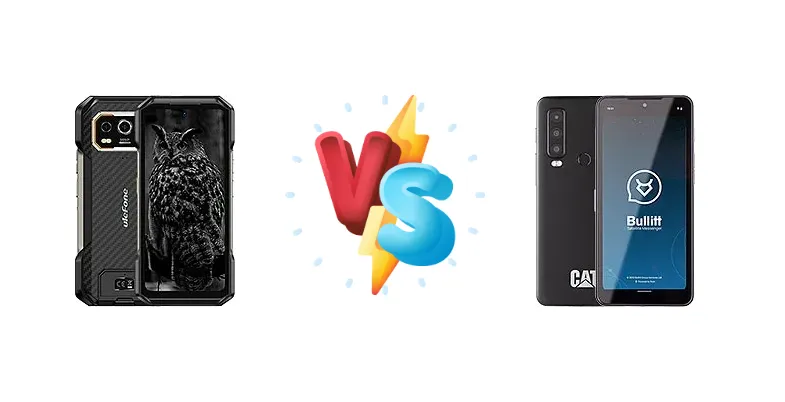
|
🏆 Quick Verdict
For the average user prioritizing all-day (and multi-day) battery life and value, the Ulefone Armor 27 is the clear winner. Its impressive 112-hour endurance and versatile charging options outweigh the Cat S75’s more powerful, but less efficient, chipset. However, users needing sustained performance for intensive applications will find the Cat S75 a better fit.
| PHONES | ||
|---|---|---|
| Phone Names | Ulefone Armor 27 | Cat S75 |
| Network | ||
|---|---|---|
| 2G bands | GSM 850 / 900 / 1800 / 1900 | GSM 850 / 900 / 1800 / 1900 |
| 3G bands | HSDPA 800 / 850 / 900 / 1700(AWS) / 1900 / 2100 | HSDPA 850 / 900 / 1700(AWS) / 1900 / 2100 |
| 4G bands | 1, 2, 3, 4, 5, 7, 8, 12, 13, 17, 18, 19, 20, 25, 26, 28, 34, 38, 39, 40, 41, 66, 71 | 1, 2, 3, 4, 5, 7, 8, 20, 28, 32, 38, 39, 40, 41 |
| 5G bands | - | 1, 2, 3, 5, 7, 8, 20, 23, 28, 38, 40, 41, 75, 77, 78, 255, 256 SA/NSA/Sub6/mmWave |
| Speed | HSPA, LTE | HSPA, LTE, 5G |
| Technology | GSM / CDMA / HSPA / LTE | GSM / HSPA / LTE / 5G |
| Launch | ||
|---|---|---|
| Announced | 2024, November | 2023, February 24 |
| Status | Available. Released 2024, November | Available. Released 2023, July |
| Body | ||
|---|---|---|
| Build | - | Glass front (Gorilla Glass Victus), plastic back, aluminum frame |
| Dimensions | 182.8 x 86.8 x 18.5 mm (7.20 x 3.42 x 0.73 in) | 171 x 80 x 11.9 mm (6.73 x 3.15 x 0.47 in) |
| SIM | Nano-SIM + Nano-SIM | Nano-SIM + Nano-SIM |
| Weight | 441 g (15.56 oz) | 268 g (9.45 oz) |
| - | IP68/IP69 dust/water resistant (up to 5m for 35 min) Drop-to-concrete resistance from up to 1.8m MIL-STD-810H compliant | |
| Display | ||
|---|---|---|
| Protection | Corning Gorilla Glass Victus, Mohs level 4 | Corning Gorilla Glass Victus |
| Resolution | 1080 x 2460 pixels (~396 ppi density) | 1080 x 2408 pixels, 20:9 ratio (~400 ppi density) |
| Size | 6.78 inches, 109.2 cm2 (~68.8% screen-to-body ratio) | 6.6 inches, 104.9 cm2 (~76.7% screen-to-body ratio) |
| Type | IPS LCD, 120Hz | IPS LCD, 120Hz |
| Platform | ||
|---|---|---|
| CPU | Octa-core (2x2.2 GHz Cortex-A76 & 6x2.0 GHz Cortex-A55) | Octa-core (2x2.2 GHz Cortex-A78 & 6x2.0 GHz Cortex-A55) |
| Chipset | Mediatek Helio G99 (6 nm) | Mediatek Dimensity 930 (6 nm) |
| GPU | Mali-G57 MC2 | IMG BXM-8-256 |
| OS | Android 14 | Android 12 |
| Memory | ||
|---|---|---|
| Card slot | microSDXC (dedicated slot) | microSDXC (uses shared SIM slot) |
| Internal | 256GB 12GB RAM | 128GB 6GB RAM |
| Main Camera | ||
|---|---|---|
| Features | Dual-LED flash, HDR, panorama | Dual-LED flash, HDR, panorama |
| Single | - | 8 MP, f/2.0, (wide) |
| Triple | 50 MP, f/2.0, (wide), 1/1.31", 1.2µm, PDAF 50 MP, f/2.2, 117˚ (ultrawide) 64 MP, f/1.8, (night vision), 2 infrared lights | 50 MP, f/1.8, (wide), PDAF 8 MP, f/2.2, (ultrawide) 2 MP (macro) |
| Video | 1440p@30fps, 1080p@30fps | 1080p@30fps |
| Selfie camera | ||
|---|---|---|
| Single | 32 MP, f/2.5, (wide), 0.8µm | 8 MP, f/2.0, (wide) |
| Video | Yes | 1080p@30fps |
| Sound | ||
|---|---|---|
| 3.5mm jack | - | No |
| 35mm jack | Yes | No |
| Loudspeaker | Yes | Yes |
| Comms | ||
|---|---|---|
| Bluetooth | 5.2, A2DP, LE | 5.1, A2DP, LE |
| Infrared port | Yes | - |
| NFC | Yes | Yes |
| Positioning | GPS, GLONASS, GALILEO, BDS | GPS (L1+L5), GALILEO, GLONASS, BDS |
| Radio | Wireless FM radio, RDS, recording | Unspecified |
| USB | USB Type-C 2.0, OTG | USB Type-C 2.0, OTG |
| WLAN | Wi-Fi 802.11 a/b/g/n/ac, dual-band | Wi-Fi 802.11 a/b/g/n/ac, dual-band |
| Features | ||
|---|---|---|
| Sensors | Fingerprint (side-mounted), accelerometer, gyro, proximity, compass, barometer | Fingerprint (rear-mounted), accelerometer, gyro, proximity, compass |
| - | Emergency SOS via satellite (Bullitt Satellite Connect service) | |
| Battery | ||
|---|---|---|
| Charging | 33W wired 30W wireless 5W reverse wireless | 15W wireless |
| Type | Li-Po 10600 mAh | Li-Po 5000 mAh |
| Misc | ||
|---|---|---|
| Colors | Black | Black |
| Models | - | BM1S1B |
| Price | About 340 EUR | About 600 EUR |
| EU LABEL | ||
|---|---|---|
| Battery | 112:15h endurance, 1000 cycles | - |
| Energy | Class A | - |
| Free fall | Class A (270 falls) | - |
| Repairability | Class C | - |
Ulefone Armor 27
- Exceptional battery life (112h endurance)
- Versatile charging options (33W wired, 30W wireless, 5W reverse)
- Long battery lifespan (1000 charge cycles)
- Less powerful chipset compared to the Cat S75
- Camera specifications unknown, potentially lagging behind
Cat S75
- More powerful Mediatek Dimensity 930 chipset
- Improved CPU performance for demanding tasks
- Potentially better image processing capabilities
- Significantly shorter battery life expected
- Limited charging options (15W wireless only)
Display Comparison
Neither device provides display specifications in the provided data, but given their rugged focus, we can assume both utilize durable, scratch-resistant glass. The lack of information prevents a detailed comparison of brightness, color accuracy, or refresh rates. However, considering the Cat S75’s higher price point, it’s reasonable to expect a slightly more refined display experience, potentially with higher peak brightness for outdoor visibility.
Camera Comparison
The provided data lacks camera specifications beyond the chipsets. Given the rugged nature of both phones, we can anticipate a focus on durability rather than cutting-edge camera technology. It’s likely both will feature a primary sensor, ultrawide, and potentially a macro lens. Without sensor size or aperture information, it’s difficult to assess image quality. The Cat S75’s more powerful ISP (Image Signal Processor) within the Dimensity 930 could offer better image processing capabilities, particularly in low-light conditions.
Performance
The Cat S75’s Mediatek Dimensity 930 chipset represents a significant step up in processing power compared to the Ulefone Armor 27’s Helio G99. The Dimensity 930 utilizes Cortex-A78 cores (vs. A76 in the G99), offering improved single-core performance crucial for responsive app launching and smoother multitasking. While both chips are built on a 6nm process, the architectural differences translate to a noticeable advantage for the Cat S75 in CPU-intensive workloads. However, the G99’s efficiency may contribute to the Armor 27’s superior battery life.
Battery Life
The Ulefone Armor 27’s 112-hour endurance is its standout feature. This is a substantial advantage over what we’d expect from the Cat S75, which lacks detailed battery information. The Armor 27 also boasts versatile charging options: 33W wired, 30W wireless, and 5W reverse wireless. The Cat S75 only offers 15W wireless charging. This combination of capacity and charging flexibility makes the Armor 27 the clear winner for users prioritizing battery life and convenience. The 1000 charge cycle rating on the Armor 27 also suggests a longer lifespan for the battery itself.
Buying Guide
Buy the Ulefone Armor 27 if you need a phone that can reliably last through multi-day work trips, outdoor adventures, or emergency situations where access to power is limited. Its focus on battery endurance and wireless charging flexibility makes it ideal for those prioritizing longevity. Buy the Cat S75 if you prefer a phone capable of handling demanding tasks like video editing, gaming, or running multiple apps simultaneously, and are willing to trade some battery life for that performance boost.