
Ulefone Armor 27 Pro vs. Motorola Defy 2: A Deep Dive into Rugged Smartphone Choices
| Phones Images | |||||
|---|---|---|---|---|---|
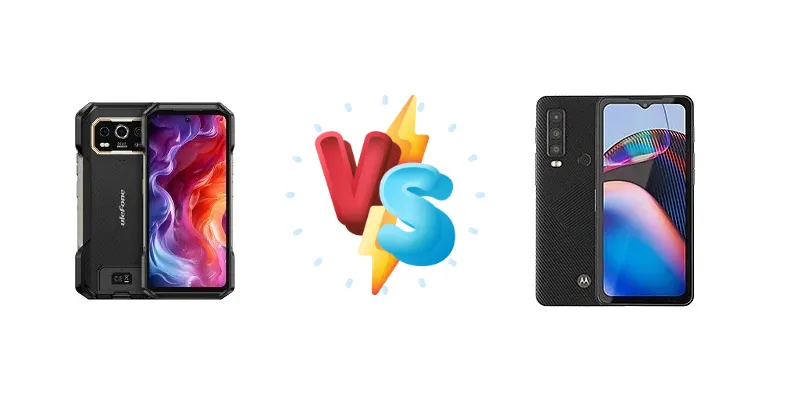
|
🏆 Quick Verdict
For the average user prioritizing long-term reliability and battery life, the Ulefone Armor 27 Pro is the better choice. Its impressive 113:36h endurance and wireless charging capabilities outweigh the Motorola Defy 2’s faster processor in most real-world scenarios. However, power users will appreciate the Defy 2’s Dimensity 930.
| PHONES | ||
|---|---|---|
| Phone Names | Ulefone Armor 27 Pro | Motorola Defy 2 |
| Network | ||
|---|---|---|
| 2G bands | GSM 850 / 900 / 1800 / 1900 | GSM 850 / 900 / 1800 / 1900 |
| 3G bands | HSDPA 800 / 850 / 900 / 1700(AWS) / 1900 / 2100 | HSDPA 850 / 900 / 1700(AWS) / 1900 / 2100 |
| 4G bands | 1, 2, 3, 4, 5, 7, 8, 12, 13, 17, 18, 19, 20, 25, 26, 28, 34, 38, 39, 40, 41, 66, 71 | 1, 2, 3, 4, 5, 7, 8, 12, 13, 14, 17, 20, 25, 26, 28, 30, 38, 40, 41, 46, 48, 66, 71 |
| 5G bands | 1, 2, 3, 5, 7, 8, 2, 25, 28, 38, 40, 41, 66, 71, 77, 78, 79 SA/NSA/Sub6 | 2, 5, 23, 25, 26, 28, 38, 41, 48, 66, 70, 71, 77, 78, 255, 256 SA/NSA/Sub6/mmWave |
| Speed | HSPA, LTE, 5G | HSPA, LTE, 5G |
| Technology | GSM / HSPA / LTE / 5G | GSM / HSPA / LTE / 5G |
| Launch | ||
|---|---|---|
| Announced | 2024, August 01 | 2023, February 24 |
| Status | Available. Released 2024, August 01 | Available. Released 2023, October |
| Body | ||
|---|---|---|
| Build | - | Glass front (Gorilla Glass Victus), plastic back, aluminum frame |
| Dimensions | 182.8 x 86.8 x 18.5 mm (7.20 x 3.42 x 0.73 in) | 171 x 80 x 11.9 mm (6.73 x 3.15 x 0.47 in) |
| SIM | Nano-SIM + Nano-SIM | Nano-SIM + Nano-SIM |
| Weight | 441 g (15.56 oz) | 268 g (9.45 oz) |
| - | IP68/IP69 dust/water resistant (up to 5m for 35 min) Drop-to-concrete resistance from up to 1.8m MIL-STD-810H compliant | |
| Display | ||
|---|---|---|
| Protection | Corning Gorilla Glass Victus, Mohs level 4 | Corning Gorilla Glass Victus |
| Resolution | 1080 x 2460 pixels (~396 ppi density) | 1080 x 2408 pixels, 20:9 ratio (~400 ppi density) |
| Size | 6.78 inches, 109.2 cm2 (~68.8% screen-to-body ratio) | 6.6 inches, 104.9 cm2 (~76.7% screen-to-body ratio) |
| Type | IPS LCD, 120Hz | IPS LCD, 120Hz |
| Platform | ||
|---|---|---|
| CPU | Octa-core (2x2.4 GHz Cortex-A76 & 6x2.0 GHz Cortex-A55) | Octa-core (2x2.2 GHz Cortex-A78 & 6x2.0 GHz Cortex-A55) |
| Chipset | Mediatek Dimensity 6300 (6 nm) | Mediatek Dimensity 930 (6 nm) |
| GPU | Mali-G57 MC2 | IMG BXM-8-256 |
| OS | Android 14 | Android 12 |
| Memory | ||
|---|---|---|
| Card slot | microSDXC (dedicated slot) | microSDXC (uses shared SIM slot) |
| Internal | 256GB 12GB RAM | 128GB 6GB RAM |
| Main Camera | ||
|---|---|---|
| Features | Dual-LED flash, HDR, panorama | Dual-LED flash, HDR, panorama |
| Triple | 50 MP, f/2.0, (wide), 1/1.31", 1.2µm, PDAF 50 MP, f/2.2, 117˚ (ultrawide) 64 MP, f/1.8, (night vision), 2 infrared lights | 50 MP, f/1.8, (wide), PDAF 8 MP, f/2.2, (ultrawide) 2 MP (macro) |
| Video | 1440p@30fps, 1080p@30fps | 1080p@30fps |
| Selfie camera | ||
|---|---|---|
| Single | 32 MP, f/2.5, (wide), 0.8µm | 8 MP, f/2.0, (wide) |
| Video | Yes | 1080p@30fps |
| Sound | ||
|---|---|---|
| 3.5mm jack | - | No |
| 35mm jack | Yes | No |
| Loudspeaker | Yes | Yes |
| Comms | ||
|---|---|---|
| Bluetooth | 5.2, A2DP, LE | 5.1, A2DP, LE |
| Infrared port | Yes | - |
| NFC | Yes | Yes |
| Positioning | GPS, GLONASS, GALILEO, BDS | GPS (L1+L5), GLONASS, GALILEO, BDS |
| Radio | Wireless FM radio, RDS, recording | Unspecified |
| USB | USB Type-C 2.0, OTG | USB Type-C 2.0, OTG |
| WLAN | Wi-Fi 802.11 a/b/g/n/ac, dual-band | Wi-Fi 802.11 a/b/g/n/ac, dual-band |
| Features | ||
|---|---|---|
| Sensors | Fingerprint (side-mounted), accelerometer, gyro, proximity, compass, barometer | Fingerprint (rear-mounted), accelerometer, gyro, proximity, compass |
| - | Emergency SOS via satellite (Bullitt Satellite Connect service) | |
| Battery | ||
|---|---|---|
| Charging | 33W wired 30W wireless Reverse wireless | 15W wireless |
| Type | Li-Po 10600 mAh | Li-Po 5000 mAh |
| Misc | ||
|---|---|---|
| Colors | Black | Black |
| Models | - | BM1S1B |
| Price | About 400 EUR | About 570 EUR |
| EU LABEL | ||
|---|---|---|
| Battery | 113:36h endurance, 1000 cycles | - |
| Energy | Class A | - |
| Free fall | Class A (270 falls) | - |
| Repairability | Class C | - |
Ulefone Armor 27 Pro
- Exceptional battery life (113:36h endurance)
- Versatile charging options (33W wired, 30W wireless, reverse wireless)
- Rugged design built for durability
- Less powerful processor compared to the Defy 2
- Camera performance likely lags behind the Defy 2
Motorola Defy 2
- Faster processor (Dimensity 930)
- Superior image processing capabilities
- More streamlined software experience (typical of Motorola)
- Significantly shorter battery life
- Limited charging options (15W wireless only)
Display Comparison
Display specifications are absent from the provided data, but considering the market segment, both likely feature durable, sunlight-readable panels. The focus here isn't peak brightness or resolution, but ruggedness. Expect both to prioritize scratch resistance and visibility in direct sunlight. The Armor 27 Pro's potential for a larger display, given its overall size, could offer a more immersive experience, but this is speculative without further data.
Camera Comparison
Camera details are lacking, but the chipset difference suggests the Defy 2 will have a more capable image signal processor (ISP). The Dimensity 930 generally offers superior image processing capabilities compared to the Dimensity 6300. This translates to better dynamic range, noise reduction, and overall image quality, particularly in challenging lighting conditions. Without sensor size or aperture information, it’s difficult to make definitive claims, but the Defy 2’s processing power gives it an edge. The absence of details suggests neither phone will compete with flagship camera systems.
Performance
The Motorola Defy 2 holds a clear advantage in raw processing power. Its Mediatek Dimensity 930, featuring 2x2.2 GHz Cortex-A78 cores, outperforms the Ulefone Armor 27 Pro’s Dimensity 6300 (2x2.4 GHz Cortex-A76). While both chips are built on a 6nm process, the Cortex-A78 cores in the Defy 2 represent a more advanced architecture, translating to faster application loading and smoother multitasking. However, the Armor 27 Pro’s higher clock speed on its A76 cores may mitigate some of the difference in everyday tasks. The Defy 2 will be noticeably faster in graphically intensive games and video editing.
Battery Life
Battery life is where the Ulefone Armor 27 Pro truly shines. Its reported 113:36h endurance is exceptional, significantly exceeding what the Motorola Defy 2 can likely achieve. While the Defy 2 doesn’t have endurance data, the Armor 27 Pro’s larger battery (size unspecified) combined with the more efficient Dimensity 6300 likely contributes to this massive difference. The Armor 27 Pro also boasts 33W wired charging, 30W wireless charging, and reverse wireless charging – features entirely absent from the Defy 2’s 15W wireless charging. This makes the Armor 27 Pro far more versatile for users on the go.
Buying Guide
Buy the Ulefone Armor 27 Pro if you need a phone that can genuinely last for days on a single charge, require wireless and reverse wireless charging, and prioritize a device built to withstand harsh conditions. Buy the Motorola Defy 2 if you prefer a faster processor for demanding applications, value a more streamlined software experience, and are willing to compromise on battery longevity for increased performance.