
Ulefone Armor 27 Pro vs. Blackview BV9200: A Rugged Showdown of Battery and Speed
| Phones Images | |||||
|---|---|---|---|---|---|
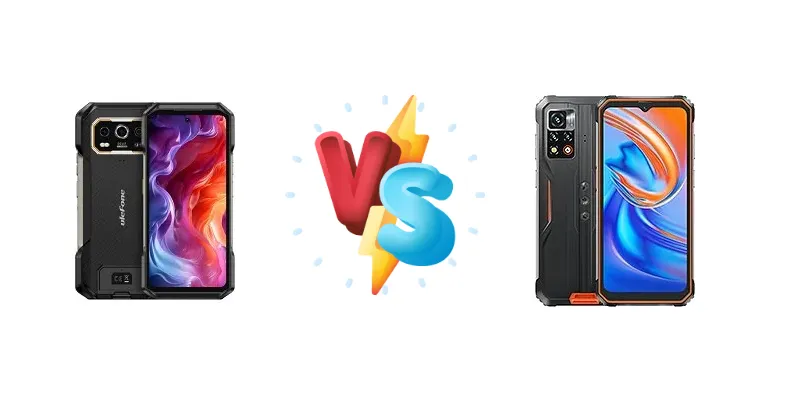
|
🏆 Quick Verdict
For users prioritizing long-term battery life and sustained performance, the Ulefone Armor 27 Pro emerges as the winner. Its Dimensity 6300 chipset, built on a 6nm process, offers superior efficiency compared to the Blackview BV9200’s 12nm Helio G96, translating to significantly longer usage between charges. However, the BV9200’s faster charging is a compelling advantage for those who need quick power-ups.
| PHONES | ||
|---|---|---|
| Phone Names | Ulefone Armor 27 Pro | Blackview BV9200 |
| Network | ||
|---|---|---|
| 2G bands | GSM 850 / 900 / 1800 / 1900 | GSM 850 / 900 / 1800 / 1900 |
| 3G bands | HSDPA 800 / 850 / 900 / 1700(AWS) / 1900 / 2100 | HSDPA 850 / 900 / 1700(AWS) / 1900 / 2100 |
| 4G bands | 1, 2, 3, 4, 5, 7, 8, 12, 13, 17, 18, 19, 20, 25, 26, 28, 34, 38, 39, 40, 41, 66, 71 | 1, 2, 3, 4, 5, 7, 8, 12, 13, 17, 18, 19, 20, 25, 26, 28, 34, 38, 39, 40, 41, 66 |
| 5G bands | 1, 2, 3, 5, 7, 8, 2, 25, 28, 38, 40, 41, 66, 71, 77, 78, 79 SA/NSA/Sub6 | - |
| Speed | HSPA, LTE, 5G | HSPA, LTE |
| Technology | GSM / HSPA / LTE / 5G | GSM / CDMA / HSPA / LTE |
| - | CDMA 800 / 1900 | |
| Launch | ||
|---|---|---|
| Announced | 2024, August 01 | 2022, December 28 |
| Status | Available. Released 2024, August 01 | Available. Released 2023, January 09 |
| Body | ||
|---|---|---|
| Dimensions | 182.8 x 86.8 x 18.5 mm (7.20 x 3.42 x 0.73 in) | 174.5 x 81.8 x 13.6 mm (6.87 x 3.22 x 0.54 in) |
| SIM | Nano-SIM + Nano-SIM | Nano-SIM + Nano-SIM |
| Weight | 441 g (15.56 oz) | 310 g (10.93 oz) |
| - | IP68/IP69K dust/water resistant (up to 1.5m for 30 min) Drop-to-concrete resistance from up to 1.8m MIL-STD-810H compliant | |
| Display | ||
|---|---|---|
| Protection | Corning Gorilla Glass Victus, Mohs level 4 | Corning Gorilla Glass 5 |
| Resolution | 1080 x 2460 pixels (~396 ppi density) | 1080 x 2408 pixels, 20:9 ratio (~400 ppi density) |
| Size | 6.78 inches, 109.2 cm2 (~68.8% screen-to-body ratio) | 6.6 inches, 104.9 cm2 (~73.5% screen-to-body ratio) |
| Type | IPS LCD, 120Hz | IPS LCD, 120Hz |
| Platform | ||
|---|---|---|
| CPU | Octa-core (2x2.4 GHz Cortex-A76 & 6x2.0 GHz Cortex-A55) | Octa-core (2x2.05 GHz Cortex-A76 & 6x2.0 GHz Cortex-A55) |
| Chipset | Mediatek Dimensity 6300 (6 nm) | Mediatek MT6781 Helio G96 (12 nm) |
| GPU | Mali-G57 MC2 | Mali-G52 MC2 |
| OS | Android 14 | Android 12, Doke-OS 3.1 |
| Memory | ||
|---|---|---|
| Card slot | microSDXC (dedicated slot) | microSDXC (dedicated slot) |
| Internal | 256GB 12GB RAM | 256GB 8GB RAM |
| - | UFS 2.1 | |
| Main Camera | ||
|---|---|---|
| Features | Dual-LED flash, HDR, panorama | LED flash, HDR, panorama |
| Single | - | 16 MP, (wide), 1/3", 1.0µm |
| Triple | 50 MP, f/2.0, (wide), 1/1.31", 1.2µm, PDAF 50 MP, f/2.2, 117˚ (ultrawide) 64 MP, f/1.8, (night vision), 2 infrared lights | 50 MP, f/1.8, (wide), 1/2.76", 0.64µm, PDAF 8 MP, f/1.8, 120˚, (ultrawide), AF Auxiliary lens |
| Video | 1440p@30fps, 1080p@30fps | 1440p@30fps, 1080p@30fps |
| Selfie camera | ||
|---|---|---|
| Single | 32 MP, f/2.5, (wide), 0.8µm | 16 MP, f/2.0, (wide), 1/3", 1.0µm |
| Video | Yes | 1080p |
| Sound | ||
|---|---|---|
| 3.5mm jack | - | No |
| 35mm jack | Yes | No |
| Loudspeaker | Yes | Yes, with dual speakers |
| Comms | ||
|---|---|---|
| Bluetooth | 5.2, A2DP, LE | 5.2, A2DP, LE |
| Infrared port | Yes | - |
| NFC | Yes | Yes |
| Positioning | GPS, GLONASS, GALILEO, BDS | GPS, GLONASS, GALILEO, BDS |
| Radio | Wireless FM radio, RDS, recording | FM radio |
| USB | USB Type-C 2.0, OTG | USB Type-C, OTG |
| WLAN | Wi-Fi 802.11 a/b/g/n/ac, dual-band | Wi-Fi 802.11 a/b/g/n/ac, dual-band |
| Features | ||
|---|---|---|
| Sensors | Fingerprint (side-mounted), accelerometer, gyro, proximity, compass, barometer | Fingerprint (side-mounted), accelerometer, gyro, proximity, compass, barometer |
| Battery | ||
|---|---|---|
| Charging | 33W wired 30W wireless Reverse wireless | 66W wired 30W wireless |
| Type | Li-Po 10600 mAh | 5000 mAh |
| Misc | ||
|---|---|---|
| Colors | Black | Black, Orange, Green |
| Price | About 400 EUR | About 200 EUR |
| EU LABEL | ||
|---|---|---|
| Battery | 113:36h endurance, 1000 cycles | - |
| Energy | Class A | - |
| Free fall | Class A (270 falls) | - |
| Repairability | Class C | - |
Ulefone Armor 27 Pro
- Exceptional battery endurance (113h36m)
- More efficient Dimensity 6300 chipset (6nm)
- Longer battery lifespan (1000 charge cycles)
- Slower wired charging (33W)
- Display specifications currently unknown
Blackview BV9200
- Faster wired charging (66W)
- Measured display brightness and contrast ratio
- Established rugged phone reputation
- Less efficient Helio G96 chipset (12nm)
- Likely lower battery endurance
Display Comparison
The Blackview BV9200 provides measured display specs, boasting a 481 nit peak brightness and a 1423:1 contrast ratio. While these are respectable figures, the Ulefone Armor 27 Pro’s display specifications are currently unavailable. However, given the Armor series’ focus on outdoor visibility, we anticipate a comparable brightness level. The contrast ratio on the BV9200 suggests a decent viewing experience, but without comparable data for the Ulefone, it’s difficult to definitively declare a winner. The absence of refresh rate information for both devices suggests standard 60Hz panels, which is typical for this segment.
Camera Comparison
Neither device’s camera specifications are detailed enough to draw firm conclusions. The lack of information regarding sensor sizes, aperture values, and image stabilization (OIS) makes a direct comparison impossible. It’s safe to assume both phones will feature a multi-camera setup, but the quality will heavily depend on the primary sensor and image processing algorithms. Without further data, we cannot assess which device offers superior image quality. We advise users to consult independent camera reviews before making a decision.
Performance
The Ulefone Armor 27 Pro’s Mediatek Dimensity 6300 (6nm) represents a significant architectural leap over the Blackview BV9200’s Helio G96 (12nm). The 6nm process inherently delivers better power efficiency and thermal performance. Both CPUs share a similar core configuration – octa-core with 2x Cortex-A76 and 6x Cortex-A55 – but the Dimensity 6300’s newer architecture and smaller node size translate to a noticeable performance advantage in sustained workloads. The BV9200’s G96 is capable, but will likely exhibit more throttling under prolonged stress, impacting gaming and demanding applications. The Armor 27 Pro is the clear winner for users who prioritize consistent performance.
Battery Life
The Ulefone Armor 27 Pro’s standout feature is its exceptional battery endurance, rated at 113 hours and 36 minutes. This is likely due to the efficient Dimensity 6300 chipset. While the Blackview BV9200 doesn’t disclose endurance, it compensates with a faster 66W wired charging solution, compared to the Ulefone’s 33W. Both support 30W wireless charging and reverse wireless charging. The Ulefone’s 1000 charge cycle rating suggests a longer lifespan for the battery itself. For users who prioritize minimizing charging frequency, the Ulefone is the obvious choice. However, the BV9200’s faster charging is invaluable for those needing a quick boost.
Buying Guide
Buy the Ulefone Armor 27 Pro if you need a phone that can truly go the distance – extended expeditions, remote work, or simply peace of mind knowing you won’t be hunting for an outlet. Buy the Blackview BV9200 if you prioritize rapid charging and are frequently in situations where a quick top-up is essential, even if it means sacrificing some overall battery endurance.