
Ulefone Armor 26 Ultra vs. Sonim XP8: A Deep Dive into Rugged Smartphone Performance
| Phones Images | |||||
|---|---|---|---|---|---|
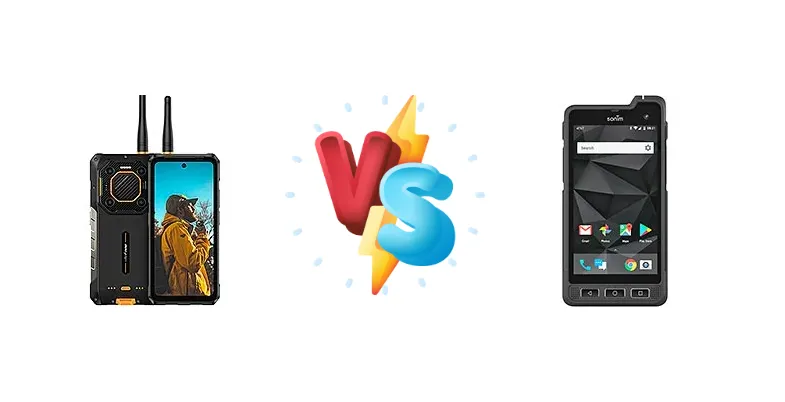
|
🏆 Quick Verdict
For the average user needing a rugged phone with strong performance and fast charging, the Ulefone Armor 26 Ultra is the clear winner. Its Dimensity 8020 chipset offers significantly more processing power than the Sonim XP8’s Snapdragon 630, and the 120W charging is a game-changer. However, those prioritizing proven reliability and a simpler user experience may still find value in the Sonim XP8.
| PHONES | ||
|---|---|---|
| Phone Names | Ulefone Armor 26 Ultra Walkie-talkie | Sonim XP8 |
| Network | ||
|---|---|---|
| 2G bands | GSM 850 / 900 / 1800 / 1900 | GSM 850 / 900 / 1800 / 1900 |
| 3G bands | HSDPA 850 / 900 / 1700(AWS) / 1900 / 2100 | HSDPA 850 / 900 / 1700(AWS) / 1900 / 2100 |
| 4G bands | 1, 2, 3, 4, 5, 7, 8, 12, 13, 17, 18, 19, 20, 25, 26, 28, 34, 38, 39, 40, 41, 66, 71 | 1, 2, 3, 4, 5, 7, 8, 12, 13, 14, 20, 25, 26, 28, 29, 30, 38, 40, 41, 66 |
| 5G bands | 1, 2, 3, 5, 7, 8, 20, 25, 28, 38, 40, 41, 66, 71, 77, 78, 79 SA/NSA/Sub6 | - |
| Speed | HSPA, LTE, 5G | HSPA 42.2/5.76 Mbps, LTE (3CA) Cat12 600/150 Mbps |
| Technology | GSM / CDMA / HSPA / LTE / 5G | GSM / CDMA / HSPA / EVDO / LTE |
| - | CDMA2000 1xEV-DO | |
| Launch | ||
|---|---|---|
| Announced | 2024, April | 2018, April. Released 2018, May |
| Status | Available. Released 2024, April | Discontinued |
| Body | ||
|---|---|---|
| Dimensions | 179 x 83 x 25.5 mm (7.05 x 3.27 x 1.00 in) | 152 x 79.5 x 18 mm (5.98 x 3.13 x 0.71 in) |
| SIM | Nano-SIM + Nano-SIM | Nano-SIM + Nano-SIM |
| Weight | 609 g (1.34 lb) | 335 g (11.82 oz) |
| - | IP69 dust proof and water resistant over 1 meter and 30 minutes MIL-STD-810G | |
| Display | ||
|---|---|---|
| Protection | Corning Gorilla Glass 5 | Corning Gorilla Glass 3 |
| Resolution | 1080 x 2460 pixels (~396 ppi density) | 1080 x 1920 pixels, 16:9 ratio (~441 ppi density) |
| Size | 6.78 inches, 109.2 cm2 (~73.5% screen-to-body ratio) | 5.0 inches, 68.9 cm2 (~57.0% screen-to-body ratio) |
| Type | IPS LCD, 120Hz | IPS LCD |
| Platform | ||
|---|---|---|
| CPU | Octa-core (4x2.6 GHz Cortex-A78 & 4x2.0 GHz Cortex-A55) | Octa-core 2.2 GHz Cortex-A53 |
| Chipset | Mediatek Dimensity 8020 (6 nm) | Qualcomm SDM630 Snapdragon 630 (14 nm) |
| GPU | Mali-G77 MC9 | Adreno 508 |
| OS | Android 13 | Android 7.0 (Nougat) |
| Memory | ||
|---|---|---|
| Card slot | microSDXC (dedicated slot) | microSDXC |
| Internal | 512GB 12GB RAM | 64GB 4GB RAM |
| Main Camera | ||
|---|---|---|
| Features | Quad-LED flash, HDR, panorama | LED flash, HDR, panorama |
| Quad | 200 MP, f/1.8, (wide), 1/1.4", 0.56µm, PDAF 8 MP, (telephoto), 3.2x optical zoom 50 MP, f/2.2, 117˚ (ultrawide) 64 MP, f/1.8, (night vision), 2 infrared night vision lights | - |
| Single | - | 12 MP, PDAF |
| Video | 4K@30fps, 1080p@30fps | 1080p@30fps |
| Selfie camera | ||
|---|---|---|
| Single | 50 MP, f/2.3, (wide), 1.0µm | 8 MP |
| Video | 1080p@30fps | 1080p@30fps |
| Sound | ||
|---|---|---|
| 3.5mm jack | - | No |
| 35mm jack | Yes | No |
| Loudspeaker | Yes | Yes |
| Comms | ||
|---|---|---|
| Bluetooth | 5.2, A2DP, LE | 5.0, A2DP, EDR, LE |
| Infrared port | Yes | - |
| NFC | Yes | Yes |
| Positioning | GPS (L1+L5), GLONASS, GALILEO, BDS, QZSS | GPS, GLONASS |
| Radio | Wireless FM radio, RDS, recording | FM radio |
| USB | USB Type-C 3.1, OTG | USB Type-C 2.0, magnetic connector |
| WLAN | Wi-Fi 802.11 a/b/g/n/ac/6, dual-band | Wi-Fi 802.11 a/b/g/n/ac, dual-band, Wi-Fi Direct |
| Features | ||
|---|---|---|
| Sensors | Fingerprint (side-mounted), accelerometer, proximity, compass, gyro, barometer | Accelerometer, gyro, proximity, compass, barometer |
| Battery | ||
|---|---|---|
| Charging | 120W wired 33W wireless (via docking station with pins) Reverse wired | 18W wired, QC4 |
| Music play | - | Up to 70 h |
| Stand-by | - | Up to 720 h |
| Talk time | - | Up to 30 h |
| Type | Li-Po 15600 mAh | Li-Ion 4900 mAh, removable |
| Misc | ||
|---|---|---|
| Colors | Black | Black |
| Models | - | XP8800 |
| Price | About 600 EUR | About 700 EUR |
Ulefone Armor 26 Ultra Walkie-talkie
- Significantly faster processor for demanding tasks
- Ultra-fast 120W wired and 33W wireless charging
- Likely superior camera performance
- Potential for software instability (Ulefone's track record)
- Long-term durability remains to be fully tested
Sonim XP8
- Proven durability and reliability in harsh environments
- Dedicated PTT functionality for professional communication
- Simpler, more focused user experience
- Outdated processor struggles with modern applications
- Slow 18W charging
- Limited camera capabilities
Display Comparison
Neither Ulefone nor Sonim provide detailed display specs beyond basic resolution. However, the Armor 26 Ultra’s modern chipset suggests a potentially higher-quality panel with features like a higher refresh rate. The XP8, with its older processor, likely utilizes a standard 60Hz LCD. While both will prioritize visibility in direct sunlight, the Armor 26 Ultra likely benefits from a brighter panel and potentially better color accuracy due to the more advanced processing capabilities driving the display.
Camera Comparison
Detailed camera specs are unavailable for both devices. However, given the Armor 26 Ultra’s focus on modern features, it likely incorporates a more advanced camera system with a larger sensor and improved image processing. The Snapdragon 630’s ISP in the XP8 is comparatively limited. While both phones will likely offer acceptable image quality in good lighting conditions, the Armor 26 Ultra should excel in low-light scenarios and offer more versatile shooting options.
Performance
The performance gap between these devices is substantial. The Ulefone Armor 26 Ultra’s Mediatek Dimensity 8020 (6nm) features an octa-core CPU with 4x2.6 GHz Cortex-A78 cores and 4x2.0 GHz Cortex-A55 cores, offering a significant leap in processing power compared to the Sonim XP8’s Qualcomm Snapdragon 630 (14nm) with its octa-core 2.2 GHz Cortex-A53 CPU. The 6nm process node of the Dimensity 8020 also translates to improved thermal efficiency, reducing throttling during sustained workloads. This means the Armor 26 Ultra will handle demanding applications and multitasking with ease, while the XP8 will struggle with anything beyond basic tasks.
Battery Life
Battery capacity isn’t specified, but the charging capabilities highlight a key difference. The Ulefone Armor 26 Ultra’s 120W wired charging and 33W wireless charging (via docking station) are dramatically faster than the Sonim XP8’s 18W wired charging with Quick Charge 4.0. This means the Armor 26 Ultra can replenish its battery much more quickly, minimizing downtime. While the XP8 may offer slightly better battery life due to its less power-hungry chipset, the Armor 26 Ultra’s fast charging mitigates this advantage.
Buying Guide
Buy the Ulefone Armor 26 Ultra Walkie-talkie if you need a rugged phone that can also handle demanding tasks like gaming, video editing, or running multiple apps simultaneously, and if fast charging is a priority. Buy the Sonim XP8 if you prefer a device focused on extreme durability, reliable PTT communication, and a longer-established track record in harsh environments, even if it means sacrificing processing power and modern features.