
Ulefone Armor 26 Ultra vs Blackview BV9200: A Deep Dive into Rugged Performance
| Phones Images | |||||
|---|---|---|---|---|---|
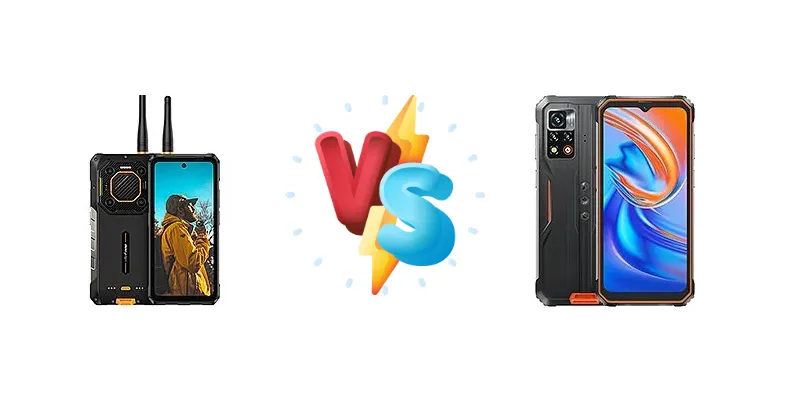
|
🏆 Quick Verdict
For users prioritizing raw performance and future-proofing, the Ulefone Armor 26 Ultra is the clear winner. Its Dimensity 8020 chipset offers a significant leap over the Blackview BV9200’s Helio G96, translating to smoother multitasking and gaming. While the BV9200 offers a respectable experience, the Armor 26 Ultra’s superior processing power and charging speed justify its price premium.
| PHONES | ||
|---|---|---|
| Phone Names | Ulefone Armor 26 Ultra Walkie-talkie | Blackview BV9200 |
| Network | ||
|---|---|---|
| 2G bands | GSM 850 / 900 / 1800 / 1900 | GSM 850 / 900 / 1800 / 1900 |
| 3G bands | HSDPA 850 / 900 / 1700(AWS) / 1900 / 2100 | HSDPA 850 / 900 / 1700(AWS) / 1900 / 2100 |
| 4G bands | 1, 2, 3, 4, 5, 7, 8, 12, 13, 17, 18, 19, 20, 25, 26, 28, 34, 38, 39, 40, 41, 66, 71 | 1, 2, 3, 4, 5, 7, 8, 12, 13, 17, 18, 19, 20, 25, 26, 28, 34, 38, 39, 40, 41, 66 |
| 5G bands | 1, 2, 3, 5, 7, 8, 20, 25, 28, 38, 40, 41, 66, 71, 77, 78, 79 SA/NSA/Sub6 | - |
| Speed | HSPA, LTE, 5G | HSPA, LTE |
| Technology | GSM / CDMA / HSPA / LTE / 5G | GSM / CDMA / HSPA / LTE |
| - | CDMA 800 / 1900 | |
| Launch | ||
|---|---|---|
| Announced | 2024, April | 2022, December 28 |
| Status | Available. Released 2024, April | Available. Released 2023, January 09 |
| Body | ||
|---|---|---|
| Dimensions | 179 x 83 x 25.5 mm (7.05 x 3.27 x 1.00 in) | 174.5 x 81.8 x 13.6 mm (6.87 x 3.22 x 0.54 in) |
| SIM | Nano-SIM + Nano-SIM | Nano-SIM + Nano-SIM |
| Weight | 609 g (1.34 lb) | 310 g (10.93 oz) |
| - | IP68/IP69K dust/water resistant (up to 1.5m for 30 min) Drop-to-concrete resistance from up to 1.8m MIL-STD-810H compliant | |
| Display | ||
|---|---|---|
| Protection | Corning Gorilla Glass 5 | Corning Gorilla Glass 5 |
| Resolution | 1080 x 2460 pixels (~396 ppi density) | 1080 x 2408 pixels, 20:9 ratio (~400 ppi density) |
| Size | 6.78 inches, 109.2 cm2 (~73.5% screen-to-body ratio) | 6.6 inches, 104.9 cm2 (~73.5% screen-to-body ratio) |
| Type | IPS LCD, 120Hz | IPS LCD, 120Hz |
| Platform | ||
|---|---|---|
| CPU | Octa-core (4x2.6 GHz Cortex-A78 & 4x2.0 GHz Cortex-A55) | Octa-core (2x2.05 GHz Cortex-A76 & 6x2.0 GHz Cortex-A55) |
| Chipset | Mediatek Dimensity 8020 (6 nm) | Mediatek MT6781 Helio G96 (12 nm) |
| GPU | Mali-G77 MC9 | Mali-G52 MC2 |
| OS | Android 13 | Android 12, Doke-OS 3.1 |
| Memory | ||
|---|---|---|
| Card slot | microSDXC (dedicated slot) | microSDXC (dedicated slot) |
| Internal | 512GB 12GB RAM | 256GB 8GB RAM |
| - | UFS 2.1 | |
| Main Camera | ||
|---|---|---|
| Features | Quad-LED flash, HDR, panorama | LED flash, HDR, panorama |
| Quad | 200 MP, f/1.8, (wide), 1/1.4", 0.56µm, PDAF 8 MP, (telephoto), 3.2x optical zoom 50 MP, f/2.2, 117˚ (ultrawide) 64 MP, f/1.8, (night vision), 2 infrared night vision lights | - |
| Single | - | 16 MP, (wide), 1/3", 1.0µm |
| Triple | - | 50 MP, f/1.8, (wide), 1/2.76", 0.64µm, PDAF 8 MP, f/1.8, 120˚, (ultrawide), AF Auxiliary lens |
| Video | 4K@30fps, 1080p@30fps | 1440p@30fps, 1080p@30fps |
| Selfie camera | ||
|---|---|---|
| Single | 50 MP, f/2.3, (wide), 1.0µm | 16 MP, f/2.0, (wide), 1/3", 1.0µm |
| Video | 1080p@30fps | 1080p |
| Sound | ||
|---|---|---|
| 3.5mm jack | - | No |
| 35mm jack | Yes | No |
| Loudspeaker | Yes | Yes, with dual speakers |
| Comms | ||
|---|---|---|
| Bluetooth | 5.2, A2DP, LE | 5.2, A2DP, LE |
| Infrared port | Yes | - |
| NFC | Yes | Yes |
| Positioning | GPS (L1+L5), GLONASS, GALILEO, BDS, QZSS | GPS, GLONASS, GALILEO, BDS |
| Radio | Wireless FM radio, RDS, recording | FM radio |
| USB | USB Type-C 3.1, OTG | USB Type-C, OTG |
| WLAN | Wi-Fi 802.11 a/b/g/n/ac/6, dual-band | Wi-Fi 802.11 a/b/g/n/ac, dual-band |
| Features | ||
|---|---|---|
| Sensors | Fingerprint (side-mounted), accelerometer, proximity, compass, gyro, barometer | Fingerprint (side-mounted), accelerometer, gyro, proximity, compass, barometer |
| Battery | ||
|---|---|---|
| Charging | 120W wired 33W wireless (via docking station with pins) Reverse wired | 66W wired 30W wireless |
| Type | Li-Po 15600 mAh | 5000 mAh |
| Misc | ||
|---|---|---|
| Colors | Black | Black, Orange, Green |
| Price | About 600 EUR | About 200 EUR |
Ulefone Armor 26 Ultra Walkie-talkie
- Significantly faster processor (Dimensity 8020)
- Blazing-fast 120W wired charging
- Potentially more efficient power consumption
- Display specifications currently unknown
- Potentially higher price point
Blackview BV9200
- Solid build quality and ruggedness
- Respectable performance for everyday tasks
- More affordable price point
- Older and less powerful chipset (Helio G96)
- Slower charging speeds compared to Ulefone
Display Comparison
The Blackview BV9200 provides a measured peak brightness of 481 nits and a 1423:1 contrast ratio, offering a usable outdoor viewing experience. However, the Ulefone Armor 26 Ultra’s display specifications are currently unavailable, making a direct comparison difficult. Given Ulefone’s recent focus on high-refresh-rate panels in other models, it’s reasonable to expect a comparable or superior display experience, potentially with a higher refresh rate. The BV9200’s contrast ratio is solid, but the Armor 26 Ultra could potentially offer better color accuracy depending on its panel technology.
Camera Comparison
Detailed camera specifications for both devices are limited. However, given the focus on ruggedness, we can assume both prioritize durability over cutting-edge camera technology. The absence of detailed sensor information suggests neither device will compete with flagship smartphone cameras. The Ulefone Armor 26 Ultra’s potential advantage lies in the processing power of the Dimensity 8020, which could enable better image processing algorithms. The BV9200’s camera performance will likely be adequate for casual photography in good lighting conditions.
Performance
This is where the Ulefone Armor 26 Ultra truly shines. Its Mediatek Dimensity 8020 (6nm) chipset, featuring an octa-core CPU with 4x2.6 GHz Cortex-A78 and 4x2.0 GHz Cortex-A55 cores, represents a substantial upgrade over the Blackview BV9200’s Mediatek MT6781 Helio G96 (12nm). The 6nm process node of the Dimensity 8020 translates to improved power efficiency and reduced thermal throttling compared to the 12nm Helio G96. The Cortex-A78 cores in the Armor 26 Ultra also offer significantly higher single-core performance, benefiting responsiveness and app launch times. The BV9200’s Helio G96, with its 2x2.05 GHz Cortex-A76 and 6x2.0 GHz Cortex-A55 cores, is adequate for everyday tasks but will struggle with demanding applications.
Battery Life
The Ulefone Armor 26 Ultra boasts a significant advantage in charging speed with its 120W wired charging capability, allowing for incredibly fast top-ups. It also supports 33W wireless charging via a docking station with pins, and reverse wired charging. The Blackview BV9200 offers 66W wired charging and 30W wireless charging. While both offer wireless charging, the Armor 26 Ultra’s faster wired charging is a major convenience factor. Battery capacity is not specified for either device, but the Armor 26 Ultra’s more efficient chipset could potentially offset a smaller battery size.
Buying Guide
Buy the Ulefone Armor 26 Ultra Walkie-talkie if you need uncompromising performance for demanding tasks like video editing, gaming, or running multiple apps simultaneously, and if rapid charging is a priority. Buy the Blackview BV9200 if you prefer a more budget-friendly option that still delivers a durable build and reliable performance for everyday tasks, and aren't as concerned with top-tier processing power.