
Ulefone Armor 25T Pro vs Power Armor 18T Ultra: Which Rugged Phone Reigns Supreme?
| Phones Images | |||||
|---|---|---|---|---|---|
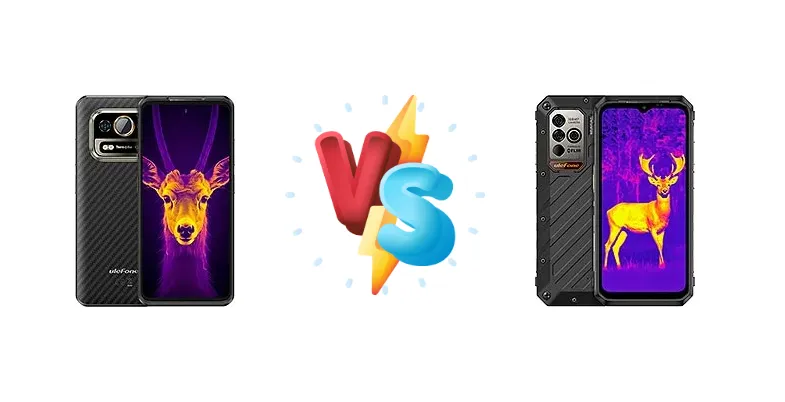
|
🏆 Quick Verdict
For most users, the Ulefone Power Armor 18T Ultra is the stronger choice. Its Dimensity 7050 chipset provides a noticeable performance uplift, and the 66W charging significantly reduces downtime. While the 25T Pro offers wireless charging, the 18T Ultra’s superior battery life and faster wired charging are more impactful for the target audience.
| PHONES | ||
|---|---|---|
| Phone Names | Ulefone Armor 25T Pro | Ulefone Power Armor 18T Ultra |
| Network | ||
|---|---|---|
| 2G bands | GSM 850 / 900 / 1800 / 1900 | GSM 850 / 900 / 1800 / 1900 |
| 3G bands | HSDPA 800 / 850 / 900 / 1700(AWS) / 1900 / 2100 | HSDPA 800 / 850 / 900 / 1700(AWS) / 1900 / 2100 |
| 4G bands | 1, 2, 3, 4, 5, 7, 8, 12, 13, 17, 18, 19, 20, 25, 26, 28, 34, 38, 39, 40, 41, 66, 71 | 1, 2, 3, 4, 5, 7, 8, 12, 13, 17, 18, 19, 20, 25, 26, 28, 34, 38, 39, 40, 41, 66, 71 |
| 5G bands | 1, 3, 5, 8, 20, 28, 38, 41, 71, 77, 78, 79 SA/NSA/Sub6 | 1, 2, 3, 5, 7, 8, 12, 20, 25, 28, 38, 40, 41, 66, 71, 77, 78, 79 SA/NSA/Sub6 |
| Speed | HSPA, LTE, 5G | HSPA, LTE, 5G |
| Technology | GSM / HSPA / LTE / 5G | GSM / CDMA / HSPA / CDMA2000 / LTE / 5G |
| Launch | ||
|---|---|---|
| Announced | 2024, May | 2023, October |
| Status | Available. Released 2024, May | Available. Released 2023, November |
| Body | ||
|---|---|---|
| Dimensions | 177.4 x 81.4 x 12.5 mm (6.98 x 3.20 x 0.49 in) | 175.2 x 83.4 x 18.8 mm (6.90 x 3.28 x 0.74 in) |
| SIM | Nano-SIM + Nano-SIM | Nano-SIM + Nano-SIM |
| Weight | 326 g (11.50 oz) | 409 g (14.43 oz) |
| Display | ||
|---|---|---|
| Protection | Corning Gorilla Glass Victus | Corning Gorilla Glass 5, Mohs level 4 |
| Resolution | 1080 x 2460 pixels (~396 ppi density) | 1080 x 2408 pixels, 20:9 ratio (~401 ppi density) |
| Size | 6.78 inches, 109.2 cm2 (~75.6% screen-to-body ratio) | 6.58 inches, 104.3 cm2 (~71.4% screen-to-body ratio) |
| Type | IPS LCD, 120Hz | IPS LCD, 120Hz |
| Platform | ||
|---|---|---|
| CPU | Octa-core (2x2.4 GHz Cortex-A76 & 6x2.0 GHz Cortex-A55) | Octa-core (2x2.6 GHz Cortex-A78 & 6x2.0 GHz Cortex-A55) |
| Chipset | Mediatek Dimensity 6300 (6 nm) | Mediatek Dimensity 7050 (6 nm) |
| GPU | Mali-G57 MC2 | Mali-G68 MC4 |
| OS | Android 14 | Android 13, upgradable to Android 14 |
| Memory | ||
|---|---|---|
| Card slot | microSDXC (dedicated slot) | microSDXC (uses shared SIM slot) |
| Internal | 256GB 6GB RAM | 512GB 12GB RAM |
| Main Camera | ||
|---|---|---|
| Features | Dual-LED flash, HDR, panorama | Hexa-LED flash, HDR, panorama |
| Triple | 50 MP, f/1.7, (wide), 1/1.31", 1.2µm, PDAF 64 MP, f/1.8, (night vision), 2 infrared night vision lights Thermal camera by ThermoVue, 160x120 px, 25Hz, 12μm | 108 MP, f/1.9, (wide), 1/1.52", 0.7µm, PDAF 5 MP (macro) 5 MP, f/2.2, (FLIR thermal camera, Lepton module) |
| Video | 1440p@30fps, 1080p@30fps | 4K@30fps, 1080p@30fps |
| Selfie camera | ||
|---|---|---|
| Single | 32 MP, f/2.5, (wide), 0.8µm | 32 MP, f/2.0, (wide), 1.2µm |
| Video | Yes | 1080p@30fps |
| Sound | ||
|---|---|---|
| 35mm jack | Yes | Yes |
| Loudspeaker | Yes | Yes |
| Comms | ||
|---|---|---|
| Bluetooth | 5.2, A2DP, LE | 5.0, A2DP, LE |
| Infrared port | Yes | - |
| NFC | Yes | Yes |
| Positioning | GPS, GLONASS, GALILEO, BDS | GPS (L1+L5), GLONASS, GALILEO, BDS, NavIC |
| Radio | Wireless FM radio, RDS, recording | Wireless FM radio, RDS, recording |
| USB | USB Type-C 2.0, OTG | USB Type-C 2.0, OTG, magnetic connector |
| WLAN | Wi-Fi 802.11 a/b/g/n/ac, dual-band | Wi-Fi 802.11 a/b/g/n/ac/6, dual-band |
| Features | ||
|---|---|---|
| Sensors | Fingerprint (side-mounted), accelerometer, gyro, proximity, compass, barometer | Fingerprint (side-mounted), accelerometer, gyro, proximity, compass |
| Battery | ||
|---|---|---|
| Charging | 33W wired 30W wireless Reverse wireless | 66W wired, 52% in 30 min 15W wireless 5W wireless reversed |
| Type | Li-Po 6500 mAh | Li-Po 9600 mAh |
| Misc | ||
|---|---|---|
| Colors | Black | Black |
| Price | About 420 EUR | About 700 EUR |
| EU LABEL | ||
|---|---|---|
| Battery | - | 88:30h endurance, 1000 cycles |
| Energy | - | Class B |
| Free fall | - | Class A (270 falls) |
| Repairability | - | Class C |
Ulefone Armor 25T Pro
- Offers 30W wireless charging for added convenience.
- Potentially more affordable price point.
- Slightly more compact design (speculation based on model naming).
- Dimensity 6300 chipset is less powerful than the 7050.
- Slower wired charging speed (33W vs 66W).
- No stated battery endurance rating.
Ulefone Power Armor 18T Ultra
- Faster Dimensity 7050 chipset for improved performance.
- 66W fast charging significantly reduces charging time.
- Exceptional 88:30h battery endurance and 1000 charge cycles.
- Wireless charging is limited to 15W.
- Higher price point.
- Larger size may be less comfortable for some users.
Display Comparison
Neither Ulefone provides display specs beyond resolution, so a direct comparison is limited. However, given the price points, we can assume both utilize IPS LCD panels. The focus here is on durability, not visual fidelity. The Armor 18T Ultra’s larger size *may* allow for a slightly larger display, but this is speculative. Bezels are likely similar on both, prioritizing impact resistance over a modern edge-to-edge design.
Camera Comparison
Without detailed camera specifications, a precise comparison is difficult. However, Ulefone typically focuses on megapixel count rather than sensor size. We can assume both phones feature a multi-camera setup, but image quality will likely depend more on software processing than raw hardware. The absence of detailed aperture information suggests neither phone excels in low-light photography. The 18T Ultra’s slightly higher price point *might* indicate a marginally better primary sensor, but this is unconfirmed.
Performance
The Ulefone Power Armor 18T Ultra’s Mediatek Dimensity 7050 (6nm) represents a clear advantage over the Armor 25T Pro’s Dimensity 6300 (6nm). The 7050 features a faster CPU configuration – 2x2.6 GHz Cortex-A78 vs 2x2.4 GHz Cortex-A76 – translating to snappier application loading and smoother multitasking. While both chipsets utilize the same 6nm process, the A78 cores in the 7050 are architecturally superior. This difference will be most noticeable in demanding tasks like gaming and video editing. The 18T Ultra will offer a more responsive experience overall.
Battery Life
The Ulefone Power Armor 18T Ultra dominates in battery performance. While the Armor 25T Pro offers 33W wired and 30W wireless charging, the 18T Ultra boasts 66W wired charging, capable of reaching 52% charge in just 30 minutes. This is a significant time saving. The 18T Ultra also claims an 88:30h endurance rating and 1000 charge cycles, indicating exceptional longevity. The 15W wireless charging on the 18T Ultra is slower than the 25T Pro’s 30W, but the overall battery package is far more compelling.
Buying Guide
Buy the Ulefone Armor 25T Pro if you prioritize wireless charging convenience and a slightly more streamlined user experience. It’s ideal for professionals who need a reliable, capable device for everyday tasks and occasional outdoor adventures. Buy the Ulefone Power Armor 18T Ultra if you demand maximum battery life, require the fastest possible charging speeds, and need a phone that can withstand truly demanding conditions – perfect for construction workers, outdoor enthusiasts, or anyone who frequently finds themselves off-grid.