
Ulefone Armor 25T Pro vs. Blackview BV9200: A Rugged Smartphone Showdown
| Phones Images | |||||
|---|---|---|---|---|---|
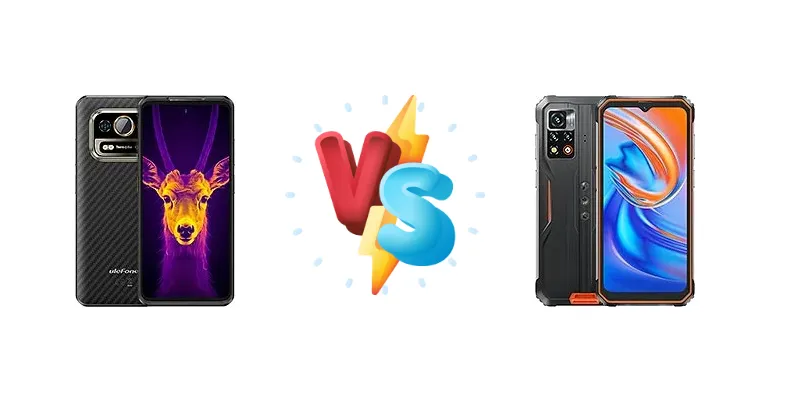
|
🏆 Quick Verdict
For users prioritizing raw performance and future-proofing, the Ulefone Armor 25T Pro is the clear winner. Its Dimensity 6300 chipset offers a significant leap in processing power over the Blackview BV9200’s Helio G96. However, the BV9200’s faster 66W wired charging and brighter display make it a strong contender for those valuing efficiency and visibility.
| PHONES | ||
|---|---|---|
| Phone Names | Ulefone Armor 25T Pro | Blackview BV9200 |
| Network | ||
|---|---|---|
| 2G bands | GSM 850 / 900 / 1800 / 1900 | GSM 850 / 900 / 1800 / 1900 |
| 3G bands | HSDPA 800 / 850 / 900 / 1700(AWS) / 1900 / 2100 | HSDPA 850 / 900 / 1700(AWS) / 1900 / 2100 |
| 4G bands | 1, 2, 3, 4, 5, 7, 8, 12, 13, 17, 18, 19, 20, 25, 26, 28, 34, 38, 39, 40, 41, 66, 71 | 1, 2, 3, 4, 5, 7, 8, 12, 13, 17, 18, 19, 20, 25, 26, 28, 34, 38, 39, 40, 41, 66 |
| 5G bands | 1, 3, 5, 8, 20, 28, 38, 41, 71, 77, 78, 79 SA/NSA/Sub6 | - |
| Speed | HSPA, LTE, 5G | HSPA, LTE |
| Technology | GSM / HSPA / LTE / 5G | GSM / CDMA / HSPA / LTE |
| - | CDMA 800 / 1900 | |
| Launch | ||
|---|---|---|
| Announced | 2024, May | 2022, December 28 |
| Status | Available. Released 2024, May | Available. Released 2023, January 09 |
| Body | ||
|---|---|---|
| Dimensions | 177.4 x 81.4 x 12.5 mm (6.98 x 3.20 x 0.49 in) | 174.5 x 81.8 x 13.6 mm (6.87 x 3.22 x 0.54 in) |
| SIM | Nano-SIM + Nano-SIM | Nano-SIM + Nano-SIM |
| Weight | 326 g (11.50 oz) | 310 g (10.93 oz) |
| - | IP68/IP69K dust/water resistant (up to 1.5m for 30 min) Drop-to-concrete resistance from up to 1.8m MIL-STD-810H compliant | |
| Display | ||
|---|---|---|
| Protection | Corning Gorilla Glass Victus | Corning Gorilla Glass 5 |
| Resolution | 1080 x 2460 pixels (~396 ppi density) | 1080 x 2408 pixels, 20:9 ratio (~400 ppi density) |
| Size | 6.78 inches, 109.2 cm2 (~75.6% screen-to-body ratio) | 6.6 inches, 104.9 cm2 (~73.5% screen-to-body ratio) |
| Type | IPS LCD, 120Hz | IPS LCD, 120Hz |
| Platform | ||
|---|---|---|
| CPU | Octa-core (2x2.4 GHz Cortex-A76 & 6x2.0 GHz Cortex-A55) | Octa-core (2x2.05 GHz Cortex-A76 & 6x2.0 GHz Cortex-A55) |
| Chipset | Mediatek Dimensity 6300 (6 nm) | Mediatek MT6781 Helio G96 (12 nm) |
| GPU | Mali-G57 MC2 | Mali-G52 MC2 |
| OS | Android 14 | Android 12, Doke-OS 3.1 |
| Memory | ||
|---|---|---|
| Card slot | microSDXC (dedicated slot) | microSDXC (dedicated slot) |
| Internal | 256GB 6GB RAM | 256GB 8GB RAM |
| - | UFS 2.1 | |
| Main Camera | ||
|---|---|---|
| Features | Dual-LED flash, HDR, panorama | LED flash, HDR, panorama |
| Single | - | 16 MP, (wide), 1/3", 1.0µm |
| Triple | 50 MP, f/1.7, (wide), 1/1.31", 1.2µm, PDAF 64 MP, f/1.8, (night vision), 2 infrared night vision lights Thermal camera by ThermoVue, 160x120 px, 25Hz, 12μm | 50 MP, f/1.8, (wide), 1/2.76", 0.64µm, PDAF 8 MP, f/1.8, 120˚, (ultrawide), AF Auxiliary lens |
| Video | 1440p@30fps, 1080p@30fps | 1440p@30fps, 1080p@30fps |
| Selfie camera | ||
|---|---|---|
| Single | 32 MP, f/2.5, (wide), 0.8µm | 16 MP, f/2.0, (wide), 1/3", 1.0µm |
| Video | Yes | 1080p |
| Sound | ||
|---|---|---|
| 3.5mm jack | - | No |
| 35mm jack | Yes | No |
| Loudspeaker | Yes | Yes, with dual speakers |
| Comms | ||
|---|---|---|
| Bluetooth | 5.2, A2DP, LE | 5.2, A2DP, LE |
| Infrared port | Yes | - |
| NFC | Yes | Yes |
| Positioning | GPS, GLONASS, GALILEO, BDS | GPS, GLONASS, GALILEO, BDS |
| Radio | Wireless FM radio, RDS, recording | FM radio |
| USB | USB Type-C 2.0, OTG | USB Type-C, OTG |
| WLAN | Wi-Fi 802.11 a/b/g/n/ac, dual-band | Wi-Fi 802.11 a/b/g/n/ac, dual-band |
| Features | ||
|---|---|---|
| Sensors | Fingerprint (side-mounted), accelerometer, gyro, proximity, compass, barometer | Fingerprint (side-mounted), accelerometer, gyro, proximity, compass, barometer |
| Battery | ||
|---|---|---|
| Charging | 33W wired 30W wireless Reverse wireless | 66W wired 30W wireless |
| Type | Li-Po 6500 mAh | 5000 mAh |
| Misc | ||
|---|---|---|
| Colors | Black | Black, Orange, Green |
| Price | About 420 EUR | About 200 EUR |
Ulefone Armor 25T Pro
- Significantly faster processor (Dimensity 6300)
- More efficient 6nm process node
- Potential for better sustained performance
- Slower wired charging (33W)
- Display specifications unknown
- Battery capacity not specified
Blackview BV9200
- Faster wired charging (66W)
- Brighter display (481 nits)
- Good contrast ratio (1423:1)
- Less powerful processor (Helio G96)
- Less efficient 12nm process node
- Potential for thermal throttling
Display Comparison
The Blackview BV9200 boasts a measured peak brightness of 481 nits and a 1423:1 contrast ratio, providing good visibility in direct sunlight. While the Ulefone Armor 25T Pro’s display specifications are not provided, the BV9200’s brightness is a clear advantage for outdoor workers or adventurers. The contrast ratio on the BV9200 suggests a decent viewing experience, though the panel technology (likely IPS) isn’t specified. Without knowing the Armor 25T Pro’s display specs, it’s difficult to assess its color accuracy or viewing angles, but the BV9200 sets a solid baseline.
Camera Comparison
Neither device’s camera specifications are detailed enough to draw definitive conclusions. However, given the rugged phone segment, image processing tends to prioritize practicality over artistic flair. Without knowing sensor sizes or aperture values, it’s impossible to assess low-light performance. The presence of a 2MP macro camera on the BV9200 is likely a marketing feature with limited real-world utility. The focus should be on the main sensor’s capabilities, which are currently unknown for both devices.
Performance
The Ulefone Armor 25T Pro’s Mediatek Dimensity 6300 (6nm) represents a substantial upgrade over the Blackview BV9200’s Helio G96 (12nm). The 6nm process node allows for greater transistor density and improved power efficiency, translating to better sustained performance and reduced thermal throttling. While both CPUs feature a similar core configuration (2x Cortex-A76 and 6x Cortex-A55), the Dimensity 6300’s Cortex-A76 cores operate at a higher clock speed (2.4 GHz vs 2.05 GHz), resulting in faster single-core performance. This difference will be noticeable in app launch times, multitasking, and demanding games. The Armor 25T Pro is the clear winner for users who prioritize speed.
Battery Life
The Blackview BV9200’s 66W wired charging is significantly faster than the Ulefone Armor 25T Pro’s 33W charging. This translates to a quicker turnaround time for topping up the battery, crucial for users who rely heavily on their phone throughout the day. Both devices offer 30W wireless charging and reverse wireless charging, providing convenient charging options. While battery capacity isn’t specified for either device, the faster charging speed of the BV9200 partially offsets any potential capacity disadvantage.
Buying Guide
Buy the Ulefone Armor 25T Pro if you need a rugged phone capable of handling demanding tasks like mobile gaming, video editing, or running resource-intensive applications. Buy the Blackview BV9200 if you prioritize battery life, a brighter screen for outdoor use, and faster wired charging, and your workload consists of everyday tasks and moderate media consumption.