
Ulefone Armor 22 vs. Blackview BV9200: A Deep Dive into Rugged Smartphone Performance
| Phones Images | |||||
|---|---|---|---|---|---|
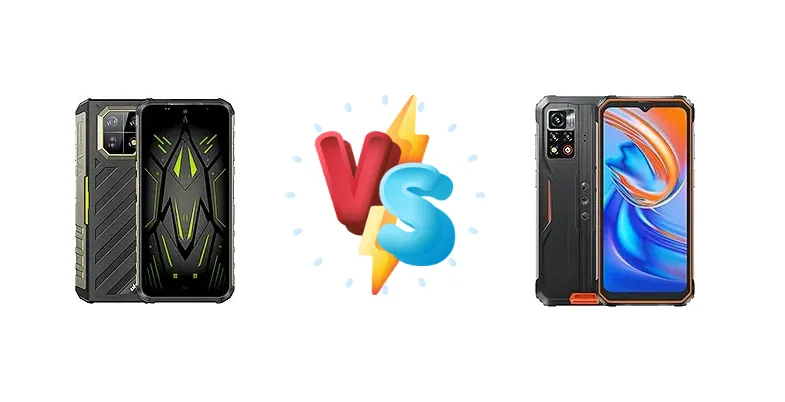
|
🏆 Quick Verdict
For users prioritizing maximum uptime and longevity, the Ulefone Armor 22’s impressive 72-hour battery endurance is a clear winner. However, the Blackview BV9200 counters with significantly faster 66W wired and 30W wireless charging, making it ideal for those who need quick power top-ups.
| PHONES | ||
|---|---|---|
| Phone Names | Ulefone Armor 22 | Blackview BV9200 |
| Network | ||
|---|---|---|
| 2G bands | GSM 850 / 900 / 1800 / 1900 | GSM 850 / 900 / 1800 / 1900 |
| 3G bands | HSDPA 850 / 900 / 1700(AWS) / 1900 / 2100 | HSDPA 850 / 900 / 1700(AWS) / 1900 / 2100 |
| 4G bands | 1, 2, 3, 4, 5, 7, 8, 12, 17, 19, 20, 28, 34, 38, 39, 40, 41, 66 | 1, 2, 3, 4, 5, 7, 8, 12, 13, 17, 18, 19, 20, 25, 26, 28, 34, 38, 39, 40, 41, 66 |
| Speed | HSPA, LTE | HSPA, LTE |
| Technology | GSM / HSPA / LTE | GSM / CDMA / HSPA / LTE |
| - | CDMA 800 / 1900 | |
| Launch | ||
|---|---|---|
| Announced | 2023, August 14 | 2022, December 28 |
| Status | Available. Released 2023, August | Available. Released 2023, January 09 |
| Body | ||
|---|---|---|
| Dimensions | 176.8 x 84.9 x 15 mm (6.96 x 3.34 x 0.59 in) | 174.5 x 81.8 x 13.6 mm (6.87 x 3.22 x 0.54 in) |
| SIM | Nano-SIM + Nano-SIM | Nano-SIM + Nano-SIM |
| Weight | 324 g (11.43 oz) | 310 g (10.93 oz) |
| - | IP68/IP69K dust/water resistant (up to 1.5m for 30 min) Drop-to-concrete resistance from up to 1.8m MIL-STD-810H compliant | |
| Display | ||
|---|---|---|
| Protection | Mohs level 4 | Corning Gorilla Glass 5 |
| Resolution | 1080 x 2408 pixels, 20:9 ratio (~401 ppi density) | 1080 x 2408 pixels, 20:9 ratio (~400 ppi density) |
| Size | 6.58 inches, 104.3 cm2 (~69.5% screen-to-body ratio) | 6.6 inches, 104.9 cm2 (~73.5% screen-to-body ratio) |
| Type | IPS LCD, 120Hz | IPS LCD, 120Hz |
| Platform | ||
|---|---|---|
| CPU | Octa-core (2x2.05 GHz Cortex-A76 & 6x2.0 GHz Cortex-A55) | Octa-core (2x2.05 GHz Cortex-A76 & 6x2.0 GHz Cortex-A55) |
| Chipset | Mediatek MT6781 Helio G96 (12 nm) | Mediatek MT6781 Helio G96 (12 nm) |
| GPU | Mali-G57 MC2 | Mali-G52 MC2 |
| OS | Android 13 | Android 12, Doke-OS 3.1 |
| Memory | ||
|---|---|---|
| Card slot | microSDXC (dedicated slot) | microSDXC (dedicated slot) |
| Internal | 128GB 8GB RAM, 256GB 8GB RAM | 256GB 8GB RAM |
| - | UFS 2.1 | |
| Main Camera | ||
|---|---|---|
| Dual | 64 MP, f/1.9, (wide), 1/1.7", 0.8µm, PDAF 64 MP, f/1.8, (night vision), 2 infrared night vision lights | - |
| Features | LED flash, HDR, panorama | LED flash, HDR, panorama |
| Single | - | 16 MP, (wide), 1/3", 1.0µm |
| Triple | - | 50 MP, f/1.8, (wide), 1/2.76", 0.64µm, PDAF 8 MP, f/1.8, 120˚, (ultrawide), AF Auxiliary lens |
| Video | 1440p@30fps, 1080p@30fps | 1440p@30fps, 1080p@30fps |
| Selfie camera | ||
|---|---|---|
| Single | 8 MP, f/2.0, (wide), 1/4.0", 1.12µm | 16 MP, f/2.0, (wide), 1/3", 1.0µm |
| Video | 1080p@30fps | 1080p |
| Sound | ||
|---|---|---|
| 3.5mm jack | - | No |
| 35mm jack | Yes | No |
| Loudspeaker | Yes | Yes, with dual speakers |
| Comms | ||
|---|---|---|
| Bluetooth | 5.2, A2DP, LE | 5.2, A2DP, LE |
| Infrared port | Yes | - |
| NFC | Yes | Yes |
| Positioning | GPS, GLONASS, GALILEO, BDS | GPS, GLONASS, GALILEO, BDS |
| Radio | Wireless FM radio, RDS, recording | FM radio |
| USB | USB Type-C 2.0 | USB Type-C, OTG |
| WLAN | Wi-Fi 802.11 a/b/g/n/ac, dual-band | Wi-Fi 802.11 a/b/g/n/ac, dual-band |
| Features | ||
|---|---|---|
| Sensors | Fingerprint (side-mounted), accelerometer, proximity, compass, gyro, barometer | Fingerprint (side-mounted), accelerometer, gyro, proximity, compass, barometer |
| Battery | ||
|---|---|---|
| Charging | 33W wired | 66W wired 30W wireless |
| Type | Li-Po 6600 mAh | 5000 mAh |
| Misc | ||
|---|---|---|
| Colors | Black, Black/Green | Black, Orange, Green |
| Models | Armor 22 pro | - |
| Price | About 190 EUR | About 200 EUR |
| EU LABEL | ||
|---|---|---|
| Battery | 72:48h endurance, 1000 cycles | - |
| Energy | Class A | - |
| Free fall | Class A (270 falls) | - |
| Repairability | Class C | - |
Ulefone Armor 22
- Exceptional 72-hour battery endurance
- 1000-cycle battery lifespan for long-term reliability
- Potentially better for extended outdoor use without charging
- Charging speed is limited to 33W
- Display specifications are unknown, potentially inferior to the BV9200
Blackview BV9200
- 66W wired and 30W wireless charging for rapid power replenishment
- 481 nits peak brightness and 1423:1 contrast ratio for a vibrant display
- Faster charging is ideal for users who frequently need to top up
- Battery endurance is likely shorter than the Ulefone Armor 22
- May require more frequent charging
Display Comparison
The Blackview BV9200 boasts a measurable advantage in display quality, achieving 481 nits of peak brightness and a 1423:1 contrast ratio. While the Ulefone Armor 22’s display specifications are not provided, the BV9200’s numbers suggest a more vibrant and visible screen, particularly in direct sunlight. This is crucial for outdoor use, where glare can wash out dimmer displays. The higher contrast ratio also contributes to a more immersive viewing experience.
Camera Comparison
Without detailed camera specifications for either device beyond the chipset, a direct comparison is limited. However, the rugged phone segment often prioritizes durability over cutting-edge camera technology. We can assume both phones will offer acceptable image quality for casual photography, but likely won't compete with flagship smartphones. The absence of information regarding sensor size and aperture makes it difficult to assess low-light performance or dynamic range.
Performance
Both the Ulefone Armor 22 and Blackview BV9200 are powered by the Mediatek MT6781 Helio G96 (12 nm) chipset, featuring an octa-core CPU configuration of 2x2.05 GHz Cortex-A76 and 6x2.0 GHz Cortex-A55 cores. This means raw processing power will be nearly identical for everyday tasks and most gaming scenarios. However, thermal management – a spec not provided for either device – will be the deciding factor in sustained performance. The 12nm process node is relatively mature, but efficient cooling is still vital to prevent throttling during prolonged intensive use.
Battery Life
The Ulefone Armor 22 distinguishes itself with a claimed 72-hour endurance and a 1000-cycle battery lifespan, suggesting a focus on long-term reliability and extended use between charges. Conversely, the Blackview BV9200 prioritizes charging speed, offering 66W wired charging and 30W wireless charging. While battery capacity isn’t specified for either, the charging speeds indicate the BV9200 is designed for quick top-ups, while the Armor 22 is built for sustained operation. The Armor 22’s 1000 cycle rating also suggests a battery designed to hold its capacity longer over time.
Buying Guide
Buy the Ulefone Armor 22 if you need a phone that can reliably last through multi-day expeditions or extended work shifts without needing a power outlet. Buy the Blackview BV9200 if you value the convenience of rapid charging – both wired and wireless – and frequently find yourself needing to quickly replenish battery levels, even if it means charging more often.