
Ulefone Armor 2 vs. Power Armor 13: Which Rugged Phone Reigns Supreme?
| Phones Images | |||||
|---|---|---|---|---|---|
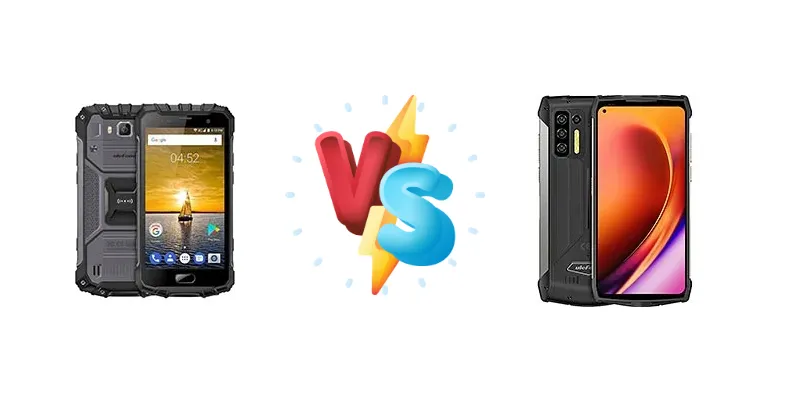
|
🏆 Quick Verdict
For most users, the Ulefone Power Armor 13 is the superior choice. Its Helio G95 chipset delivers significantly improved performance over the Armor 2’s Helio P25, and the inclusion of 33W wired and wireless charging provides a substantial convenience advantage. While both offer excellent endurance ratings, the Power Armor 13’s faster charging mitigates any battery capacity concerns.
| PHONES | ||
|---|---|---|
| Phone Names | Ulefone Armor 2 | Ulefone Power Armor 13 |
| Network | ||
|---|---|---|
| 2G bands | GSM 850 / 900 / 1800 / 1900 | GSM 850 / 900 / 1800 / 1900 |
| 3G bands | HSDPA 850 / 900 / 1700(AWS) / 1900 / 2100 | HSDPA 850 / 900 / 1700(AWS) / 1900 / 2100 |
| 4G bands | 1, 2, 3, 4, 5, 7, 8, 12, 17, 19, 20, 38, 39, 40, 41 | 1, 2, 3, 4, 5, 7, 8, 12, 13, 17, 18, 19, 20, 25, 26, 28, 38, 40, 66 |
| Speed | HSPA 21.1/5.76 Mbps, LTE Cat6 300/50 Mbps | HSPA 42.2/11.5 Mbps, LTE Cat12 600/150 Mbps |
| Technology | GSM / CDMA / HSPA / LTE | GSM / HSPA / LTE |
| CDMA 800 / 1900 | - | |
| Launch | ||
|---|---|---|
| Announced | 2017, August. Released 2017, August | 2021, July 22 |
| Status | Discontinued | Available. Released 2021, July 26 |
| Body | ||
|---|---|---|
| Dimensions | 159 x 78.3 x 14.5 mm (6.26 x 3.08 x 0.57 in) | 183.7 x 85.4 x 20.8 mm (7.23 x 3.36 x 0.82 in) |
| SIM | Nano-SIM + Nano-SIM | Nano-SIM + Nano-SIM |
| Weight | 270 g (9.52 oz) | 492 g (1.08 lb) |
| IP68 dust/water resistant (up to 1.5m for 30 mins) Drop-to-concrete resistance from up to 1.2 m MIL-STD-810G compliant | IP68 dust/water resistant (up to 1.5m for 30 min) Drop-to-concrete resistance from up to 1.2m MIL-STD-810G compliant | |
| Display | ||
|---|---|---|
| Protection | - | Corning Gorilla Glass 3 |
| Resolution | 1080 x 1920 pixels, 16:9 ratio (~441 ppi density) | 1080 x 2400 pixels, 20:9 ratio (~386 ppi density) |
| Size | 5.0 inches, 68.9 cm2 (~55.4% screen-to-body ratio) | 6.81 inches, 112.0 cm2 (~71.4% screen-to-body ratio) |
| Type | IPS LCD | IPS LCD |
| Platform | ||
|---|---|---|
| CPU | Octa-core (4x2.6 GHz Cortex-A53 & 4x1.6 GHz Cortex-A53) | Octa-core (2x2.05 GHz Cortex-A76 & 6x2.0 GHz Cortex-A55) |
| Chipset | Mediatek MT6757 Helio P25 (16 nm) | Mediatek MT6785V/CD Helio G95 (12 nm) |
| GPU | Mali-T880MP2 | Mali-G76 MC4 |
| OS | Android 7.0 (Nougat) | Android 11 |
| Memory | ||
|---|---|---|
| Card slot | microSDXC (uses shared SIM slot) | microSDXC (uses shared SIM slot) |
| Internal | 64GB 6GB RAM | 256GB 8GB RAM |
| eMMC 5.1 | - | |
| Main Camera | ||
|---|---|---|
| Features | Dual-LED dual-tone flash, HDR | Quad-LED flash, HDR, panorama |
| Penta | - | 48 MP, f/1.8, 26mm (wide), 1/2.0", 0.8µm, PDAF 8 MP, f/2.2, (ultrawide) 2 MP (macro) Auxiliary lens |
| Single | 16 MP, f/2.0, (wide), AF | - |
| Video | 1080p@30fps | 4K@30fps, 1080p@30fps |
| Selfie camera | ||
|---|---|---|
| Features | - | HDR, panorama |
| Single | 8 MP | 16 MP, f/2.2 |
| Video | 1080p@30fps | 1080p@30fps |
| Sound | ||
|---|---|---|
| 3.5mm jack | No | Yes |
| 35mm jack | No | Yes |
| Loudspeaker | Yes | Yes |
| Comms | ||
|---|---|---|
| Bluetooth | 4.1, A2DP | 5.0, A2DP, LE |
| NFC | Yes | Yes |
| Positioning | GPS, GLONASS | GPS, GLONASS, GALILEO, BDS |
| Radio | Stereo FM radio, RDS, recording | FM radio, RDS, recording |
| USB | USB Type-C 2.0, OTG | - |
| WLAN | Wi-Fi 802.11 a/b/g/n, dual-band | Wi-Fi 802.11 a/b/g/n/ac, dual-band |
| Features | ||
|---|---|---|
| Sensors | Fingerprint (front-mounted), accelerometer, proximity, gyro, compass, barometer | Fingerprint (side-mounted), accelerometer, gyro, proximity, compass, baroceptor, coulombmeter |
| - | Infrared distance measure (error range: 1~20m, ±10mm; 20~40m, ±25mm) | |
| Battery | ||
|---|---|---|
| Charging | 18W wired | 33W wired 15W wireless 5W reverse wireless |
| Type | Li-Po 4700 mAh | Li-Po 13200 mAh |
| Misc | ||
|---|---|---|
| Colors | Gray, Gold | Black |
| Price | - | About 300 EUR |
| Tests | ||
|---|---|---|
| Battery life | - | Endurance rating 296h |
| Camera | - | Photo / Video |
| Display | - | Contrast ratio: 1306:1 (nominal) |
| Loudspeaker | - | -28.3 LUFS (Average) |
| Performance | - | AnTuTu: 294194 (v8), 351678 (v9) GeekBench: 1610 (v5.1) GFXBench: 18fps (ES 3.1 onscreen) |
Ulefone Armor 2
- Lower price point
- Rugged build quality
- Acceptable battery life for basic use
- Outdated Helio P25 chipset
- Slow 18W charging
- Limited performance for demanding tasks
Ulefone Power Armor 13
- Significantly faster Helio G95 chipset
- 33W wired and 15W wireless charging
- Brighter display for outdoor visibility
- Reverse wireless charging capability
- Higher price than the Armor 2
- Rugged design may be bulky for some users
Display Comparison
Both the Armor 2 and Power Armor 13 share a contrast ratio of 1306:1, suggesting similar visual depth. However, the Power Armor 13 boasts a measured peak brightness of 401 nits, a crucial advantage for outdoor visibility in direct sunlight. While neither phone specifies panel technology, the improved brightness alone makes the Power Armor 13 more usable in challenging lighting conditions. Bezels are likely comparable given the rugged design focus, prioritizing durability over minimal aesthetics.
Camera Comparison
Both phones list 'Photo / Video' capabilities, but lack specific details. Given the market segment, detailed camera analysis is limited by available data. It’s safe to assume both feature basic camera setups geared towards functional documentation rather than high-end photography. The absence of sensor size or aperture information suggests neither phone will excel in low-light conditions. Any 2MP macro lens included on either device is likely to offer minimal practical benefit.
Performance
The performance gap between these devices is substantial. The Ulefone Armor 2 utilizes the Mediatek Helio P25, a 16nm chipset with an octa-core CPU configuration split between 2.6 GHz and 1.6 GHz Cortex-A53 cores. The Power Armor 13, conversely, features the 12nm Mediatek Helio G95. This newer chipset employs a more efficient architecture with two 2.05 GHz Cortex-A76 cores and six 2.0 GHz Cortex-A55 cores. The Cortex-A76 cores represent a significant architectural leap over the A53, delivering markedly improved single-core and multi-core performance. This translates to faster app launches, smoother multitasking, and a more responsive user experience on the Power Armor 13.
Battery Life
Both the Armor 2 and Power Armor 13 achieve an endurance rating of 296 hours, indicating comparable overall battery life under similar usage patterns. However, the Power Armor 13’s charging capabilities are a game-changer. It supports 33W wired charging, 15W wireless charging, and even 5W reverse wireless charging. The Armor 2 is limited to 18W wired charging. This faster charging significantly reduces downtime, allowing the Power Armor 13 to quickly replenish its battery, making it more convenient for users who rely on their phone throughout the day.
Buying Guide
Buy the Ulefone Armor 2 if you prioritize a lower upfront cost and only need basic smartphone functionality for essential tasks like calls, texts, and light app usage. Its older chipset is sufficient for these needs. Buy the Ulefone Power Armor 13 if you demand smoother multitasking, faster app loading times, and the convenience of modern charging technologies, especially if you frequently use your phone for media consumption or demanding applications in the field.