
Ulefone Armor 2 vs. Samsung Galaxy XCover 5: Which Rugged Phone Reigns Supreme?
| Phones Images | |||||
|---|---|---|---|---|---|
|
🏆 Quick Verdict
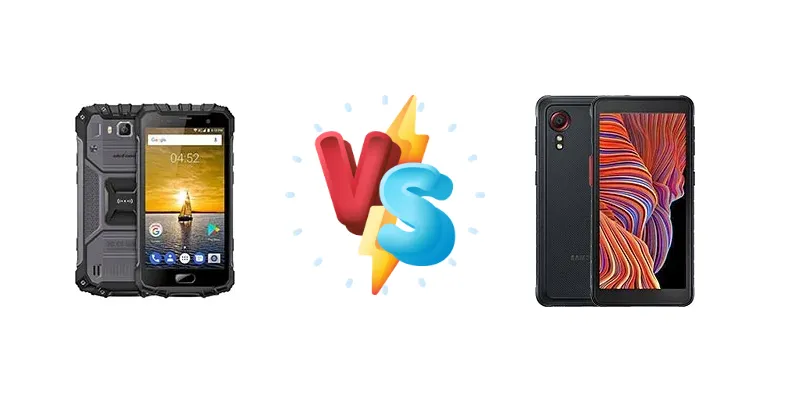
For the average user prioritizing long-term software support and a smoother user experience, the Samsung Galaxy XCover 5 is the better choice. Its Exynos 850 chipset, built on an 8nm process, provides a significant performance and efficiency advantage over the Ulefone Armor 2’s older Helio P25, despite the slightly slower charging.
| PHONES | ||
|---|---|---|
| Phone Names | Ulefone Armor 2 | Samsung Galaxy XCover 5 |
| Network | ||
|---|---|---|
| 2G bands | GSM 850 / 900 / 1800 / 1900 | GSM 850 / 900 / 1800 / 1900 |
| 3G bands | HSDPA 850 / 900 / 1700(AWS) / 1900 / 2100 | HSDPA 850 / 900 / 1700(AWS) / 1900 / 2100 |
| 4G bands | 1, 2, 3, 4, 5, 7, 8, 12, 17, 19, 20, 38, 39, 40, 41 | 1, 2, 3, 4, 5, 7, 8, 12, 17, 20, 26, 28, 38, 40, 41, 66 |
| Speed | HSPA 21.1/5.76 Mbps, LTE Cat6 300/50 Mbps | HSPA, LTE |
| Technology | GSM / CDMA / HSPA / LTE | GSM / HSPA / LTE |
| CDMA 800 / 1900 | - | |
| Launch | ||
|---|---|---|
| Announced | 2017, August. Released 2017, August | 2021, March 04 |
| Status | Discontinued | Available. Released 2021, March 12 |
| Body | ||
|---|---|---|
| Dimensions | 159 x 78.3 x 14.5 mm (6.26 x 3.08 x 0.57 in) | 147.1 x 71.6 x 9.2 mm (5.79 x 2.82 x 0.36 in) |
| SIM | Nano-SIM + Nano-SIM | · Nano-SIM· Nano-SIM + Nano-SIM |
| Weight | 270 g (9.52 oz) | 172 g (6.07 oz) |
| IP68 dust/water resistant (up to 1.5m for 30 mins) Drop-to-concrete resistance from up to 1.2 m MIL-STD-810G compliant | IP68 dust/water resistant (up to 1.5m for 30 min) MIL-STD-810H compliant | |
| Display | ||
|---|---|---|
| Resolution | 1080 x 1920 pixels, 16:9 ratio (~441 ppi density) | 720 x 1480 pixels, 18.5:9 ratio (~311 ppi density) |
| Size | 5.0 inches, 68.9 cm2 (~55.4% screen-to-body ratio) | 5.3 inches, 71.3 cm2 (~67.7% screen-to-body ratio) |
| Type | IPS LCD | PLS LCD |
| Platform | ||
|---|---|---|
| CPU | Octa-core (4x2.6 GHz Cortex-A53 & 4x1.6 GHz Cortex-A53) | Octa-core (4x2.0 GHz Cortex-A55 & 4x2.0 GHz Cortex-A55) |
| Chipset | Mediatek MT6757 Helio P25 (16 nm) | Exynos 850 (8 nm) |
| GPU | Mali-T880MP2 | Mali-G52 |
| OS | Android 7.0 (Nougat) | Android 11, upgradable to Android 14, One UI 6.1 |
| Memory | ||
|---|---|---|
| Card slot | microSDXC (uses shared SIM slot) | microSDXC (dedicated slot) |
| Internal | 64GB 6GB RAM | 64GB 4GB RAM |
| eMMC 5.1 | eMMC 5.1 | |
| Main Camera | ||
|---|---|---|
| Features | Dual-LED dual-tone flash, HDR | Dual LED flash, HDR, panorama |
| Single | 16 MP, f/2.0, (wide), AF | 16 MP, f/1.8, PDAF |
| Video | 1080p@30fps | 1080p@30fps |
| Selfie camera | ||
|---|---|---|
| Single | 8 MP | 5 MP, f/2.2 |
| Video | 1080p@30fps | - |
| Sound | ||
|---|---|---|
| 3.5mm jack | No | Yes |
| 35mm jack | No | Yes |
| Loudspeaker | Yes | Yes |
| Comms | ||
|---|---|---|
| Bluetooth | 4.1, A2DP | 5.0, A2DP, LE |
| NFC | Yes | Yes |
| Positioning | GPS, GLONASS | GPS, GLONASS, GALILEO, BDS |
| Radio | Stereo FM radio, RDS, recording | Unspecified |
| USB | USB Type-C 2.0, OTG | USB Type-C 2.0, charging connector pins |
| WLAN | Wi-Fi 802.11 a/b/g/n, dual-band | Wi-Fi 802.11 a/b/g/n/ac, dual-band, Wi-Fi Direct |
| Features | ||
|---|---|---|
| Sensors | Fingerprint (front-mounted), accelerometer, proximity, gyro, compass, barometer | Accelerometer, gyro, proximity, compass |
| Battery | ||
|---|---|---|
| Charging | 18W wired | 15W wired |
| Type | Li-Po 4700 mAh | Li-Ion 3000 mAh, removable |
| Misc | ||
|---|---|---|
| Colors | Gray, Gold | Black |
| Models | - | SM-G525F, SM-G525F/DS, SM-G525N |
| Price | - | £ 61.49 / € 74.89 |
| SAR EU | - | 0.70 W/kg (head) 1.27 W/kg (body) |
Ulefone Armor 2
- More affordable price point
- Potentially faster charging (18W)
- Rugged design for demanding environments
- Older, less efficient chipset (Helio P25)
- Likely slower performance and more lag
- Limited software update support
Samsung Galaxy XCover 5
- More powerful and efficient chipset (Exynos 850)
- Better performance for multitasking and gaming
- Samsung’s software support and Knox security
- Higher price tag
- Slower charging (15W)
- May not be as overtly rugged as the Ulefone
Display Comparison
Neither device boasts a cutting-edge display. Details on panel type and resolution are missing for both, but the focus is clearly on practicality over aesthetics. The real difference lies under the hood. While both are likely LCD panels, the performance gap in the chipsets will impact UI smoothness. The Ulefone's older processor will struggle to drive a fluid experience, especially with multiple apps open. We can assume both will have adequate outdoor visibility, given their target audience, but lack features like high refresh rates or HDR support.
Camera Comparison
Camera details are sparse for both devices. However, given the market segment, we can expect basic camera performance. The Ulefone Armor 2 likely relies heavily on software processing to compensate for its older chipset. The Galaxy XCover 5, benefiting from the Exynos 850’s image signal processor, will likely produce sharper, more detailed images with better dynamic range. The presence of OIS (Optical Image Stabilization) on the XCover 5, if present (based on Samsung's typical implementation), would be a significant advantage in low-light conditions. We can safely assume both will include a basic macro camera, but its utility will be limited.
Performance
The Exynos 850 in the Galaxy XCover 5 represents a substantial leap forward compared to the Helio P25 in the Ulefone Armor 2. The 8nm fabrication process of the Exynos is significantly more efficient than the 16nm process of the Helio P25, translating to better battery life and reduced thermal throttling. While both are octa-core CPUs, the Cortex-A55 cores in the Exynos 850 are more modern and efficient than the Cortex-A53 cores in the Helio P25. This means the XCover 5 will handle multitasking, app loading, and general usage with noticeably less lag. The GPU difference is also significant, making the XCover 5 the clear winner for any graphical tasks.
Battery Life
Battery capacity is not specified for either device, but the charging wattage provides some insight. The Ulefone Armor 2 supports 18W wired charging, while the Samsung Galaxy XCover 5 is limited to 15W. While the Ulefone charges slightly faster on paper, the Exynos 850’s superior power efficiency means the XCover 5 will likely offer comparable or even better real-world battery life. The 8nm process allows for more efficient power management, reducing standby drain and extending usage time between charges. The difference in charging speed is unlikely to be a major factor for most users.
Buying Guide
Buy the Ulefone Armor 2 if you need a highly affordable, extremely rugged phone for basic tasks and aren't concerned about the latest software updates or peak performance. It's ideal for those who frequently work in harsh environments and prioritize durability above all else. Buy the Samsung Galaxy XCover 5 if you prefer a more polished user experience, faster performance for multitasking and moderate gaming, and the assurance of Samsung’s software updates and Knox security platform – even if it comes at a higher price.