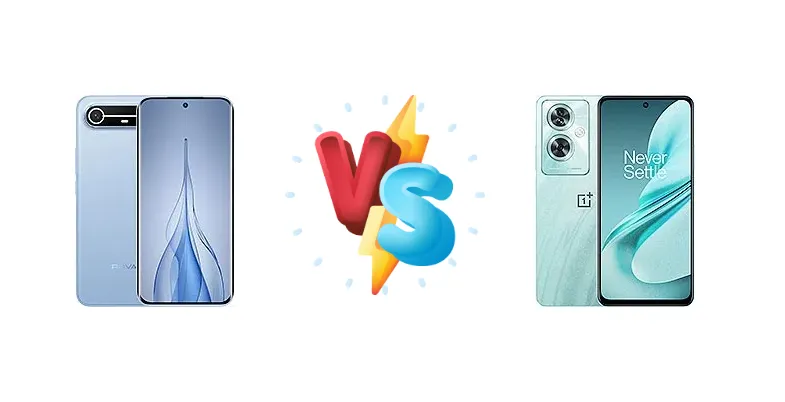
The sub-$250 smartphone market is fiercely competitive. The Tecno Pova Slim and OnePlus Nord N30 SE both aim to deliver a compelling experience without breaking the bank. However, they take different approaches – the Pova Slim prioritizes raw charging speed and a slightly more powerful processor, while the Nord N30 SE leans on OnePlus’s software reputation and a more efficient chipset.
🏆 Quick Verdict
For the average user prioritizing sustained performance and a refined software experience, the OnePlus Nord N30 SE is the better choice. While the Tecno Pova Slim boasts faster charging, the Nord N30 SE’s more efficient Dimensity 6020 and OnePlus’s OxygenOS provide a smoother, more consistent user experience.
| Network |
|---|
| 2G bands | GSM 850 / 900 / 1800 / 1900 | GSM 850 / 900 / 1800 / 1900 |
| 3G bands | HSDPA 850 / 900 / 2100 | HSDPA 850 / 900 / 1700(AWS) / 1900 / 2100 |
| 4G bands | LTE | 1, 2, 3, 4, 5, 7, 8, 12, 13, 17, 18, 19, 20, 26, 28, 38, 39, 40, 41, 66 |
| 5G bands | SA/NSA | 1, 3, 5, 7, 8, 20, 28, 38, 40, 41, 66, 77, 78 SA/NSA |
| Speed | HSPA, LTE, 5G | HSPA, LTE, 5G |
| Technology | GSM / HSPA / LTE / 5G | GSM / HSPA / LTE / 5G |
| Launch |
|---|
| Announced | 2025, September 02 | 2024, January 29 |
| Status | Available. Released 2025, October 08 | Available. Released 2024, January 31 |
| Body |
|---|
| Build | Glass front (Gorilla Glass 7i), fiber-reinforced plastic back | Glass front, plastic frame, plastic back |
| Dimensions | 164.2 x 75.9 x 6 mm (6.46 x 2.99 x 0.24 in) | 165.6 x 76 x 8 mm (6.52 x 2.99 x 0.31 in) |
| SIM | Nano-SIM | Nano-SIM + Nano-SIM |
| Weight | 156 g (5.50 oz) | 193 g (6.81 oz) |
| Display |
|---|
| Protection | Corning Gorilla Glass 7i | - |
| Resolution | 1224 x 2720 pixels, 20:9 ratio (~440 ppi density) | 1080 x 2400 pixels, 20:9 ratio (~392 ppi density) |
| Size | 6.78 inches, 111.0 cm2 (~89.1% screen-to-body ratio) | 6.72 inches, 109.0 cm2 (~86.6% screen-to-body ratio) |
| Type | AMOLED, 144Hz, 1600 nits (HBM), 4500 nits (peak) | IPS LCD |
| Platform |
|---|
| CPU | Octa-core (2x2.5 GHz Cortex-A76 & 6x2.0 GHz Cortex-A55) | Octa-core (2x2.2 GHz Cortex-A76 & 6x2.0 GHz Cortex-A55) |
| Chipset | Mediatek Dimensity 6400 (6 nm) | Mediatek Dimensity 6020 (7 nm) |
| GPU | Mali-G57 MC2 | Mali-G57 MC2 |
| OS | Android 15, HIOS 15 | Android 13, OxygenOS 13.1 |
| Memory |
|---|
| Card slot | No | No |
| Internal | 128GB 8GB RAM, 256GB 8GB RAM | 128GB 4GB RAM |
| Main Camera |
|---|
| Dual | 50 MP, (wide), PDAF
2 MP | 50 MP, f/1.8, (wide), 1/2.76", 0.64µm, PDAF
Auxiliary lens |
| Features | LED flash | LED flash, HDR, panorama |
| Video | 1440p@30fps, 1080p@30fps | 1080p@30fps |
| Selfie camera |
|---|
| Single | 13 MP, (wide) | 8 MP, f/2.0, (wide), 1/4.0", 1.12µm |
| Video | Yes | 1080p@30fps |
| Sound |
|---|
| 35mm jack | No | Yes |
| Loudspeaker | Yes | Yes, with stereo speakers |
| Comms |
|---|
| Bluetooth | 5.4, A2DP, LE | 5.3, A2DP, LE |
| Infrared port | Yes | - |
| NFC | Yes | Yes |
| Positioning | GPS, GLONASS, GALILEO, BDS | GPS, GALILEO, GLONASS, BDS |
| Radio | FM radio | No |
| USB | USB Type-C | USB Type-C 2.0, OTG |
| WLAN | Wi-Fi 802.11 a/b/g/n/ac, dual-band | Wi-Fi 802.11 a/b/g/n/ac, dual-band |
| Features |
|---|
| Sensors | Fingerprint (under display, optical), accelerometer, gyro, proximity, compass | Fingerprint (side-mounted), accelerometer, gyro, proximity, compass |
| Battery |
|---|
| Charging | 45W wired, 100% in 57 min
10W reverse wired
Bypass charging | 33W wired, 51% in 30 min |
| Type | 5160 mAh | 5000 mAh |
| Misc |
|---|
| Colors | Sky Blue, Slim White, Cool Black | Black Satin, Cyan |
| Models | KM9 | CPH2605 |
| Price | ₹ 20,999 | About 510 EUR |
Tecno Pova Slim
- Significantly faster 45W charging
- Slightly more powerful CPU for peak performance
- Reverse wired charging capability
- Bypass charging allows use while charging
- Less power-efficient chipset (Dimensity 6400)
- Potential for more thermal throttling
- Software experience likely less refined
OnePlus Nord N30 SE
- More power-efficient chipset (Dimensity 6020)
- Likely better sustained performance
- OnePlus’s OxygenOS offers a smoother experience
- Better battery life due to chipset efficiency
- Slower 33W charging
- Lacks reverse wireless charging
- Potentially less peak CPU performance
Display Comparison
Neither device boasts a standout display. Both likely utilize LCD panels, a common cost-saving measure in this segment. The key difference lies under the hood: the Tecno Pova Slim’s processor demands more power, potentially impacting battery life during display-intensive tasks. While specific brightness nits aren't provided, the Pova Slim's higher power draw suggests it might not achieve the same sustained brightness as the Nord N30 SE. Bezels are expected to be similar, and color accuracy will likely be standard for this price point.
Camera Comparison
Without detailed sensor information, a direct camera comparison is difficult. However, it’s safe to assume both phones feature a primary sensor paired with depth and macro lenses. The absence of OIS on either device suggests image stabilization will rely on software processing. The Pova Slim’s more powerful processor *could* allow for faster image processing, but the Dimensity 6020’s ISP is likely more refined. The usefulness of the 2MP macro cameras on both devices is questionable; they typically deliver low-resolution images with limited detail. Focus should be on the primary sensor’s performance in good lighting conditions.
Performance
The Mediatek Dimensity 6400 in the Tecno Pova Slim (6nm) and the Dimensity 6020 in the OnePlus Nord N30 SE (7nm) represent a key battleground. While the Pova Slim’s CPU clocks slightly higher at 2.5 GHz vs 2.2 GHz on the Nord N30 SE, the 7nm process of the Dimensity 6020 offers superior power efficiency. This translates to less heat generation under sustained load, potentially mitigating throttling during gaming. The architectural similarity (both using Cortex-A76 cores) means real-world differences will be nuanced, but the Nord N30 SE is likely to maintain performance for longer. RAM configurations are not specified, but LPDDR4X is probable on both, limiting the performance gains.
Battery Life
The Tecno Pova Slim’s 45W charging is a significant advantage, promising a 100% charge in just 57 minutes. The OnePlus Nord N30 SE’s 33W charging, reaching 51% in 30 minutes, is considerably slower. However, the Dimensity 6020’s 7nm efficiency means the Nord N30 SE will likely offer comparable, if not better, all-day battery life despite potentially having a smaller battery capacity (not specified). The Pova Slim also offers 10W reverse wired charging, a useful feature for topping up accessories, which the Nord N30 SE lacks. The Pova Slim’s bypass charging feature is also a plus, allowing for charging while the phone is in use.
Buying Guide
Buy the Tecno Pova Slim if you absolutely need the fastest possible charging and frequently engage in extended gaming sessions where peak performance is critical, even at the cost of some thermal efficiency. Buy the OnePlus Nord N30 SE if you value a balanced experience with a more refined software interface, better power efficiency for all-day use, and a generally smoother user experience, even if charging takes a bit longer.
Frequently Asked Questions
❓ Will the Tecno Pova Slim’s Dimensity 6400 overheat during prolonged gaming sessions?
The Dimensity 6400, while powerful, is built on a 6nm process, which is less efficient than the Nord N30 SE’s 7nm Dimensity 6020. This means the Pova Slim is more likely to experience thermal throttling during extended gaming, potentially leading to reduced performance over time. While it will offer higher peak performance initially, the Nord N30 SE is likely to maintain more consistent frame rates.
❓ How much faster is the Tecno Pova Slim’s 45W charging in real-world use compared to the OnePlus Nord N30 SE’s 33W?
The Tecno Pova Slim can reach a full charge in approximately 57 minutes, while the Nord N30 SE only reaches 51% in 30 minutes. This means a full charge on the Nord N30 SE will take well over an hour. For users who frequently need to quickly top up their phone, the Pova Slim’s charging speed is a significant advantage.
❓ Does the OnePlus Nord N30 SE’s OxygenOS offer significant software updates and security patches compared to Tecno’s HiOS?
OnePlus has a strong track record of providing timely software updates and security patches for its Nord series. Tecno’s HiOS, while improving, generally lags behind in terms of update frequency and long-term support. Users prioritizing software longevity and security will likely prefer the Nord N30 SE.