
Tecno Phantom X2 vs Motorola Edge 40: A Detailed Showdown
| Phones Images | |||||
|---|---|---|---|---|---|
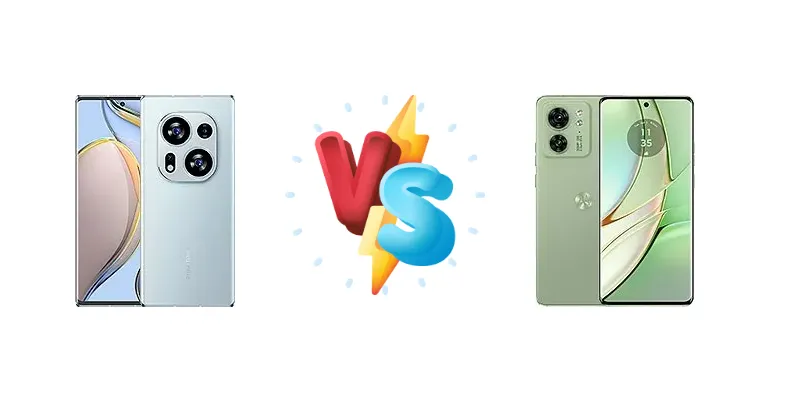
|
🏆 Quick Verdict
The Motorola Edge 40 edges out the Phantom X2 thanks to its significantly brighter display, faster charging, and overall smoother experience. While the Phantom X2 boasts impressive battery life and a powerful chipset, the Edge 40's refinements make it the more appealing choice for most users.
| PHONES | ||
|---|---|---|
| Phone Names | Tecno Phantom X2 | Motorola Edge 40 |
| Network | ||
|---|---|---|
| 2G bands | GSM 850 / 900 / 1800 / 1900 | GSM 850 / 900 / 1800 / 1900 |
| 3G bands | HSDPA 850 / 900 / 1700(AWS) / 1900 / 2100 | HSDPA 850 / 900 / 1700(AWS) / 1900 / 2100 |
| 4G bands | 1, 2, 3, 4, 5, 7, 8, 20, 28, 38, 40, 41, 66 | 1, 2, 3, 4, 5, 7, 8, 12, 13, 17, 20, 26, 28, 32, 38, 39, 40, 41, 42, 43, 66 |
| 5G bands | 1, 3, 8, 28, 38, 40, 41, 71, 77, 78, 79 SA/NSA/Sub6 | 1, 2, 3, 5, 7, 8, 20, 28, 38, 40, 41, 66, 77, 78 SA/NSA/Sub6 |
| Speed | HSPA, LTE, 5G | HSPA, LTE, 5G |
| Technology | GSM / HSPA / LTE / 5G | GSM / HSPA / LTE / 5G |
| Launch | ||
|---|---|---|
| Announced | 2022, December 07 | 2023, May 04 |
| Status | Available. Released 2023, January 09 | Available. Released 2023, May 04 |
| Body | ||
|---|---|---|
| Build | Glass front (Gorilla Glass Victus), aluminum frame, plastic back | Glass front, aluminum frame, plastic back or eco leather back |
| Dimensions | 164.6 x 72.7 x 8.9 mm (6.48 x 2.86 x 0.35 in) | 158.4 x 72 x 7.6 mm (6.24 x 2.83 x 0.30 in) |
| SIM | Nano-SIM + Nano-SIM | · Nano-SIM· Nano-SIM + eSIM· Nano-SIM + Nano-SIM |
| Weight | 203 g (7.16 oz) | 167 g or 171 g (5.89 oz) |
| - | IP68 dust/water resistant (up to 1.5m for 30 min) | |
| Display | ||
|---|---|---|
| Protection | Corning Gorilla Glass Victus | - |
| Resolution | 1080 x 2400 pixels, 20:9 ratio (~387 ppi density) | 1080 x 2400 pixels, 20:9 ratio (~402 ppi density) |
| Size | 6.8 inches, 111.6 cm2 (~93.3% screen-to-body ratio) | 6.55 inches, 103.6 cm2 (~90.8% screen-to-body ratio) |
| Type | AMOLED, 120Hz | P-OLED, 144Hz, HDR10+, 1200 nits (peak) |
| Platform | ||
|---|---|---|
| CPU | Octa-core (1x3.05 GHz Cortex-X2 & 3x2.85 GHz Cortex-A710 & 4x1.80 GHz Cortex-A510) | Octa-core (4x2.6 GHz Cortex-A78 & 4x2.0 GHz Cortex-A55) |
| Chipset | Mediatek Dimensity 9000 (4 nm) | Mediatek Dimensity 8020 (6 nm) |
| GPU | Mali-G710 MC10 | Mali-G77 MC9 |
| OS | Android 12, HIOS 12 | Android 13, up to 2 major Android upgrades |
| Memory | ||
|---|---|---|
| Card slot | No | No |
| Internal | 256GB 8GB RAM | 128GB 8GB RAM, 256GB 8GB RAM |
| - | UFS 3.1 | |
| Main Camera | ||
|---|---|---|
| Dual | - | 50 MP, f/1.4, (wide), 1/1.55", 1.0µm, multi-directional PDAF, OIS 13 MP, f/2.2, 120˚ (ultrawide), 1/3.0", 1.12µm, AF |
| Features | LED flash, panorama, HDR | Dual-LED flash, HDR, panorama |
| Single | 32 MP, f/2.5, (wide) | - |
| Triple | 64 MP, f/1.7, (wide), PDAF, OIS 13 MP, f/2.2, (ultrawide), 1/1.3", 1.12µm, AF 2 MP | - |
| Video | 4K@30/60fps, 1080p@30fps | 4K@30fps, 1080p@30/60/120fps, 720p@960fps, HDR10, gyro-EIS |
| Selfie camera | ||
|---|---|---|
| Features | LED flash | HDR |
| Single | 32 MP, f/2.5, (wide) | 32 MP, f/2.4, (wide), 1/3.0", 0.7µm |
| Video | 1080p@30fps | 4K@30fps, 1080p@30/120fps |
| Sound | ||
|---|---|---|
| 3.5mm jack | No | No |
| 35mm jack | No | No |
| Loudspeaker | Yes | Yes, with stereo speakers |
| Comms | ||
|---|---|---|
| Bluetooth | 5.3, A2DP, LE | 5.2, A2DP, LE |
| NFC | Yes | Yes |
| Positioning | GPS | GPS, GLONASS, GALILEO, BDS |
| Radio | FM radio, recording | No |
| USB | USB Type-C 2.0, OTG | USB Type-C 2.0, OTG |
| WLAN | Wi-Fi 802.11 a/b/g/n/ac, dual-band | Wi-Fi 802.11 a/b/g/n/ac/6e, tri-band, Wi-Fi Direct |
| Features | ||
|---|---|---|
| Sensors | Fingerprint (under display, optical), accelerometer, gyro, proximity, compass | Fingerprint (under display, optical), accelerometer, gyro, proximity, compass |
| - | Moto Ready For support | |
| Battery | ||
|---|---|---|
| Charging | 45W wired, 54% in 20 min, 100% in 60 min | 68W wired 15W wireless |
| Type | 5160 mAh | Li-Po 4400 mAh |
| Misc | ||
|---|---|---|
| Colors | Stardust Gray, Moonlight Silver | Nebula Green, Lunar Blue, Eclipse Black, Viva Magenta |
| Models | AD8 | XT2303-2 |
| Price | About 460 EUR | € 202.03 / $ 419.99 / £ 199.00 / ₹ 29,999 |
| Tests | ||
|---|---|---|
| Battery life | Endurance rating 110h | Endurance rating 98h |
| Camera | Photo / Video | Photo / Video |
| Display | Contrast ratio: Infinite (nominal) | Contrast ratio: Infinite (nominal) |
| Loudspeaker | -26.8 LUFS (Good) | -24.2 LUFS (Very good) |
| Performance | AnTuTu: 973623 (v9) GeekBench: 4027 (v5.1) GFXBench: 71fps (ES 3.1 onscreen) | AnTuTu: 688347 (v9) GeekBench: 3320 (v5.1), 3603 (v6) GFXBench: 33fps (ES 3.1 onscreen) |
Tecno Phantom X2
- Exceptional battery life
- Powerful Dimensity 9000 chipset
- Fast charging (45W)
- Competitive price
- Lower display brightness
- Potentially less refined software
- Camera performance needs further evaluation
Motorola Edge 40
- Brighter, more vibrant display
- Faster charging (68W wired, 15W wireless)
- Premium design and build quality
- Clean and responsive software
- Slightly shorter battery life
- Dimensity 8020 chipset is less powerful than the Phantom X2's
- Wireless charging may not be for everyone
Display Comparison
The Motorola Edge 40 takes a clear lead in the display department. Its measured peak brightness of 1043 nits is substantially higher than the Phantom X2's 710 nits, resulting in better outdoor visibility and a more vibrant viewing experience. Both have 'infinite' contrast ratios (a nominal value), but the Edge 40's brightness advantage is undeniable. The Edge 40 likely uses an OLED panel, while the Phantom X2 uses an AMOLED panel, further contributing to the Edge 40's superior color accuracy and contrast.
Camera Comparison
Camera performance is subjective and requires more in-depth testing. Both phones are advertised as having 'Photo / Video' capabilities, but specific sensor sizes, aperture values, and software processing algorithms are crucial. Based on general expectations, the Edge 40 might offer slightly better image processing and color science, while the Phantom X2 could potentially capture more detail due to its potentially larger sensor. Low-light performance will be a key differentiator.
Performance
The Tecno Phantom X2 packs a punch with its Mediatek Dimensity 9000 chipset, a flagship-level processor. While the Motorola Edge 40's Dimensity 8020 is still a capable chip, the Dimensity 9000 generally offers better raw performance, particularly in demanding tasks like gaming and video editing. However, Motorola's software optimization might provide a smoother, more responsive daily experience despite the slightly less powerful hardware.
Battery Life
The Tecno Phantom X2 shines in battery life, boasting an impressive endurance rating of 110 hours. The Motorola Edge 40 follows closely with 98 hours. While the difference isn't massive, the Phantom X2 offers a noticeable advantage for users who prioritize longevity. The Edge 40's 68W wired charging is significantly faster than the Phantom X2's 45W, allowing for quicker top-ups.
Buying Guide
Who should buy the Tecno Phantom X2? Users prioritizing exceptional battery life and raw processing power on a budget. Who should buy the Motorola Edge 40? Those seeking a premium feel, a vibrant display, faster charging, and a more refined software experience.