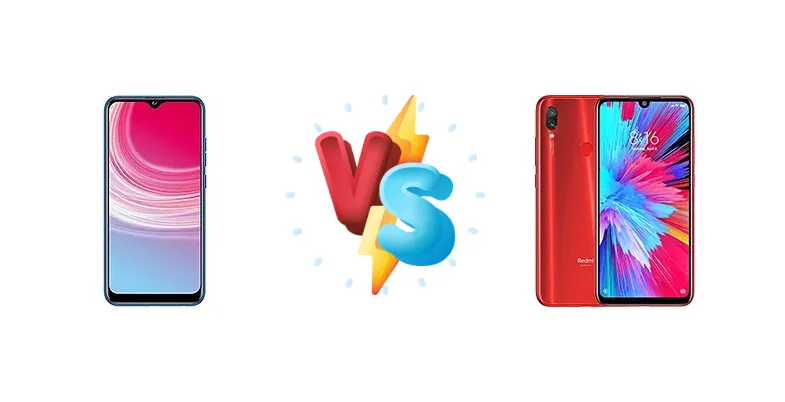
Both the Tecno Camon i4 and Xiaomi Redmi Note 7S represent compelling options in the ultra-budget smartphone segment. However, they cater to different priorities. The Camon i4 focuses on providing basic functionality at the lowest possible price, while the Redmi Note 7S aims for a balance of features and performance, leveraging Qualcomm’s Snapdragon platform.
🏆 Quick Verdict
For the average user needing a responsive and capable smartphone, the Xiaomi Redmi Note 7S is the clear winner. Its Snapdragon 660 chipset delivers significantly better performance than the Camon i4’s Helio A22, making it suitable for multitasking, moderate gaming, and a smoother overall experience. The Camon i4 remains a viable option for extremely budget-conscious users.
| Network |
|---|
| 2G bands | GSM 850 / 900 / 1800 / 1900 | GSM 850 / 900 / 1800 / 1900 |
| 3G bands | HSDPA 2100 | HSDPA 850 / 900 / 1900 / 2100 |
| 4G bands | LTE | 1, 3, 5, 8, 40, 41 |
| Speed | HSPA, LTE | HSPA 42.2/5.76 Mbps, LTE (2CA) Cat12 600/150 Mbps |
| Technology | GSM / HSPA / LTE | GSM / HSPA / LTE |
| Launch |
|---|
| Announced | 2019, April 03. Released 2019, April 03 | 2019, May. Released 2019, May |
| Status | Discontinued | Discontinued |
| Body |
|---|
| Build | - | Glass front (Gorilla Glass 5), glass back (Gorilla Glass 5), plastic frame |
| Dimensions | 156.9 x 75.8 x 8 mm (6.18 x 2.98 x 0.31 in) | 159.2 x 75.2 x 8.1 mm (6.27 x 2.96 x 0.32 in) |
| SIM | Dual SIM | Nano-SIM + Nano-SIM |
| Weight | 140 g (4.94 oz) | 186 g (6.56 oz) |
| | - | Splash resistant |
| Display |
|---|
| Protection | - | Corning Gorilla Glass 5 |
| Resolution | 720 x 1520 pixels, 19:9 ratio (~271 ppi density) | 1080 x 2340 pixels, 19.5:9 ratio (~409 ppi density) |
| Size | 6.2 inches, 95.9 cm2 (~80.7% screen-to-body ratio) | 6.3 inches, 97.4 cm2 (~81.4% screen-to-body ratio) |
| Type | IPS LCD | IPS LCD |
| Platform |
|---|
| CPU | Quad-core 2.0 GHz Cortex-A53 | Octa-core (4x2.2 GHz Kryo 260 Gold & 4x1.8 GHz Kryo 260 Silver) |
| Chipset | Mediatek MT6761 Helio A22 (12 nm) | Qualcomm SDM660 Snapdragon 660 (14 nm) |
| GPU | PowerVR GE8320 | Adreno 512 |
| OS | Android 9.0 (Pie) | Android 9.0 (Pie), planned upgrade to Android 10, MIUI 12 |
| Memory |
|---|
| Card slot | microSDXC (dedicated slot) | microSDXC (uses shared SIM slot) |
| Internal | 32GB 2GB RAM, 32GB 3GB RAM, 64GB 4GB RAM | 32GB 3GB RAM, 64GB 4GB RAM |
| | - | eMMC 5.1 |
| Main Camera |
|---|
| Dual | - | 48 MP, f/1.8, (wide), 1/2.0", 0.8µm, PDAF
Auxiliary lens |
| Features | Quad-LED flash, HDR | Dual-LED flash, HDR, panorama |
| Triple | 13 MP, f/1.8, AF
8 MP
2 MP | - |
| Video | 1080p@30fps | 1080p@30/60/120fps, (gyro-EIS) |
| Selfie camera |
|---|
| Features | - | HDR |
| Single | 16 MP | 13 MP, f/2.0, (wide), 1/3.1", 1.12µm |
| Video | Yes | 1080p@30fps |
| Sound |
|---|
| 3.5mm jack | - | Yes |
| 35mm jack | Yes | Yes |
| Loudspeaker | Yes | Yes |
| Comms |
|---|
| Bluetooth | 5.0, A2DP, LE | 5.0, A2DP, LE |
| Infrared port | - | Yes |
| NFC | No | No |
| Positioning | GPS | GPS, GLONASS, BDS |
| Radio | FM radio | FM radio, recording |
| USB | microUSB 2.0 | USB Type-C 2.0 |
| WLAN | Wi-Fi 802.11 b/g/n | Wi-Fi 802.11 a/b/g/n/ac, dual-band, Wi-Fi Direct |
| Features |
|---|
| Sensors | Fingerprint (rear-mounted), accelerometer, gyro, proximity, compass | Fingerprint (rear-mounted), accelerometer, gyro, proximity, compass |
| Battery |
|---|
| Charging | - | 18W wired, QC4 |
| Type | 3500 mAh | Li-Po 4000 mAh, non-removable |
| Misc |
|---|
| Colors | Aqua Blue, Champagne Gold, Midnight Black, Nebula Black | Onyx Black, Sapphire Blue, Ruby Red, Astro White |
| Models | - | M1901F71 |
| Price | About 150 EUR | About 140 EUR |
Tecno Camon i4
- Extremely affordable price point
- Functional for basic smartphone tasks
- Potentially longer standby time due to less powerful processor
- Significantly slower performance
- Limited multitasking capabilities
- Poor gaming experience
- Likely inferior camera quality
Xiaomi Redmi Note 7S
- Much faster and smoother performance
- Better multitasking and gaming capabilities
- 18W Quick Charge 4 support
- Improved camera processing thanks to Snapdragon ISP
- Slightly higher price
- May not be the best choice for extremely light users
- No advanced display features
Display Comparison
Neither device boasts a particularly impressive display. Details regarding panel type, resolution, and brightness are missing for the Camon i4, suggesting a basic LCD. The Redmi Note 7S, while also likely an LCD, benefits from a larger screen size. The absence of high refresh rates or advanced features like HDR on both devices indicates a focus on cost reduction. Bezels are expected to be noticeable on both, typical for this price bracket.
Camera Comparison
Camera performance is likely to be a weak point on both devices, but the Redmi Note 7S has a potential advantage. While specific sensor details are missing for the Camon i4, its positioning suggests a basic camera setup. The Redmi Note 7S, while not a camera flagship, benefits from Qualcomm’s image signal processor (ISP) within the Snapdragon 660, which offers better image processing capabilities. The Redmi Note 7S’s inclusion of 18W Quick Charge 4 (QC4) suggests a more robust power delivery system, potentially impacting camera processing speed. The absence of Optical Image Stabilization (OIS) on either device means low-light photography will be challenging.
Performance
The performance gap is the most significant differentiator. The Xiaomi Redmi Note 7S’s Qualcomm Snapdragon 660, an octa-core processor built on a 14nm process, vastly outperforms the Tecno Camon i4’s MediaTek Helio A22. The Snapdragon 660’s Kryo 260 cores (4x2.2 GHz Gold & 4x1.8 GHz Silver) utilize a big.LITTLE architecture for efficient power management and sustained performance. In contrast, the Helio A22’s quad-core 2.0 GHz Cortex-A53 configuration is geared towards basic tasks. This translates to noticeably slower app loading times, lag during multitasking, and a less enjoyable gaming experience on the Camon i4. The 14nm process of the Snapdragon 660, while older, is more efficient than the Helio A22’s 12nm, potentially leading to better thermal management under sustained load.
Battery Life
Battery capacity details are missing for the Camon i4, but it’s reasonable to assume a similar capacity to the Redmi Note 7S (around 4000mAh). However, the Redmi Note 7S’s 18W wired charging with QC4 support provides a significant advantage. This allows for much faster charging times – a full charge is achievable in approximately 1.5-2 hours. The Camon i4 likely supports standard 5W or 10W charging, resulting in considerably longer charging times. While both phones should offer all-day battery life with moderate use, the Redmi Note 7S’s faster charging mitigates the inconvenience of needing to charge overnight.
Buying Guide
Buy the Tecno Camon i4 if you need a functional smartphone for basic tasks like calls, texts, and light social media use, and your budget is extremely limited. Buy the Xiaomi Redmi Note 7S if you prioritize a smoother user experience, better performance for apps and games, and faster charging capabilities, even if it means spending a bit more.
Frequently Asked Questions
❓ Will the Redmi Note 7S be able to run demanding games like PUBG Mobile?
The Snapdragon 660 in the Redmi Note 7S can run PUBG Mobile, but likely at medium settings to maintain a stable frame rate. Expect some frame drops during intense action. The Camon i4’s Helio A22 will struggle significantly with PUBG Mobile, offering a poor gaming experience.
❓ Is the Redmi Note 7S’s 18W charging a significant advantage in real-world use?
Yes, the 18W charging with QC4 support on the Redmi Note 7S is a substantial benefit. It can reduce charging time from 0-100% to around 1.5-2 hours, compared to potentially 4-5 hours on the Camon i4 with standard charging. This is particularly useful for users who need to quickly top up their battery.
❓ How much of a difference will the processor make for everyday tasks like browsing and social media?
The difference will be very noticeable. The Snapdragon 660 in the Redmi Note 7S will provide a much smoother and more responsive experience when browsing the web, using social media apps, and switching between applications. The Helio A22 in the Camon i4 will feel sluggish and may exhibit lag, especially with multiple apps open.