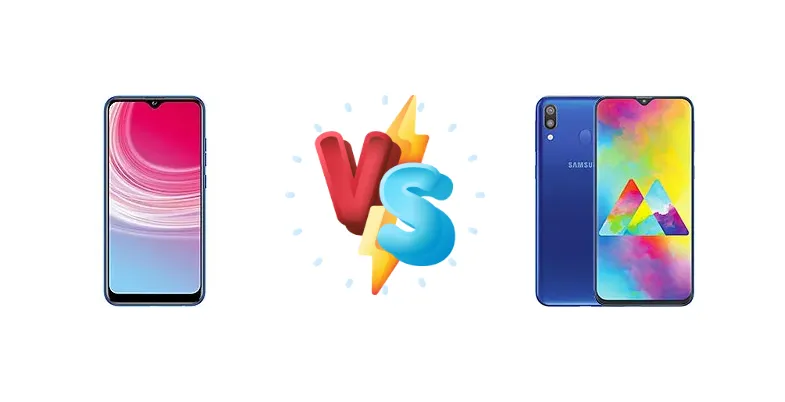
The Tecno Camon i4 and Samsung Galaxy M20 represent compelling options in the ultra-budget smartphone segment. While both aim to deliver essential functionality at a low price point, they take different approaches to achieving this. The Camon i4 prioritizes affordability with a basic Mediatek chipset, while the Galaxy M20 attempts to offer a more balanced experience with Samsung’s Exynos 7904, focusing on a better display and battery endurance.
🏆 Quick Verdict
For the average user prioritizing a smoother overall experience and a more vibrant display, the Samsung Galaxy M20 is the better choice. Its Exynos 7904 chipset provides significantly more processing power, making it more capable for multitasking and demanding applications, despite both phones sharing the same impressive 103-hour endurance rating.
| Network |
|---|
| 2G bands | GSM 850 / 900 / 1800 / 1900 | GSM 850 / 900 / 1800 / 1900 |
| 3G bands | HSDPA 2100 | HSDPA 850 / 900 / 1900 / 2100 |
| 4G bands | LTE | 1, 3, 5, 7, 8, 20, 38, 40, 41 |
| Speed | HSPA, LTE | HSPA 42.2/5.76 Mbps, LTE (2CA) Cat12 600/50 Mbps |
| Technology | GSM / HSPA / LTE | GSM / HSPA / LTE |
| Launch |
|---|
| Announced | 2019, April 03. Released 2019, April 03 | 2019, January 28. Released 2019, February |
| Status | Discontinued | Discontinued |
| Body |
|---|
| Build | - | Glass front, plastic back, plastic frame |
| Dimensions | 156.9 x 75.8 x 8 mm (6.18 x 2.98 x 0.31 in) | 156.4 x 74.5 x 8.8 mm (6.16 x 2.93 x 0.35 in) |
| SIM | Dual SIM | Nano-SIM + Nano-SIM |
| Weight | 140 g (4.94 oz) | 186 g (6.56 oz) |
| Display |
|---|
| Resolution | 720 x 1520 pixels, 19:9 ratio (~271 ppi density) | 1080 x 2340 pixels, 19.5:9 ratio (~409 ppi density) |
| Size | 6.2 inches, 95.9 cm2 (~80.7% screen-to-body ratio) | 6.3 inches, 97.4 cm2 (~83.6% screen-to-body ratio) |
| Type | IPS LCD | PLS LCD |
| Platform |
|---|
| CPU | Quad-core 2.0 GHz Cortex-A53 | Octa-core (2x1.8 GHz Cortex-A73 & 6x1.6 GHz Cortex-A53) |
| Chipset | Mediatek MT6761 Helio A22 (12 nm) | Exynos 7904 (14 nm) |
| GPU | PowerVR GE8320 | Mali-G71 MP2 |
| OS | Android 9.0 (Pie) | Android 8.1 (Oreo), upgradable to Android 10, One UI 2 |
| Memory |
|---|
| Card slot | microSDXC (dedicated slot) | microSDXC (dedicated slot) |
| Internal | 32GB 2GB RAM, 32GB 3GB RAM, 64GB 4GB RAM | 32GB 3GB RAM, 64GB 4GB RAM |
| Main Camera |
|---|
| Dual | - | 13 MP, f/1.9, 1/3.1", 1.12µm, PDAF
5 MP, f/2.2, 12mm (ultrawide) |
| Features | Quad-LED flash, HDR | LED flash, panorama, HDR |
| Triple | 13 MP, f/1.8, AF
8 MP
2 MP | - |
| Video | 1080p@30fps | 1080p@30fps |
| Selfie camera |
|---|
| Features | - | HDR |
| Single | 16 MP | 8 MP, f/2.0, 25mm (wide) |
| Video | Yes | 1080p@30fps |
| Sound |
|---|
| 3.5mm jack | - | Yes |
| 35mm jack | Yes | Yes |
| Loudspeaker | Yes | Yes |
| Comms |
|---|
| Bluetooth | 5.0, A2DP, LE | 5.0, A2DP, LE |
| NFC | No | Yes (market/region dependent) |
| Positioning | GPS | GPS, GLONASS, BDS |
| Radio | FM radio | FM radio, RDS, recording |
| USB | microUSB 2.0 | USB Type-C 2.0 |
| WLAN | Wi-Fi 802.11 b/g/n | Wi-Fi 802.11 b/g/n, Wi-Fi Direct |
| Features |
|---|
| Sensors | Fingerprint (rear-mounted), accelerometer, gyro, proximity, compass | Fingerprint (rear-mounted), accelerometer, gyro, proximity, compass |
| Battery |
|---|
| Charging | - | 15W wired |
| Type | 3500 mAh | Li-Po 5000 mAh, non-removable |
| Misc |
|---|
| Colors | Aqua Blue, Champagne Gold, Midnight Black, Nebula Black | Ocean Blue, Charcoal Black |
| Models | - | SM-M205F, SM-M205FN, SM-M205G, SM-M205M, SM-M205N |
| Price | About 150 EUR | About 400 EUR |
| SAR EU | - | 0.25 W/kg (head) 1.59 W/kg (body) |
| Tests |
|---|
| Audio quality | - |
Noise -90.5dB / Crosstalk -91.7dB |
| Battery life | - | Endurance rating 103h |
| Camera | - |
Photo / Video |
| Display | - |
Contrast ratio: 1333:1 (nominal), 2.960 (sunlight) |
| Loudspeaker | - |
Voice 67dB / Noise 66dB / Ring 68dB |
| Performance | - |
AnTuTu: 108658 (v7)
GeekBench: 4160 (v4.4)
GFXBench: 4.4fps (ES 3.1 onscreen) |
Tecno Camon i4
- Extremely affordable price point
- Decent battery life (103h endurance)
- Functional for basic smartphone tasks
- Weak processor performance
- Likely basic display quality
- Limited multitasking capabilities
Samsung Galaxy M20
- Significantly better processor performance
- More vibrant and responsive display
- Faster 15W charging
- Slightly higher price than the Camon i4
- May not be ideal for heavy gaming
- Still a budget device with inherent limitations
Display Comparison
Both the Tecno Camon i4 and Samsung Galaxy M20 feature displays with a contrast ratio of 1333:1 (nominal) and 2960:1 (sunlight). This suggests similar outdoor visibility. However, the Galaxy M20’s display benefits from Samsung’s color science and likely a higher peak brightness, even without specific nit values provided. The Camon i4, lacking detailed display specifications, likely utilizes a more basic panel, potentially impacting color accuracy and viewing angles. The shared contrast ratio indicates both are attempting to mitigate washed-out visuals in bright conditions, but the M20 likely achieves this more effectively.
Camera Comparison
Both phones are listed as having Photo/Video capabilities, but lack specific details. Given the market positioning, it’s safe to assume both feature basic camera systems. The Galaxy M20 likely benefits from Samsung’s image processing algorithms, potentially delivering more pleasing results in various lighting conditions. The absence of sensor size or aperture information makes a direct comparison difficult, but Samsung’s history suggests a focus on image quality even in its budget offerings. The Camon i4, while functional, likely prioritizes cost savings over advanced camera features.
Performance
The performance gap between these two devices is substantial. The Samsung Galaxy M20’s Exynos 7904, built on a 14nm process, is an octa-core processor featuring two Cortex-A73 cores clocked at 1.8GHz and six Cortex-A53 cores at 1.6GHz. This architecture provides a significant boost in multi-core performance compared to the Tecno Camon i4’s MediaTek Helio A22. The Helio A22, a quad-core Cortex-A53 processor running at 2.0GHz, is designed for basic tasks. The Exynos 7904’s more advanced architecture and higher core count translate to smoother app launches, faster web browsing, and a more responsive user interface. While both use Cortex-A53 cores, the A73 cores in the M20 provide a noticeable performance uplift for more demanding applications.
Battery Life
Both the Tecno Camon i4 and Samsung Galaxy M20 boast an impressive endurance rating of 103 hours. This suggests similar battery life under typical usage scenarios. However, the Galaxy M20 includes 15W wired charging, allowing for faster replenishment of the battery compared to the Camon i4, which likely supports a slower charging rate. While both offer excellent longevity, the M20’s faster charging capability provides a more convenient user experience.
Buying Guide
Buy the Tecno Camon i4 if you need a functional smartphone for basic tasks like calls, messaging, and light social media use, and your budget is extremely limited. Buy the Samsung Galaxy M20 if you prefer a more responsive device capable of handling moderate multitasking, streaming video, and occasional gaming, and value a noticeably better display experience.
Frequently Asked Questions
❓ Does the Exynos 7904 in the Galaxy M20 get hot during prolonged gaming sessions?
While the Exynos 7904 isn't a flagship processor, its 14nm process and efficient core configuration generally manage heat well. Expect some warming during extended gaming, but it's unlikely to experience significant throttling that severely impacts performance, especially compared to the Helio A22.
❓ Is the 2MP macro camera on either phone actually useful for taking detailed close-up photos?
Generally, 2MP macro cameras on budget phones offer limited detail and image quality. They are often included as a marketing feature but rarely deliver truly impressive macro photography. Expect soft images and limited dynamic range.
❓ Can the Samsung Galaxy M20 handle popular games like PUBG Mobile at playable frame rates?
The Galaxy M20 can run PUBG Mobile, but you'll likely need to lower the graphics settings to medium or low to achieve consistently smooth frame rates. Don't expect to max out the settings and maintain a stable 60fps experience.
❓ How does the Mediatek Helio A22 perform with multitasking and switching between apps?
The Helio A22 struggles with heavy multitasking. Switching between multiple apps can result in noticeable lag and app reloading. It's best suited for running one app at a time.