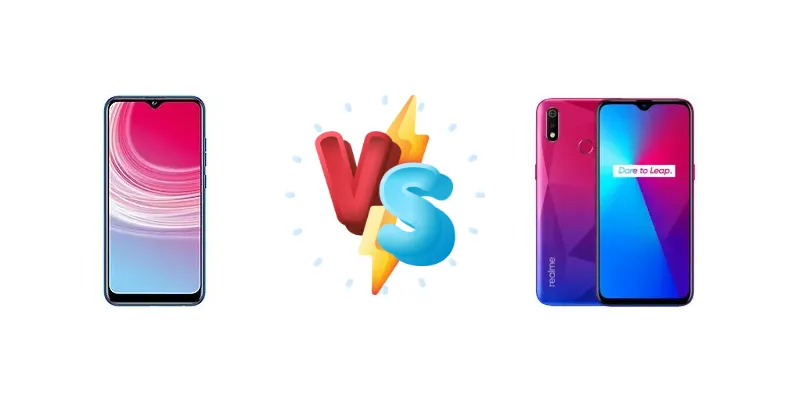
The sub-$150 smartphone market is fiercely competitive. Both the Tecno Camon i4 and the Realme 3i aim to deliver essential smartphone functionality at an accessible price point. However, they take different approaches to achieving this, with the Realme 3i prioritizing performance and the Camon i4 focusing on minimizing cost. This comparison will dissect their key differences to help you determine which device best suits your needs.
🏆 Quick Verdict
For the average user, the Realme 3i is the superior choice. Its MediaTek Helio P60 chipset, featuring an octa-core CPU, provides a significantly smoother and more responsive experience than the Tecno Camon i4’s Helio A22. While the Camon i4 is cheaper, the performance trade-off is substantial.
| Network |
|---|
| 2G bands | GSM 850 / 900 / 1800 / 1900 | GSM 850 / 900 / 1800 / 1900 |
| 3G bands | HSDPA 2100 | HSDPA 850 / 900 / 2100 |
| 4G bands | LTE | 1, 3, 5, 8, 38, 40, 41 |
| Speed | HSPA, LTE | HSPA 42.2/5.76 Mbps, LTE (2CA) Cat12 600/50 Mbps |
| Technology | GSM / HSPA / LTE | GSM / HSPA / LTE |
| Launch |
|---|
| Announced | 2019, April 03. Released 2019, April 03 | 2019, July. Released 2019, July |
| Status | Discontinued | Discontinued |
| Body |
|---|
| Build | - | Glass front (Gorilla Glass 3), plastic back, plastic frame |
| Dimensions | 156.9 x 75.8 x 8 mm (6.18 x 2.98 x 0.31 in) | 156.1 x 75.6 x 8.3 mm (6.15 x 2.98 x 0.33 in) |
| SIM | Dual SIM | Nano-SIM + Nano-SIM |
| Weight | 140 g (4.94 oz) | 175 g (6.17 oz) |
| Display |
|---|
| Protection | - | Corning Gorilla Glass 3 |
| Resolution | 720 x 1520 pixels, 19:9 ratio (~271 ppi density) | 720 x 1520 pixels, 19:9 ratio (~271 ppi density) |
| Size | 6.2 inches, 95.9 cm2 (~80.7% screen-to-body ratio) | 6.2 inches, 95.9 cm2 (~81.3% screen-to-body ratio) |
| Type | IPS LCD | IPS LCD |
| Platform |
|---|
| CPU | Quad-core 2.0 GHz Cortex-A53 | Octa-core (4x2.0 GHz Cortex-A73 & 4x2.0 GHz Cortex-A53) |
| Chipset | Mediatek MT6761 Helio A22 (12 nm) | Mediatek MT6771 Helio P60 (12 nm) |
| GPU | PowerVR GE8320 | Mali-G72 MP3 |
| OS | Android 9.0 (Pie) | Android 9.0 (Pie), upgradable to Android 10, Realme UI |
| Memory |
|---|
| Card slot | microSDXC (dedicated slot) | microSDXC (dedicated slot) |
| Internal | 32GB 2GB RAM, 32GB 3GB RAM, 64GB 4GB RAM | 32GB 3GB RAM, 64GB 4GB RAM |
| | - | eMMC 5.1 |
| Main Camera |
|---|
| Dual | - | 13 MP, f/1.8, 1/3.1", 1.12µm, PDAF
Auxiliary lens |
| Features | Quad-LED flash, HDR | LED flash, HDR |
| Triple | 13 MP, f/1.8, AF
8 MP
2 MP | - |
| Video | 1080p@30fps | 1080p@30fps |
| Selfie camera |
|---|
| Features | - | HDR |
| Single | 16 MP | 13 MP, f/2.0, (wide), 1/3.1", 1.12µm |
| Video | Yes | 1080p@30fps |
| Sound |
|---|
| 3.5mm jack | - | Yes |
| 35mm jack | Yes | Yes |
| Loudspeaker | Yes | Yes |
| Comms |
|---|
| Bluetooth | 5.0, A2DP, LE | 4.2, A2DP, LE |
| NFC | No | No |
| Positioning | GPS | GPS, GLONASS |
| Radio | FM radio | FM radio |
| USB | microUSB 2.0 | microUSB 2.0, OTG |
| WLAN | Wi-Fi 802.11 b/g/n | Wi-Fi 802.11 b/g/n |
| Features |
|---|
| Sensors | Fingerprint (rear-mounted), accelerometer, gyro, proximity, compass | Fingerprint (rear-mounted), accelerometer, proximity |
| Battery |
|---|
| Charging | - | 10W wired |
| Type | 3500 mAh | 4230 mAh, non-removable |
| Misc |
|---|
| Colors | Aqua Blue, Champagne Gold, Midnight Black, Nebula Black | Diamond Blue, Diamond Red, Diamond Black |
| Models | - | RMX1827 |
| Price | About 150 EUR | About 8000 INR |
Tecno Camon i4
- Lowest possible price point
- Acceptable for basic smartphone tasks
- Potentially longer battery life due to less powerful processor
- Significantly slower performance
- Struggles with multitasking and demanding apps
- Limited gaming capabilities
Realme 3i
- Much faster and smoother performance
- Better multitasking capabilities
- More enjoyable gaming experience
- 10W fast charging
- Slightly higher price
- Battery life may be marginally shorter than Camon i4
- Still a budget device with limitations
Display Comparison
Neither device boasts a particularly impressive display. Both utilize a 12nm process, suggesting similar power efficiency in display operation. Without specific display specs for the Camon i4, it's reasonable to assume a similar LCD panel to the Realme 3i. The Realme 3i’s display is adequate for everyday use, but neither phone will deliver vibrant colors or high brightness levels. Bezels are likely to be substantial on both, reflecting their budget positioning.
Camera Comparison
Camera performance is likely to be similar, with both phones relying on budget sensors and image processing. Without detailed camera specs for the Camon i4, it’s safe to assume it won’t outperform the Realme 3i. The Realme 3i’s camera system, while not exceptional, benefits from the more powerful ISP within the Helio P60, potentially leading to slightly better image quality and faster processing. The prevalence of 2MP macro/depth sensors on both devices suggests limited utility; these are often included for marketing purposes rather than providing a significant photographic advantage.
Performance
The core difference between these two phones lies in their chipsets. The Realme 3i’s MediaTek Helio P60 is a substantial upgrade over the Tecno Camon i4’s Helio A22. The P60’s octa-core configuration (4x2.0 GHz Cortex-A73 & 4x2.0 GHz Cortex-A53) provides significantly more processing power than the A22’s quad-core 2.0 GHz Cortex-A53. The A73 cores in the P60 are architecturally superior to the A53 cores found in both devices, resulting in faster application loading times and smoother multitasking. This difference is particularly noticeable when running multiple apps or playing games. The Realme 3i will handle more demanding tasks with greater ease.
Battery Life
Both phones likely feature similar battery capacities, typical for this price range. The Realme 3i includes 10W wired charging, which is standard for budget devices. The Camon i4’s charging capabilities are unknown, but are unlikely to exceed 10W. The Helio P60 in the Realme 3i, while more powerful, is also more efficient than the Helio A22, potentially offsetting some of the power draw and resulting in comparable real-world battery life despite the performance difference.
Buying Guide
Buy the Tecno Camon i4 if you absolutely need the lowest possible price and your smartphone usage is limited to basic tasks like calls, texts, and light social media. Buy the Realme 3i if you value a more fluid user experience, enjoy occasional gaming, or anticipate using more demanding apps. The Realme 3i’s extra processing power will translate to a noticeably better day-to-day experience.
Frequently Asked Questions
❓ Will the Realme 3i handle popular games like PUBG Mobile?
The Realme 3i, with its Helio P60, can run PUBG Mobile, but likely at medium settings to maintain a stable frame rate. Expect some occasional stuttering during intense firefights. The Tecno Camon i4 would struggle significantly with PUBG Mobile, likely offering an unplayable experience.
❓ Is the difference in performance between the Helio P60 and Helio A22 noticeable in everyday use?
Yes, the difference is very noticeable. Simple tasks like opening apps, browsing the web, and switching between applications will feel significantly snappier on the Realme 3i. The Helio A22 in the Camon i4 will exhibit noticeable lag and slowdowns, especially when multitasking.
❓ Does the Realme 3i support software updates?
Realme generally provides software updates for their devices, though the frequency and duration of support can vary. Expect at least one major Android version update, and potentially more, depending on Realme's update schedule for the 3i. Tecno's update track record is less consistent.
❓ What type of storage does each phone use, and is it expandable?
Both phones likely use eMMC storage, typical for this price range. Both also support microSD card expansion, allowing you to increase the storage capacity. However, performance will be limited by the eMMC storage type.