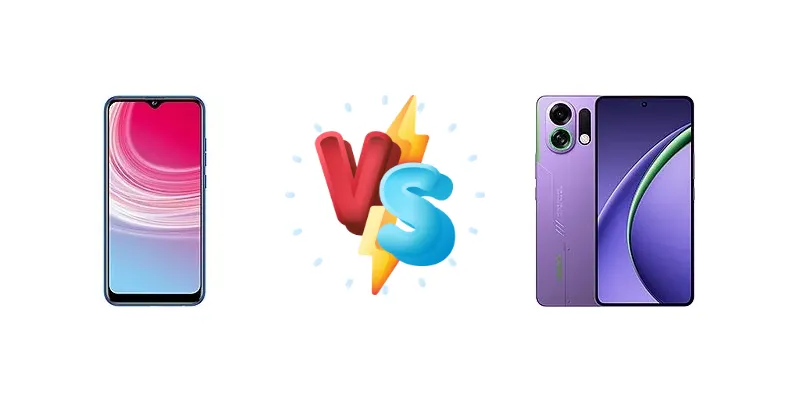
The smartphone market caters to a vast spectrum of users, from those prioritizing affordability to those demanding cutting-edge performance. This comparison pits the Tecno Camon i4, a budget-focused device, against the Oppo K13 Turbo Pro, a mid-range contender boasting a flagship-adjacent processor. We'll dissect their key differences to determine which phone delivers the best value for your money.
🏆 Quick Verdict
For the average user, the Oppo K13 Turbo Pro is the clear winner. Its Snapdragon 8s Gen 4 chipset offers a dramatically superior performance experience, coupled with incredibly fast 80W charging. While the Tecno Camon i4 provides basic functionality at a lower price, the K13 Turbo Pro’s capabilities justify the price difference.
| Network |
|---|
| 2G bands | GSM 850 / 900 / 1800 / 1900 | GSM 850 / 900 / 1800 / 1900 |
| 3G bands | HSDPA 2100 | HSDPA 850 / 1700 / 2100 |
| 4G bands | LTE | 1, 3, 5, 8, 19, 28, 34, 38, 39, 40, 41, 42, 48 |
| 5G bands | - | 1, 3, 5, 8, 28, 38, 40, 41, 77, 78 SA/NSA |
| Speed | HSPA, LTE | HSPA, LTE, 5G |
| Technology | GSM / HSPA / LTE | GSM / CDMA / HSPA / LTE / 5G |
| Launch |
|---|
| Announced | 2019, April 03. Released 2019, April 03 | 2025, July 21 |
| Status | Discontinued | Available. Released 2025, July 25 |
| Body |
|---|
| Dimensions | 156.9 x 75.8 x 8 mm (6.18 x 2.98 x 0.31 in) | 162.8 x 77.2 x 7.3 mm (6.41 x 3.04 x 0.29 in) |
| SIM | Dual SIM | Nano-SIM + Nano-SIM |
| Weight | 140 g (4.94 oz) | 208 g (7.34 oz) |
| Display |
|---|
| Resolution | 720 x 1520 pixels, 19:9 ratio (~271 ppi density) | 1280 x 2800 pixels, 19.5:9 ratio (~453 ppi density) |
| Size | 6.2 inches, 95.9 cm2 (~80.7% screen-to-body ratio) | 6.8 inches, 112.8 cm2 (~89.8% screen-to-body ratio) |
| Type | IPS LCD | AMOLED, 1B colors, 120Hz, 1600 nits (peak) |
| Platform |
|---|
| CPU | Quad-core 2.0 GHz Cortex-A53 | Octa-core (1x3.21 GHz Cortex-X4 & 3x3.0 GHz Cortex-A720 & 2x2.8 GHz Cortex-A720 & 2x2.0 GHz Cortex-A720) |
| Chipset | Mediatek MT6761 Helio A22 (12 nm) | Qualcomm SM8735 Snapdragon 8s Gen 4 (4 nm) |
| GPU | PowerVR GE8320 | Adreno 825 |
| OS | Android 9.0 (Pie) | Android 15, ColorOS 15 |
| Memory |
|---|
| Card slot | microSDXC (dedicated slot) | No |
| Internal | 32GB 2GB RAM, 32GB 3GB RAM, 64GB 4GB RAM | 256GB 8GB RAM, 256GB 12GB RAM, 256GB 16GB RAM, 512GB 12GB RAM, 512GB 16GB RAM |
| Main Camera |
|---|
| Dual | - | 50 MP, f/1.8, 27mm (wide), PDAF, OIS
2 MP |
| Features | Quad-LED flash, HDR | LED flash, HDR, panorama |
| Triple | 13 MP, f/1.8, AF
8 MP
2 MP | - |
| Video | 1080p@30fps | 4K@30/60fps, 1080p@30fps |
| Selfie camera |
|---|
| Features | - | 1080p@30fps |
| Single | 16 MP | 16 MP, f/2.4, 22mm (wide) |
| Video | Yes | Yes |
| Sound |
|---|
| 35mm jack | Yes | No |
| Loudspeaker | Yes | Yes, with stereo speakers |
| Comms |
|---|
| Bluetooth | 5.0, A2DP, LE | 5.4, A2DP, LE, aptX HD, LHDC 5 |
| Infrared port | - | Yes |
| NFC | No | Yes |
| Positioning | GPS | GPS, GLONASS, GALILEO, BDS, QZSS |
| Radio | FM radio | No |
| USB | microUSB 2.0 | USB Type-C 2.0, OTG |
| WLAN | Wi-Fi 802.11 b/g/n | Wi-Fi 802.11 a/b/g/n/ac/6/7, dual-band |
| Features |
|---|
| Sensors | Fingerprint (rear-mounted), accelerometer, gyro, proximity, compass | Fingerprint (under display, optical), accelerometer, gyro, proximity, compass |
| Battery |
|---|
| Charging | - | 80W wired, 13.5W PD, 44W UFCS, 33W PPS
Reverse wired |
| Type | 3500 mAh | 7000 mAh |
| Misc |
|---|
| Colors | Aqua Blue, Champagne Gold, Midnight Black, Nebula Black | Silver Knight, Purple Phantom, Midnight Maverick |
| Models | - | PLE110 |
| Price | About 150 EUR | About 340 EUR |
Tecno Camon i4
- Extremely affordable price point
- Functional for basic smartphone tasks
- Potentially longer battery life due to less power-hungry processor
- Poor performance for gaming and multitasking
- Slow charging speeds
- Likely lower-quality display and camera
Oppo K13 Turbo Pro
- Exceptional performance with Snapdragon 8s Gen 4
- Ultra-fast 80W charging
- Likely superior display and camera quality
- Higher price compared to Tecno Camon i4
- Potentially more expensive repairs
- May require more frequent charging with heavy usage
Display Comparison
The context data lacks display specifics for both devices. However, given the Camon i4’s positioning, it likely features a 720p or 1080p LCD panel with a standard 60Hz refresh rate. The K13 Turbo Pro, being a more premium device, is expected to have a 1080p or higher AMOLED display, potentially with a 120Hz refresh rate for smoother scrolling and animations. The difference in panel technology alone will result in superior color accuracy and contrast on the Oppo.
Camera Comparison
Without detailed camera specifications, it’s difficult to make precise comparisons. However, the K13 Turbo Pro is likely to feature a more sophisticated camera system with a larger main sensor and optical image stabilization (OIS). The Helio A22-powered Camon i4 will likely rely on software processing to compensate for a less capable sensor. While both may include multiple lenses, the K13 Turbo Pro’s image quality will be noticeably superior, particularly in low-light conditions. We can expect the K13 Turbo Pro to offer more detailed photos and better dynamic range.
Performance
The performance gap between these two devices is immense. The Tecno Camon i4’s MediaTek Helio A22, a quad-core Cortex-A53 processor built on a 12nm process, is designed for entry-level tasks. It will struggle with demanding applications and multitasking. Conversely, the Oppo K13 Turbo Pro’s Snapdragon 8s Gen 4, an octa-core processor fabricated on a 4nm node, represents a significant leap in performance and efficiency. The Snapdragon’s Cortex-X4 prime core and advanced Cortex-A720 performance cores will deliver a vastly smoother experience in gaming, video editing, and general usage. The 4nm process also translates to better thermal management, reducing throttling during sustained workloads.
Battery Life
Again, specific battery capacities are missing. However, the Oppo K13 Turbo Pro’s 80W wired charging is a game-changer. This allows for incredibly fast charging speeds, potentially reaching 100% in under 30 minutes. It also supports 13.5W PD, 44W UFCS, and 33W PPS for versatile charging options. The Tecno Camon i4 will likely have a slower charging rate, potentially taking over two hours to fully charge. While the Camon i4 might have a slightly larger battery capacity, the K13 Turbo Pro’s charging speed and efficiency will provide a more convenient user experience.
Buying Guide
Buy the Tecno Camon i4 if you need a functional smartphone for basic tasks like calls, messaging, and light social media use, and your budget is extremely limited. You're prioritizing cost above all else. Buy the Oppo K13 Turbo Pro if you prioritize smooth multitasking, gaming, fast charging, and a more future-proof experience. You're willing to invest more for a significantly enhanced user experience.
Frequently Asked Questions
❓ Will the Oppo K13 Turbo Pro get noticeably hot during extended gaming sessions?
The Snapdragon 8s Gen 4’s 4nm process is designed for improved thermal efficiency. While some heat is inevitable during prolonged gaming, the K13 Turbo Pro is expected to manage temperatures better than devices with older, less efficient chipsets, minimizing throttling and maintaining consistent performance.
❓ Is the Tecno Camon i4 suitable for running multiple apps simultaneously?
The Tecno Camon i4’s Helio A22 processor and limited RAM will struggle with multitasking. Running several apps concurrently may result in noticeable lag and slowdowns. It’s best suited for running one app at a time.
❓ Does the Oppo K13 Turbo Pro support reverse wireless charging?
Yes, the Oppo K13 Turbo Pro supports reverse wired charging, allowing you to use it as a power bank to charge other devices via a cable. This is a convenient feature for topping up accessories or sharing power with a friend.