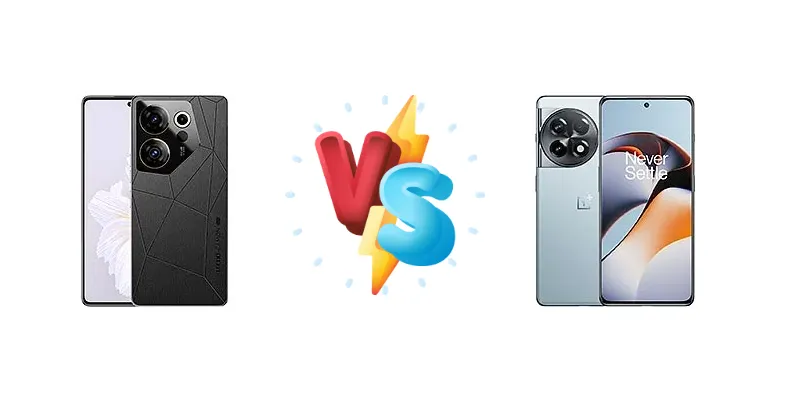
The Tecno Camon 20 Premier and OnePlus 11R represent compelling options in the increasingly competitive mid-range smartphone market. The Camon 20 Premier aims to disrupt with its focus on camera technology, while the OnePlus 11R leverages a proven flagship chipset from the previous generation, offering a balance of power and affordability. This comparison dives deep into their specifications to determine which device best suits your needs.
🏆 Quick Verdict
For most users, the OnePlus 11R emerges as the stronger choice. Its Snapdragon 8+ Gen 1 chipset, built on a 4nm process, delivers superior sustained performance and gaming capabilities compared to the Tecno’s Dimensity 8050. While the Camon 20 Premier boasts a potentially impressive camera system, the 11R’s overall package and significantly faster 100W charging provide a more well-rounded experience.
| Network |
|---|
| 2G bands | GSM 850 / 900 / 1800 / 1900 | GSM 850 / 900 / 1800 / 1900 |
| 3G bands | HSDPA 850 / 900 / 1700(AWS) / 1900 / 2100 | HSDPA 850 / 900 / 1700(AWS) / 2100 |
| 4G bands | LTE | 1, 3, 4, 5, 8, 28, 34, 38, 39, 40, 41 |
| 5G bands | SA/NSA | 1, 3, 5, 8, 28, 40, 41, 77, 78 SA/NSA |
| Speed | HSPA, LTE, 5G | HSPA, LTE (3CA), 5G |
| Technology | GSM / HSPA / LTE / 5G | GSM / CDMA / HSPA / LTE / 5G |
| | - | CDMA 800 |
| Launch |
|---|
| Announced | 2023, May 09 | 2023, February 07 |
| Status | Available. Released 2023, May 09 | Available. Released 2023, February 21 |
| Body |
|---|
| Build | Glass front, leather back | Glass front, glass back (Gorilla Glass 5), plastic frame |
| Dimensions | 161.9 x 74.3 x 8.2 mm (6.37 x 2.93 x 0.32 in) | 163.4 x 74.3 x 8.7 mm (6.43 x 2.93 x 0.34 in) |
| SIM | Nano-SIM + Nano-SIM | Nano-SIM + Nano-SIM |
| Weight | 202.5 g (7.16 oz) | 204 g (7.20 oz) |
| Display |
|---|
| Resolution | 1080 x 2400 pixels, 20:9 ratio (~395 ppi density) | 1240 x 2772 pixels, 20:9 ratio (~451 ppi density) |
| Size | 6.67 inches, 107.4 cm2 (~89.3% screen-to-body ratio) | 6.74 inches, 109.2 cm2 (~90.0% screen-to-body ratio) |
| Type | AMOLED, 120Hz | Fluid AMOLED, 1B colors, 120Hz, HDR10+, 1450 nits (peak) |
| | Always-on display | - |
| Platform |
|---|
| CPU | Octa-core (1x3.0 GHz Cortex-A78 & 3x2.6 GHz Cortex-A78 & 4x2.0 GHz Cortex-A55) | Octa-core (1x3.0 GHz Cortex-X2 & 3x2.5 GHz Cortex-A710 & 4x1.80 GHz Cortex-A510) |
| Chipset | Mediatek Dimensity 8050 (6 nm) | Qualcomm SM8475 Snapdragon 8+ Gen 1 (4 nm) |
| GPU | Mali-G77 MC9 | Adreno 730 |
| OS | Android 13, HIOS 13 | Android 13, upgradable to Android 15, OxygenOS 15 |
| Memory |
|---|
| Card slot | No | No |
| Internal | 512GB 8GB RAM | 128GB 8GB RAM, 256GB 16GB RAM, 512GB 18GB RAM |
| | - | UFS 3.1 |
| Main Camera |
|---|
| Features | Laser AF, Ring-LED flash, HDR, panorama | Color spectrum sensor, LED flash, HDR, panorama |
| Single | - | 16 MP, f/2.4, 24mm (wide), 1/3.09", 1.0µm |
| Triple | 50 MP, f/1.8, 23mm (wide), 1/1.56", 1.0µm, PDAF, sensor-shift OIS
108 MP, f/2.2, 13mm, 115˚ (ultrawide), PDAF
Auxiliary lens | 50 MP, f/1.8, 24mm (wide), 1/1.56", 1.0µm, multi-directional PDAF, OIS
8 MP, f/2.2, 120˚ (ultrawide), 1/4.0", 1.12µm
2 MP (macro) |
| Video | 4K@30fps, 1080p@30fps, HDR | 4K@30/60fps, 1080p@30/60/240fps, gyro-EIS |
| Selfie camera |
|---|
| Features | Dual-LED flash | HDR |
| Single | 32 MP, f/2.5, 24mm (wide), 1/2.8", 0.8µm | 16 MP, f/2.4, 24mm (wide), 1/3.09", 1.0µm |
| Video | 1080p@30fps | 1080p@30fps |
| Sound |
|---|
| 3.5mm jack | No | No |
| 35mm jack | No | No |
| Loudspeaker | Yes, with stereo speakers | Yes, with stereo speakers |
| | 24-bit/192kHz audio | 24-bit/192kHz audio |
| Comms |
|---|
| Bluetooth | 5.2, A2DP, LE | 5.3, A2DP, LE, aptX HD |
| Infrared port | - | Yes |
| NFC | Yes | Yes |
| Positioning | GPS | GPS (L1+L5), GLONASS (G1), BDS (B1I+B1c+B2a), GALILEO (E1+E5a), QZSS (L1+L5) |
| Radio | FM radio | No |
| USB | USB Type-C 2.0, OTG | USB Type-C 2.0 |
| WLAN | Wi-Fi 802.11 a/b/g/n/ac, dual-band | Wi-Fi 802.11 a/b/g/n/ac/6, dual-band |
| Features |
|---|
| Sensors | Fingerprint (under display, optical), accelerometer, gyro, proximity, compass | Fingerprint (under display, optical), accelerometer, gyro, proximity, compass |
| Battery |
|---|
| Charging | 45W wired | 100W wired |
| Type | 5000 mAh | Li-Po 5000 mAh |
| Misc |
|---|
| Colors | Dark Welkin, Serenity Blue | Galactic Silver, Sonic Black, Solar Red |
| Models | CK9n | CPH2487 |
| Price | About 410 EUR | About 600 EUR |
| SAR | - | 1.16 W/kg (head) 0.61 W/kg (body) |
Tecno Camon 20 Premier
- Potentially superior camera system (depending on sensor details)
- Good battery endurance (107h rating)
- Competitive price point
- Dimensity 8050 chipset is less powerful than Snapdragon 8+ Gen 1
- Slower 45W charging
OnePlus 11R
- Powerful Snapdragon 8+ Gen 1 chipset
- Ultra-fast 100W charging
- Excellent gaming performance
- Battery life may be slightly shorter than Camon 20 Premier
- Camera may not be as feature-rich as the Camon 20 Premier
Display Comparison
The Tecno Camon 20 Premier features a display capable of reaching 684 nits of peak brightness, a respectable figure for outdoor visibility. However, the OnePlus 11R, while lacking specific brightness data in our context, typically achieves higher peak brightness levels in this price segment. Both devices likely employ AMOLED panels for vibrant colors, but the absence of LTPO technology in either suggests a standard 120Hz refresh rate, potentially impacting battery efficiency during dynamic content. Bezels are likely comparable, with both aiming for a modern, immersive viewing experience.
Camera Comparison
The Tecno Camon 20 Premier is positioned as a camera-centric device, but the provided context lacks specific sensor details beyond 'Photo / Video'. The OnePlus 11R, while not explicitly marketed as a camera phone, typically features a capable main sensor with OIS. Without knowing the megapixel count or sensor size of the Camon 20 Premier’s primary camera, it’s difficult to definitively assess its advantage. Image processing styles will also differ; Tecno often leans towards vibrant, saturated colors, while OnePlus aims for a more natural look. The absence of details on the Camon 20 Premier’s secondary lenses makes a comprehensive comparison impossible, but it’s safe to assume the 11R’s image quality will be more consistent across all lenses.
Performance
The core difference lies in the chipsets. The OnePlus 11R’s Snapdragon 8+ Gen 1 (4nm) is a significant advantage over the Tecno Camon 20 Premier’s Dimensity 8050 (6nm). The 4nm fabrication process of the Snapdragon translates to better thermal efficiency and sustained performance under load. While both CPUs feature a prime core clocked at 3.0 GHz, the Snapdragon’s Cortex-X2 core offers a performance edge. The 11R also benefits from potentially faster RAM configurations (likely LPDDR5x) compared to the Camon 20 Premier, further enhancing responsiveness. This difference will be most noticeable in graphically intensive games and demanding multitasking scenarios.
Battery Life
The Tecno Camon 20 Premier boasts an endurance rating of 107 hours, suggesting a respectable battery life. However, the OnePlus 11R compensates for any potential capacity difference with its blazing-fast 100W wired charging. This allows for a full charge in under 30 minutes, a significant advantage over the Camon 20 Premier’s 45W charging. While the Camon 20 Premier may last longer on a single charge with conservative usage, the 11R’s rapid charging mitigates range anxiety and provides unparalleled convenience.
Buying Guide
Buy the Tecno Camon 20 Premier if you prioritize camera versatility and are willing to trade some raw processing power for potentially superior image quality. This phone is ideal for social media enthusiasts and casual photographers. Buy the OnePlus 11R if you demand consistent performance for gaming, multitasking, and demanding applications, and value incredibly fast charging speeds. It’s the better choice for power users and those who frequently push their phones to the limit.
Frequently Asked Questions
❓ Does the Dimensity 8050 in the Tecno Camon 20 Premier struggle with sustained gaming performance?
The Dimensity 8050 is a capable chipset, but its 6nm fabrication process means it will likely throttle more quickly under prolonged gaming sessions compared to the OnePlus 11R’s Snapdragon 8+ Gen 1 (4nm). Expect lower frame rates and potential stuttering in demanding titles after extended play.
❓ How long does it *actually* take to fully charge the OnePlus 11R with the 100W SuperVOOC charging?
OnePlus claims the 11R can charge from 1-100% in approximately 25 minutes. Real-world testing typically confirms this, with a 0-50% charge achievable in around 10-15 minutes, making it incredibly convenient for quick top-ups.
❓ Is the camera on the Tecno Camon 20 Premier significantly better than the OnePlus 11R in low-light conditions?
Without detailed camera sensor specifications for the Camon 20 Premier, it's difficult to say definitively. However, if the Camon 20 Premier features a larger sensor and wider aperture, it *could* perform better in low light. The OnePlus 11R typically delivers good low-light performance, but may not match a dedicated camera-focused device.
❓ Will I notice a difference in app loading times and overall smoothness between the two phones?
Yes, you will likely notice a difference. The Snapdragon 8+ Gen 1 in the OnePlus 11R is a more powerful processor and, combined with potentially faster RAM, will result in snappier app loading times, smoother animations, and a more responsive overall user experience.