
Motorola Edge 40 Pro vs Tecno Camon 20 Premier: A Deep Dive into Flagship Features
| Phones Images | |||||
|---|---|---|---|---|---|
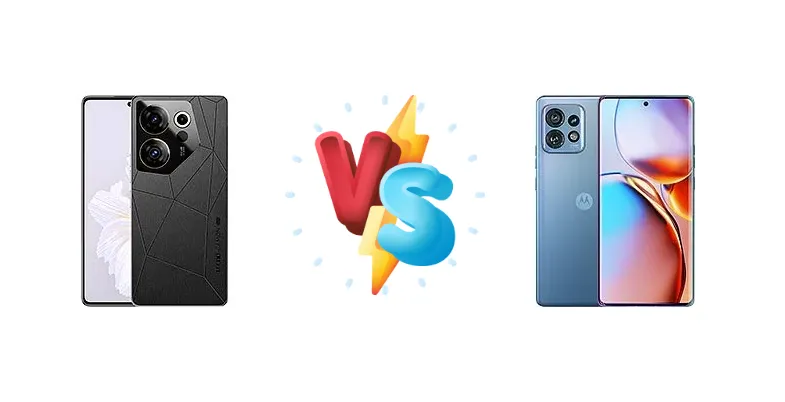
|
🏆 Quick Verdict
For most users, the Motorola Edge 40 Pro emerges as the stronger contender. Its Snapdragon 8 Gen 2 chipset delivers significantly superior performance and efficiency, coupled with blazing-fast 125W charging. While the Camon 20 Premier offers a respectable experience, it can't match the Edge 40 Pro's overall polish and power.
| PHONES | ||
|---|---|---|
| Phone Names | Tecno Camon 20 Premier | Motorola Edge 40 Pro |
| Network | ||
|---|---|---|
| 2G bands | GSM 850 / 900 / 1800 / 1900 | GSM 850 / 900 / 1800 / 1900 |
| 3G bands | HSDPA 850 / 900 / 1700(AWS) / 1900 / 2100 | HSDPA 850 / 900 / 1700(AWS) / 1900 / 2100 |
| 4G bands | LTE | 1, 2, 3, 4, 5, 7, 8, 12, 13, 17, 18, 19, 20, 25, 26, 28, 32, 38, 39, 40, 41, 42, 43, 48, 66 |
| 5G bands | SA/NSA | 1, 2, 3, 5, 7, 8, 20, 28, 38, 40, 41, 66, 77, 78 SA/NSA/Sub6 |
| Speed | HSPA, LTE, 5G | HSPA, LTE, 5G |
| Technology | GSM / HSPA / LTE / 5G | GSM / HSPA / LTE / 5G |
| Launch | ||
|---|---|---|
| Announced | 2023, May 09 | 2023, April 04 |
| Status | Available. Released 2023, May 09 | Available. Released 2023, April 04 |
| Body | ||
|---|---|---|
| Build | Glass front, leather back | Glass front (Gorilla Glass Victus), glass back (Gorilla Glass Victus), aluminum frame |
| Dimensions | 161.9 x 74.3 x 8.2 mm (6.37 x 2.93 x 0.32 in) | 161.2 x 74 x 8.6 mm (6.35 x 2.91 x 0.34 in) |
| SIM | Nano-SIM + Nano-SIM | Nano-SIM + eSIM |
| Weight | 202.5 g (7.16 oz) | 199 g (7.02 oz) |
| - | IP68 dust/water resistant (up to 1.5m for 30 min) | |
| Display | ||
|---|---|---|
| Protection | - | Corning Gorilla Glass Victus |
| Resolution | 1080 x 2400 pixels, 20:9 ratio (~395 ppi density) | 1080 x 2400 pixels, 20:9 ratio (~394 ppi density) |
| Size | 6.67 inches, 107.4 cm2 (~89.3% screen-to-body ratio) | 6.67 inches, 108.0 cm2 (~90.5% screen-to-body ratio) |
| Type | AMOLED, 120Hz | OLED, 1B colors, 165Hz, HDR10+, Dolby Vision, 1300 nits (peak) |
| Always-on display | - | |
| Platform | ||
|---|---|---|
| CPU | Octa-core (1x3.0 GHz Cortex-A78 & 3x2.6 GHz Cortex-A78 & 4x2.0 GHz Cortex-A55) | Octa-core (1x3.2 GHz Cortex-X3 & 2x2.8 GHz Cortex-A715 & 2x2.8 GHz Cortex-A710 & 3x2.0 GHz Cortex-A510) |
| Chipset | Mediatek Dimensity 8050 (6 nm) | Qualcomm SM8550-AB Snapdragon 8 Gen 2 (4 nm) |
| GPU | Mali-G77 MC9 | Adreno 740 |
| OS | Android 13, HIOS 13 | Android 13, up to 3 major Android upgrades |
| Memory | ||
|---|---|---|
| Card slot | No | No |
| Internal | 512GB 8GB RAM | 256GB 12GB RAM, 512GB 12GB RAM |
| - | UFS 4.0 | |
| Main Camera | ||
|---|---|---|
| Features | Laser AF, Ring-LED flash, HDR, panorama | Dual-LED flash, panorama, HDR |
| Triple | 50 MP, f/1.8, 23mm (wide), 1/1.56", 1.0µm, PDAF, sensor-shift OIS 108 MP, f/2.2, 13mm, 115˚ (ultrawide), PDAF Auxiliary lens | 50 MP, f/1.8, (wide), 1/1.55", 1.0µm, multi-directional PDAF, OIS 12 MP, f/1.6, (telephoto), 1/2.93", 1.22µm, PDAF, 2x optical zoom 50 MP, f/2.2, 114˚ (ultrawide), 1/2.76", 0.64µm, AF |
| Video | 4K@30fps, 1080p@30fps, HDR | 8K@30fps, 4K@30/60fps, 1080p@30/60/120/240/960fps, 10-bit HDR10+, gyro-EIS |
| Selfie camera | ||
|---|---|---|
| Features | Dual-LED flash | HDR |
| Single | 32 MP, f/2.5, 24mm (wide), 1/2.8", 0.8µm | 60 MP, f/2.2, (wide), 1/2.8", 0.61µm |
| Video | 1080p@30fps | 4K@30/60fps, 1080p@30/60fps |
| Sound | ||
|---|---|---|
| 3.5mm jack | No | No |
| 35mm jack | No | No |
| Loudspeaker | Yes, with stereo speakers | Yes, with stereo speakers |
| 24-bit/192kHz audio | - | |
| Comms | ||
|---|---|---|
| Bluetooth | 5.2, A2DP, LE | 5.3, A2DP, LE |
| NFC | Yes | Yes |
| Positioning | GPS | GPS, GLONASS, GALILEO, BDS |
| Radio | FM radio | No |
| USB | USB Type-C 2.0, OTG | USB Type-C 3.2, OTG, DisplayPort 1.4 |
| WLAN | Wi-Fi 802.11 a/b/g/n/ac, dual-band | Wi-Fi 802.11 a/b/g/n/ac/6e/7, tri-band, Wi-Fi Direct |
| Features | ||
|---|---|---|
| Sensors | Fingerprint (under display, optical), accelerometer, gyro, proximity, compass | Fingerprint (under display, optical), accelerometer, gyro, proximity, compass |
| - | Ready For 3.5 support | |
| Battery | ||
|---|---|---|
| Charging | 45W wired | 125W wired, PD3.0, QC5, 50% in 6 min, 100% in 23 min 15W wireless 5W reverse wired 5W reverse wireless |
| Type | 5000 mAh | Li-Po 4600 mAh |
| Misc | ||
|---|---|---|
| Colors | Dark Welkin, Serenity Blue | Interstellar Black, Lunar Blue |
| Models | CK9n | - |
| Price | About 410 EUR | € 313.87 |
| Tests | ||
|---|---|---|
| Battery life | - | Endurance rating 117h |
| Camera | - | Photo / Video |
| Display | - | Contrast ratio: Infinite (nominal) |
| Loudspeaker | - | -22.6 LUFS (Excellent) |
| Performance | - | AnTuTu: 1273764 (v9) GeekBench: 4896 (v5.1), 5352 (v6) GFXBench: 112fps (ES 3.1 onscreen) |
Tecno Camon 20 Premier
- Stylish design and build quality
- Capable camera system
- Competitive price point
- Less powerful processor than the competition
- Slower charging speeds
Motorola Edge 40 Pro
- Top-tier Snapdragon 8 Gen 2 performance
- Blazing-fast 125W charging
- Bright and vibrant display
- Potentially higher price
- Software experience may not appeal to all
Display Comparison
Both devices feature capable displays, but the Motorola Edge 40 Pro edges ahead with a measured peak brightness of 1050 nits compared to the Tecno Camon 20 Premier’s 684 nits. This translates to better visibility under direct sunlight. While both are excellent for everyday use, the Edge 40 Pro’s higher brightness and infinite contrast ratio provide a more vibrant and immersive viewing experience. Details regarding panel technology (LTPO) are missing for the Camon 20 Premier, suggesting a potentially less efficient display compared to the Edge 40 Pro, which likely utilizes LTPO for adaptive refresh rates.
Camera Comparison
Both phones are advertised as having strong camera capabilities, but specifics are limited. Without detailed sensor size information, it’s difficult to make a definitive judgment. However, the Edge 40 Pro’s image signal processor (ISP) within the Snapdragon 8 Gen 2 is known for its advanced computational photography features. The focus should be on real-world image samples to assess the quality of both devices. The presence of OIS (Optical Image Stabilization) is assumed on both, but the effectiveness will depend on the implementation. Ignoring the likely low-resolution macro lenses, the main sensor performance will be the deciding factor.
Performance
The performance gap is substantial. The Motorola Edge 40 Pro’s Qualcomm Snapdragon 8 Gen 2 (4nm) is a clear winner over the Tecno Camon 20 Premier’s MediaTek Dimensity 8050 (6nm). The 4nm process node of the Snapdragon 8 Gen 2 offers superior power efficiency and thermal management, resulting in less throttling during sustained workloads. The Snapdragon 8 Gen 2’s CPU configuration – featuring a Cortex-X3 prime core – provides a noticeable performance uplift over the Camon 20 Premier’s Cortex-A78 based setup. This difference will be most apparent in demanding games and resource-intensive applications.
Battery Life
The Motorola Edge 40 Pro boasts a significant advantage in charging speed with its 125W wired charging, capable of reaching 100% in just 23 minutes. The Tecno Camon 20 Premier’s 45W charging is considerably slower. While both phones have an endurance rating of around 117 hours (Edge 40 Pro) and 107 hours (Camon 20 Premier), the Edge 40 Pro’s faster charging mitigates any concerns about slightly lower endurance. The addition of 15W wireless and reverse wireless charging on the Edge 40 Pro adds further convenience.
Buying Guide
Buy the Tecno Camon 20 Premier if you prioritize a stylish design and a capable camera system without needing the absolute fastest performance. It's a good choice for social media enthusiasts and casual gamers. Buy the Motorola Edge 40 Pro if you demand top-tier performance for demanding tasks like gaming and video editing, and value incredibly fast charging and a more refined software experience.