
TCL Stylus vs. Motorola Moto G Stylus 5G (2025): A Deep Dive into Performance and Battery Life
| Phones Images | |||||
|---|---|---|---|---|---|
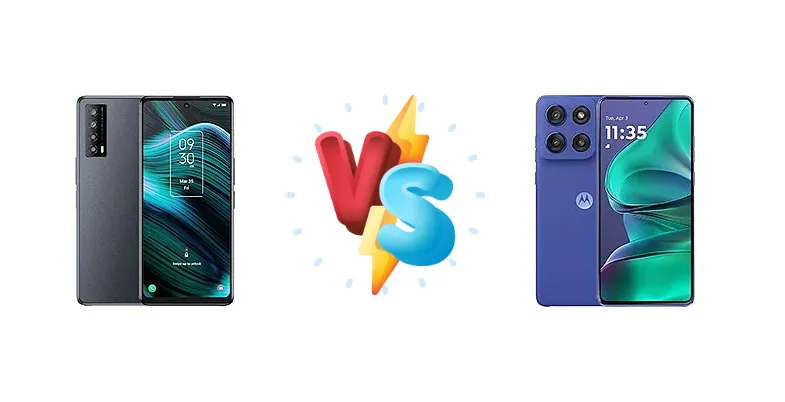
|
🏆 Quick Verdict
For the average user prioritizing performance and future-proofing, the Motorola Moto G Stylus 5G (2025) is the clear winner. Its Snapdragon 6 Gen 3 chipset and blazing-fast 68W charging significantly outperform the TCL Stylus's older Dimensity 700 and 18W charging. However, the TCL Stylus remains a viable option for those on a tighter budget.
| PHONES | ||
|---|---|---|
| Phone Names | TCL Stylus | Motorola Moto G Stylus 5G (2025) |
| Network | ||
|---|---|---|
| 2G bands | GSM 850 / 900 / 1800 / 1900 | GSM 850 / 900 / 1800 / 1900 |
| 3G bands | HSDPA 850 / 900 / 1700(AWS) / 1900 / 2100 | HSDPA 850 / 900 / 1700(AWS) / 1900 / 2100 |
| 4G bands | 2, 4, 5, 12, 25, 26, 41, 66, 71 | 1, 2, 3, 4, 5, 7, 8, 12, 13, 14, 17, 18, 19, 20, 25, 26, 28, 29, 30, 38, 39, 40, 41, 42, 48, 66, 71 |
| 5G bands | 25, 41, 66, 77 SA/NSA/Sub6 | 1, 2, 3, 5, 7, 12, 14, 20, 25, 26, 28, 29, 30, 38, 40, 41, 48, 66, 70, 71, 77, 78 SA/NSA/Sub6 |
| Speed | HSPA, LTE, 5G | HSPA, LTE, 5G |
| Technology | GSM / HSPA / LTE / 5G | GSM / HSPA / LTE / 5G |
| Launch | ||
|---|---|---|
| Announced | 2022, June 02 | 2025, April 08 |
| Status | Available. Released 2022, June 02 | Available. Released 2025, April 17 |
| Body | ||
|---|---|---|
| Build | Glass front, plastic frame, plastic back | Glass front (Gorilla Glass 3), silicone polymer (eco leather) back, plastic frame |
| Dimensions | 169.6 x 76.5 x 9 mm (6.68 x 3.01 x 0.35 in) | 162.2 x 74.8 x 8.3 mm (6.39 x 2.94 x 0.33 in) |
| SIM | Nano-SIM | Nano-SIM + eSIM |
| Weight | 213 g (7.51 oz) | 191 g (6.74 oz) |
| Stylus | - | |
| Display | ||
|---|---|---|
| Protection | NEG | Corning Gorilla Glass 3 |
| Resolution | 1080 x 2460 pixels (~395 ppi density) | 1220 x 2712 pixels, 20:9 ratio (~444 ppi density) |
| Size | 6.81 inches, 110.1 cm2 (~84.9% screen-to-body ratio) | 6.7 inches, 108.4 cm2 (~89.3% screen-to-body ratio) |
| Type | IPS LCD, 500 nits (typ) | AMOLED, 1B colors, 120Hz, HDR, 3000 nits (peak) |
| Platform | ||
|---|---|---|
| CPU | Octa-core (2x2.2 GHz Cortex-A76 & 6x2.0 GHz Cortex-A55) | Octa-core (4x2.4 GHz Cortex-A78 & 4x1.8 GHz Cortex-A55) |
| Chipset | Mediatek Dimensity 700 (7 nm) | Qualcomm SM6475-AB Snapdragon 6 Gen 3 (4 nm) |
| GPU | Mali-G57 MC2 | Adreno 710 |
| OS | Android 12, TCL UI 4.0 | Android 15, up to 2 major Android upgrades |
| Memory | ||
|---|---|---|
| Card slot | microSDXC (dedicated slot) | microSDXC (dedicated slot) |
| Internal | 128GB 4GB RAM | 128GB 8GB RAM, 256GB 8GB RAM |
| Main Camera | ||
|---|---|---|
| Dual | - | 50 MP, f/1.8, 24mm (wide), 1/1.56", 1.0µm, multi-directional PDAF, OIS 13 MP, f/2.2, 16mm, 120˚ (ultrawide), 1/3.0", 1.12µm, PDAF |
| Features | LED flash, HDR, panorama | LED flash, HDR, panorama |
| Single | 13 MP, f/2.3, 19mm (ultrawide), 1/3", 1.12µm | - |
| Triple | 50 MP, f/1.8, 28mm (wide), 1/2.76", 0.64µm, PDAF 5 MP, 115˚ (ultrawide) 2 MP (macro) Auxiliary lens | - |
| Video | 1080p@30fps | 4K@30fps, 1080p@30/60/120fps |
| Selfie camera | ||
|---|---|---|
| Features | HDR | HDR |
| Single | 13 MP, f/2.3, 19mm (ultrawide), 1/3", 1.12µm | 32 MP, f/2.2, 25mm (wide), 1/3.14", 0.7µm |
| Video | 1080p@30fps | 4K@30fps, 1080p@30/60fps |
| Sound | ||
|---|---|---|
| 3.5mm jack | Yes | - |
| 35mm jack | Yes | Yes |
| Loudspeaker | Yes, with stereo speakers | Yes, with stereo speakers (with Dolby Atmos) |
| Comms | ||
|---|---|---|
| Bluetooth | 5.2, A2DP, LE | 5.4, A2DP, LE |
| NFC | Yes | Yes |
| Positioning | GPS | GPS, GLONASS, GALILEO |
| Radio | Unspecified | No |
| USB | USB Type-C 2.0, OTG | USB Type-C 2.0 |
| WLAN | Wi-Fi 802.11 a/b/g/n/ac, dual-band, Wi-Fi Direct | Wi-Fi 802.11 a/b/g/n/ac/6e, tri-band |
| Features | ||
|---|---|---|
| Sensors | Fingerprint (side-mounted), accelerometer, gyro, proximity, compass, barometer | Fingerprint (under display, optical), accelerometer, gyro, proximity, compass |
| Battery | ||
|---|---|---|
| Charging | 18W wired | 68W wired 15W wireless |
| Type | Li-Ion 4000 mAh | 5000 mAh |
| Misc | ||
|---|---|---|
| Colors | Lunar Black | Pantone: Gibraltar sea, Surf the Web |
| Models | T779W | XT2517-1 |
| Price | About 240 EUR | $ 299.99 / C$ 368.17 |
| SAR | 1.25 W/kg (head) 1.25 W/kg (body) | - |
TCL Stylus
- Lower price point makes it accessible.
- Functional stylus for basic note-taking.
- Decent performance for everyday tasks.
- Outdated chipset limits performance.
- Slow 18W charging.
- Likely dimmer display.
Motorola Moto G Stylus 5G (2025)
- Significantly faster Snapdragon 6 Gen 3 chipset.
- Ultra-fast 68W wired and 15W wireless charging.
- Bright 1870 nit display for excellent outdoor visibility.
- Higher price compared to the TCL Stylus.
- May not offer a dramatically improved camera experience over the TCL.
- Larger size may not appeal to all users.
Display Comparison
The Motorola Moto G Stylus 5G (2025) boasts a significantly brighter display, reaching a measured peak of 1870 nits. This is a substantial improvement over what we'd expect from the TCL Stylus, making it far more usable outdoors under direct sunlight. While the TCL Stylus's display specs are not provided, it's likely to fall considerably short of this brightness level. The Motorola's brightness also suggests a more modern panel technology, potentially with better color accuracy and viewing angles. We can assume the Motorola will have a higher contrast ratio as well.
Camera Comparison
Without detailed camera specifications for the TCL Stylus, a direct comparison is limited. However, the Motorola Moto G Stylus 5G (2025) likely benefits from Qualcomm's image signal processor (ISP) within the Snapdragon 6 Gen 3, offering improved image processing capabilities. While neither phone is expected to compete with flagship camera systems, the Motorola's ISP will likely deliver better dynamic range and noise reduction. We can assume the Motorola will have a more capable main sensor, given its positioning in the market.
Performance
The core difference lies in the chipsets. The Motorola Moto G Stylus 5G (2025) utilizes the Qualcomm SM6475-AB Snapdragon 6 Gen 3, built on a power-efficient 4nm process. This contrasts sharply with the TCL Stylus's Mediatek Dimensity 700 (7nm). The Snapdragon 6 Gen 3 features a more modern CPU architecture – Cortex-A78 cores (2.4 GHz) versus the TCL's Cortex-A76 (2.2 GHz) – resulting in a noticeable performance uplift in CPU-intensive tasks. The 4nm process also translates to better thermal management, reducing the likelihood of throttling during sustained workloads. The Motorola will offer a smoother experience with multitasking and demanding applications.
Battery Life
The Motorola Moto G Stylus 5G (2025) shines in battery and charging. Its active use score of 10:05h demonstrates excellent endurance. Crucially, it supports 68W wired charging, allowing for a full charge in a fraction of the time compared to the TCL Stylus's 18W charging. The Motorola also adds 15W wireless charging, a feature absent on the TCL Stylus. While battery capacity isn't specified for either device, the faster charging speed of the Motorola effectively mitigates any potential capacity disadvantage.
Buying Guide
Buy the TCL Stylus if you need a functional stylus experience on a very limited budget and aren't demanding in terms of performance. It's ideal for basic note-taking and light tasks. Buy the Motorola Moto G Stylus 5G (2025) if you prioritize a smoother, more responsive user experience, faster charging, and a brighter display – especially if you frequently use demanding apps or enjoy mobile gaming.