
TCL Plex vs Motorola Moto G Power (2025): A Deep Dive into Budget Smartphone Choices
| Phones Images | |||||
|---|---|---|---|---|---|
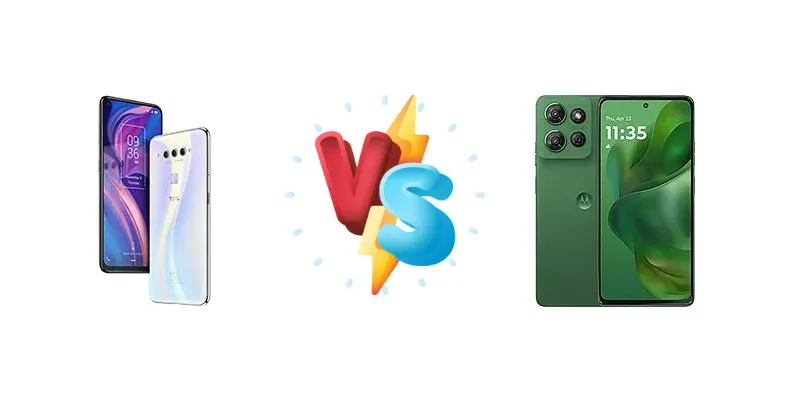
|
🏆 Quick Verdict
For the average user prioritizing battery life and modern efficiency, the Motorola Moto G Power (2025) is the clear winner. Its Dimensity 6300 chipset, coupled with exceptional battery performance (11:56h active use), outweighs the TCL Plex’s older Snapdragon 675. However, the Plex remains a viable option for those seeking a specific software experience or finding it at a significantly discounted price.
| PHONES | ||
|---|---|---|
| Phone Names | TCL Plex | Motorola Moto G Power (2025) |
| Network | ||
|---|---|---|
| 2G bands | GSM 850 / 900 / 1800 / 1900 | GSM 850 / 900 / 1800 / 1900 |
| 3G bands | HSDPA 850 / 900 / 1900 / 2100 | HSDPA 850 / 900 / 1700(AWS) / 1900 / 2100 |
| 4G bands | 1, 3, 5, 7, 8, 20, 28, 38, 40 | 1, 2, 3, 4, 5, 7, 8, 12, 13, 14, 17, 18, 20, 25, 26, 28, 29, 30, 38, 39, 40, 41, 48, 66, 71 |
| 5G bands | - | 2, 5, 7, 12, 14, 25, 26, 29, 30, 41, 48, 66, 70, 71, 77, 78 SA/NSA/Sub6 |
| Speed | HSPA 42.2/5.76 Mbps, LTE (2CA) Cat6 400/75 Mbps | HSPA, LTE, 5G |
| Technology | GSM / HSPA / LTE | GSM / HSPA / LTE / 5G |
| Launch | ||
|---|---|---|
| Announced | 2019, September. Released 2019, October | 2025, January 14 |
| Status | Discontinued | Available. Released 2025, February 06 |
| Body | ||
|---|---|---|
| Build | Glass front, glass back, aluminum frame | Glass front (Gorilla Glass 5), silicone polymer (eco leather) back, plastic frame |
| Dimensions | 162.2 x 76.6 x 8 mm (6.39 x 3.02 x 0.31 in) | 166.6 x 77.1 x 8.7 mm (6.56 x 3.04 x 0.34 in) |
| SIM | · Nano-SIM· Nano-SIM + Nano-SIM | Nano-SIM + eSIM |
| Weight | 192 g (6.77 oz) | 208 g (7.34 oz) |
| Display | ||
|---|---|---|
| Protection | - | Corning Gorilla Glass 5 |
| Resolution | 1080 x 2340 pixels, 19.5:9 ratio (~395 ppi density) | 1080 x 2388 pixels (~385 ppi density) |
| Size | 6.53 inches, 104.7 cm2 (~84.2% screen-to-body ratio) | 6.8 inches, 112.0 cm2 (~87.2% screen-to-body ratio) |
| Type | IPS LCD | IPS LCD, 120Hz |
| Platform | ||
|---|---|---|
| CPU | Octa-core (2x2.0 GHz Kryo 460 Gold & 6x1.7 GHz Kryo 460 Silver) | Octa-core (2x2.4 GHz Cortex-A76 & 6x2.0 GHz Cortex-A55) |
| Chipset | Qualcomm SDM675 Snapdragon 675 (11 nm) | Mediatek Dimensity 6300 (6 nm) |
| GPU | Adreno 612 | Mali-G57 MC2 |
| OS | Android 9.0 (Pie), upgradable to Android 10 | Android 15, up to 2 major Android upgrades |
| Memory | ||
|---|---|---|
| Card slot | microSDXC (uses shared SIM slot) | microSDXC (dedicated slot) |
| Internal | 128GB 6GB RAM | 128GB 8GB RAM |
| UFS 2.1 | - | |
| Main Camera | ||
|---|---|---|
| Dual | - | 50 MP, f/1.8, (wide), 1/2.88", 0.61µm, PDAF, OIS 8 MP, f/2.2, 119˚ 13mm (ultrawide), 1.12µm, AF |
| Features | Dual-LED flash, HDR, panorama | LED flash, HDR, panorama |
| Triple | 48 MP, f/1.8, 26mm (wide), 1/2.0", 0.8µm, PDAF 16 MP, f/2.4, 13mm (ultrawide), 1/3.1", 1.0µm 2 MP, f/1.8 | - |
| Video | 4K@30fps, 1080p@30/60/120fps, 720p@960fps, gyro-EIS | 1080p@30fps |
| Selfie camera | ||
|---|---|---|
| Single | 24 MP, f/2.0, 26mm (wide), 1/2.8", 0.9µm | 16 MP, f/2.4, 24mm (wide), 1/3.0", 1.0µm |
| Video | 1080p@30fps | 1080p@30fps |
| Sound | ||
|---|---|---|
| 3.5mm jack | Yes | - |
| 35mm jack | Yes | Yes |
| Loudspeaker | Yes | Yes, with stereo speakers (with Dolby Atmos) |
| Comms | ||
|---|---|---|
| Bluetooth | 5.0, A2DP, LE, aptX | Yes |
| NFC | Yes | Yes |
| Positioning | GPS | GPS, GALILEO, GLONASS |
| Radio | FM radio | FM radio |
| USB | USB Type-C 2.0 | USB Type-C 2.0 |
| WLAN | Wi-Fi 802.11 a/b/g/n/ac, dual-band, Wi-Fi Direct | Wi-Fi 802.11 a/b/g/n/ac, dual-band |
| Features | ||
|---|---|---|
| Sensors | Fingerprint (rear-mounted), accelerometer, gyro, proximity, compass | Fingerprint (side-mounted), accelerometer, gyro, proximity, compass, barometer |
| Battery | ||
|---|---|---|
| Charging | 18W wired, QC3, 50% in 32 min | 30W wired 15W wireless |
| Stand-by | Up to 396 h (3G) | - |
| Talk time | Up to 12 h (2G) / Up to 25 h (3G) | - |
| Type | Li-Ion 3820 mAh, non-removable | 5000 mAh |
| Misc | ||
|---|---|---|
| Colors | Obsidian Black, Opal White | Slate Gray, Leaf Green |
| Models | T780H | XT2515-1 |
| Price | About 330 EUR | $ 199.99 |
TCL Plex
- Potentially cleaner software experience (depending on TCL’s skin)
- May be available at a lower price point now due to its age
- QC3 fast charging support
- Older Snapdragon 675 chipset
- Less efficient 11nm process
- Likely shorter battery life
- Slower charging speeds
Motorola Moto G Power (2025)
- Modern Mediatek Dimensity 6300 chipset
- Exceptional battery life (11:56h active use)
- Faster 30W wired and 15W wireless charging
- Brighter and higher contrast display
- Motorola’s software can be bloated with pre-installed apps
- May be slightly more expensive than the aging TCL Plex
Display Comparison
The Motorola Moto G Power (2025) boasts a significantly brighter display, reaching a measured 993 nits compared to the TCL Plex’s unspecified peak brightness. This higher brightness, combined with a 1358:1 contrast ratio, translates to better visibility outdoors and a more vibrant viewing experience. While the TCL Plex’s display quality isn’t inherently *bad*, the G Power’s panel offers a tangible improvement in usability. We lack information on the TCL Plex’s panel type, but the G Power’s superior specs suggest a more modern IPS LCD.
Camera Comparison
Without detailed camera specs for the TCL Plex, a direct comparison is difficult. However, given its market positioning, it’s likely the G Power’s camera system offers a more competitive experience. The focus should be on the main sensor quality and image processing. The G Power likely benefits from newer image signal processing (ISP) capabilities within the Dimensity 6300, leading to improved dynamic range and low-light performance. We can assume both phones include standard features like HDR, but the G Power’s newer chipset provides a processing advantage.
Performance
The Motorola Moto G Power (2025) utilizes the Mediatek Dimensity 6300, fabricated on a more efficient 6nm process, versus the TCL Plex’s 11nm Qualcomm Snapdragon 675. This process node difference is crucial; the 6nm Dimensity 6300 will generate less heat and consume less power for similar workloads. The Dimensity 6300’s CPU configuration (2x2.4 GHz Cortex-A76 & 6x2.0 GHz Cortex-A55) also represents a generational leap over the Snapdragon 675’s (2x2.0 GHz Kryo 460 Gold & 6x1.7 GHz Kryo 460 Silver), offering faster single-core and multi-core performance. This translates to snappier app launches and smoother multitasking on the Motorola.
Battery Life
The Motorola Moto G Power (2025) dominates in battery performance, achieving an impressive 11:56h of active use. This is a significant advantage over what we’d expect from the TCL Plex, which lacks published battery life figures. Furthermore, the G Power supports 30W wired charging and 15W wireless charging, a substantial upgrade over the Plex’s 18W wired charging with QC3. The faster charging speeds mean less time tethered to an outlet, and the addition of wireless charging adds convenience.
Buying Guide
Buy the TCL Plex if you prioritize a clean, near-stock Android experience and can find it at a substantial discount. It’s a good choice for users who aren’t heavily reliant on demanding apps or extended gaming sessions. Buy the Motorola Moto G Power (2025) if you need all-day battery life, faster charging speeds, and a more modern chipset for smoother multitasking and improved efficiency. It’s ideal for users who stream video, browse the web, and rely on their phone throughout the day.