
TCL NxtPaper 60 Ultra vs. Lenovo Tab M10 Plus (3rd Gen): A Detailed Comparison
| Phones Images | |||||
|---|---|---|---|---|---|
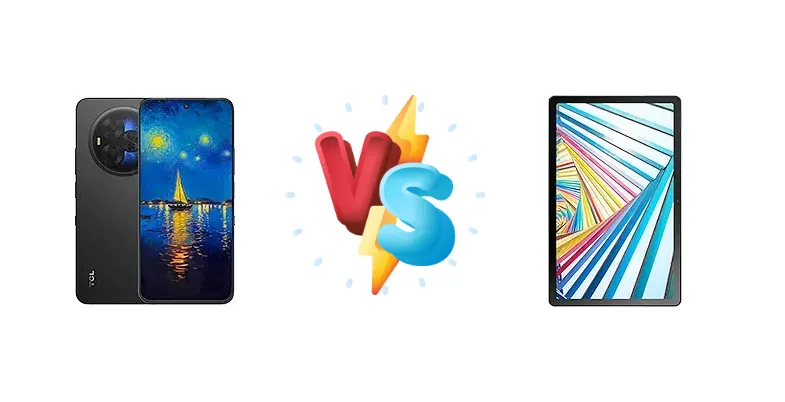
|
🏆 Quick Verdict
For users prioritizing performance and a unique reading experience, the TCL NxtPaper 60 Ultra is the clear winner. Its Dimensity 7400 chipset and 50:48h endurance significantly outperform the Lenovo Tab M10 Plus. However, the Lenovo remains a viable option for basic tasks and those on a tighter budget.
| PHONES | ||
|---|---|---|
| Phone Names | TCL NxtPaper 60 Ultra | Lenovo Tab M10 Plus (3rd Gen) |
| Network | ||
|---|---|---|
| 2G bands | GSM 850 / 900 / 1800 / 1900 | GSM 850 / 900 / 1800 / 1900 |
| 3G bands | HSDPA 850 / 1700(AWS) / 1900 / 2100 | HSDPA 800 / 850 / 900 / 1900 / 2100 |
| 4G bands | 1, 2, 3, 4, 5, 7, 8, 12, 13, 17, 18, 19, 20, 26, 28, 32, 38, 39, 40, 41, 42, 66 | 1, 2, 3, 4, 5, 7, 8, 19, 20, 26, 28, 28, 38, 40, 41 |
| 5G bands | 1, 3, 5, 7, 8, 20, 26, 28, 38, 40, 41, 66, 75, 77, 78 SA/NSA | - |
| Speed | HSPA, LTE, 5G | HSPA 42.2/5.76 Mbps, LTE Cat13 390/75 Mbps - cellular model only |
| Technology | GSM / HSPA / LTE / 5G | GSM / HSPA / LTE |
| Launch | ||
|---|---|---|
| Announced | 2025, September 04 | 2022, May |
| Status | Available. Released 2025, September 18 | Available. Released 2022, May |
| Body | ||
|---|---|---|
| Build | Glass front, plastic back, plastic frame | - |
| Dimensions | 174.5 x 81.2 x 7.6 mm (6.87 x 3.20 x 0.30 in) | 251.2 x 158.8 x 7.5 mm (9.89 x 6.25 x 0.30 in) |
| SIM | Nano-SIM + Nano-SIM + eSIM (max 2 at a time) | Nano-SIM (cellular model only) |
| Weight | 227 g (8.01 oz) | 465 g (1.03 lb) |
| - | Stylus support | |
| Display | ||
|---|---|---|
| Protection | Mohs level 7 | - |
| Resolution | 1080 x 2340 pixels, 19.5:9 ratio (~358 ppi density) | 1200 x 2000 pixels, 5:3 ratio (~220 ppi density) |
| Size | 7.2 inches, 127.3 cm2 (~89.8% screen-to-body ratio) | 10.61 inches, 320.4 cm2 (~80.3% screen-to-body ratio) |
| Type | IPS LCD, 120Hz, 850 (HBM) | IPS LCD, 400 nits (typ) |
| Platform | ||
|---|---|---|
| CPU | Octa-core (4x2.6 GHz Cortex-A78 & 4x2.0 GHz Cortex-A55) | Octa-core (4x2.4 GHz Kryo 265 Gold & 4x1.9 GHz Kryo 265 Silver) - LTE model Octa-core (2x2.0 GHz Cortex-A75 & 6x1.8 GHz Cortex-A55) - Wi-Fi only model |
| Chipset | Mediatek Dimensity 7400 (4 nm) | Qualcomm SM6225 Snapdragon 680 4G (6 nm) - LTE model Mediatek MT6769V/CU Helio G80 (12 nm) - Wi-Fi only model |
| GPU | Mali-G615 MC2 | Adreno 610 - LTE model Mali-G52 MC2 - Wi-Fi only model |
| OS | Android 15, up to 3 major Android upgrades | Android 12 |
| Memory | ||
|---|---|---|
| Card slot | No | microSDXC (dedicated slot) |
| Internal | 256GB 12GB RAM, 512GB 12GB RAM | 32GB 3GB RAM, 64GB 4GB RAM, 128GB 4GB RAM, 128GB 6GB RAM |
| - | eMCP/uMCP | |
| Main Camera | ||
|---|---|---|
| Features | LED flash, HDR, panorama | - |
| Single | - | 8 MP, AF |
| Triple | 50 MP, f/1.8, 24mm (wide), 1/1.55", 1.0µm, PDAF, OIS 50 MP, f/2.4, 71mm (periscope telephoto), 1/2.8", 0.64µm, PDAF, OIS, 3x optical zoom 8 MP, f/2.2, 112˚ (ultrawide), 1/4.0", 1.12µm | - |
| Video | 4K@30fps, 1080p@60fps | 1080p |
| Selfie camera | ||
|---|---|---|
| Features | HDR | - |
| Single | 32 MP, f/2.0, 28mm (wide), 1/3.1", 0.7µm | 8 MP |
| Video | 1440p@30fps | - |
| Sound | ||
|---|---|---|
| 3.5mm jack | - | Yes |
| 35mm jack | No | Yes |
| Loudspeaker | Yes, with stereo speakers | Yes, with stereo speakers (4 speakers) |
| Comms | ||
|---|---|---|
| Bluetooth | 5.4, A2DP, LE | 5.0, A2DP, LE |
| Infrared port | Yes | - |
| NFC | Yes (market/region dependent) | No |
| Positioning | GPS (L1+L5), GLONASS, GALILEO, BDS | GPS, GLONASS, BDS - cellular model only |
| Radio | Unspecified | FM Radio |
| USB | USB Type-C 2.0, OTG | USB Type-C 2.0 |
| WLAN | Wi-Fi 802.11 a/b/g/n/ac/6, dual-band, Wi-Fi Direct | Wi-Fi 802.11 a/b/g/n/ac, dual-band, Wi-Fi Direct |
| Features | ||
|---|---|---|
| Sensors | Fingerprint (side-mounted), accelerometer, gyro, proximity, compass, barometer | Accelerometer, proximity, gyro |
| Battery | ||
|---|---|---|
| Charging | 33W wired, 50% in 30 min 10W reverse wired | 20W wired |
| Type | 5200 mAh | Li-Po 7700 mAh |
| Misc | ||
|---|---|---|
| Colors | Lunar White, Nebula Black | Storm Grey, Frost Blue |
| Models | T951K, T951P, T951P1 | - |
| Price | £ 339.99 / € 397.84 | About 260 EUR |
| EU LABEL | ||
|---|---|---|
| Battery | 50:48h endurance, 1000 cycles | - |
| Energy | Class B | - |
| Free fall | Class B (180 falls) | - |
| Repairability | Class B | - |
TCL NxtPaper 60 Ultra
- Superior performance with the Dimensity 7400 chipset.
- Exceptional battery life (50:48h endurance).
- Faster 33W charging and reverse wireless charging capability.
- Specific display details (resolution, brightness) are unknown.
- Camera specifications are not readily available.
Lenovo Tab M10 Plus (3rd Gen)
- More affordable price point.
- Familiar Android experience.
- Available in both LTE and Wi-Fi only models.
- Significantly less powerful chipset (Snapdragon 680 or Helio G80).
- Slower 20W charging.
- Likely shorter battery life.
Display Comparison
The TCL NxtPaper 60 Ultra’s defining feature is its paper-like display, though specific details like resolution and brightness are missing. This technology aims to reduce eye strain during prolonged reading. The Lenovo Tab M10 Plus (3rd Gen) doesn’t offer such a specialized display, relying on a standard LCD panel. While the Lenovo’s display specs are also absent, its market positioning suggests a lower peak brightness compared to what a flagship-leaning device like the TCL might offer. The TCL’s focus on a paper-like experience suggests a matte finish, reducing glare, a benefit the Lenovo likely lacks.
Camera Comparison
Camera details are sparse for both devices. Given the tablet category, camera performance isn't a primary focus. However, the TCL NxtPaper 60 Ultra, positioned as a more premium device, likely incorporates a more capable camera system than the Lenovo Tab M10 Plus (3rd Gen). The Lenovo’s camera specs are typically modest, and focusing on the TCL’s potential for better image processing and sensor quality is reasonable, even without specific details. We can assume both tablets will struggle in low-light conditions.
Performance
The TCL NxtPaper 60 Ultra boasts a Mediatek Dimensity 7400 (4nm) chipset, featuring an octa-core configuration with 4x2.6 GHz Cortex-A78 and 4x2.0 GHz Cortex-A55 cores. This 4nm process node is significantly more efficient than the 6nm (Snapdragon 680) or 12nm (Helio G80) found in the Lenovo Tab M10 Plus (3rd Gen). The Dimensity 7400’s Cortex-A78 cores provide a substantial performance uplift over the Kryo 265 Gold cores in the Snapdragon 680, and a massive advantage over the Cortex-A75 cores in the Helio G80 variant. This translates to faster app loading, smoother multitasking, and improved gaming performance on the TCL. The Lenovo’s performance will vary depending on whether it’s the 4G LTE (Snapdragon 680) or Wi-Fi only (Helio G80) model, with the Snapdragon offering a moderate advantage.
Battery Life
The TCL NxtPaper 60 Ultra claims an impressive 50:48h endurance, coupled with 33W wired charging (50% in 30 minutes) and 10W reverse wired charging. The Lenovo Tab M10 Plus (3rd Gen) offers 20W wired charging. While the Lenovo’s battery capacity is unknown, the TCL’s significantly faster charging and longer endurance, likely due to the efficient Dimensity 7400 chipset, give it a clear advantage. The 10W reverse charging on the TCL is a useful feature for topping up accessories, absent on the Lenovo.
Buying Guide
Buy the TCL NxtPaper 60 Ultra if you need a tablet for extended reading sessions, content creation, or light gaming, and value a modern processor and long battery life. Buy the Lenovo Tab M10 Plus (3rd Gen) if you prioritize affordability, basic media consumption, and a familiar Android experience, and don't require demanding performance.