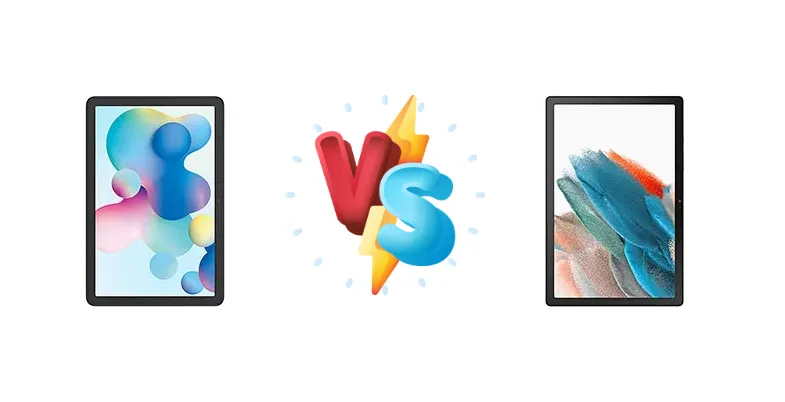
The sub-$200 Android tablet market is heating up. The TCL NxtPaper 10s aims to disrupt with its paper-like display, prioritizing eye comfort for reading. Meanwhile, the Samsung Galaxy Tab A8 10.5 (2021) offers a more traditional tablet experience focused on everyday tasks and media consumption. This comparison dissects their core differences to determine which tablet delivers the best value.
🏆 Quick Verdict
For users prioritizing extended reading sessions and eye strain reduction, the TCL NxtPaper 10s is the clear winner. However, the Samsung Galaxy Tab A8 10.5 provides a more versatile experience with a slightly more powerful processor and broader app compatibility, making it better suited for general use.
| Network |
|---|
| 2G bands | N/A | GSM 850 / 900 / 1800 / 1900 |
| 3G bands | N/A | HSDPA 850 / 900 / 1700(AWS) / 1900 / 2100 |
| 4G bands | - | 1, 2, 3, 4, 5, 7, 8, 12, 17, 20, 28, 38, 40, 41, 66 |
| EDGE | No | - |
| GPRS | No | - |
| Speed | - | HSPA, LTE - cellular model only |
| Technology | No cellular connectivity | GSM / HSPA / LTE |
| Launch |
|---|
| Announced | 2022, January 04 | 2021, December 15 |
| Status | Available. Released 2022, Q3 | Available. Released 2022, January 17 |
| Body |
|---|
| Dimensions | 241 x 158.6 x 8.3 mm (9.49 x 6.24 x 0.33 in) | 246.8 x 161.9 x 6.9 mm (9.72 x 6.37 x 0.27 in) |
| SIM | No | Nano-SIM (cellular model only) |
| Weight | 490 g (1.08 lb) | 508 g (1.12 lb) |
| Display |
|---|
| Resolution | 1200 x 1920 pixels, 16:10 ratio (~224 ppi density) | 1200 x 1920 pixels, 16:10 ratio (~216 ppi density) |
| Size | 10.1 inches, 295.8 cm2 (~77.4% screen-to-body ratio) | 10.5 inches, 319.7 cm2 (~80.0% screen-to-body ratio) |
| Type | NCVM IPS | TFT LCD |
| Platform |
|---|
| CPU | Octa-core (4x2.0 GHz Cortex-A53 & 4x1.5 GHz Cortex-A53) | Octa-core (2x2.0 GHz Cortex-A75 & 6x2.0 GHz Cortex-A55) |
| Chipset | Mediatek MT8768 | Unisoc Tiger T618 (12 nm) |
| GPU | PowerVR GE8320 | Mali G52 MP2 |
| OS | Android 11 | Android 11, upgradable to Android 14, One UI 6 |
| Memory |
|---|
| Card slot | microSDXC | microSDXC (dedicated slot) |
| Internal | 64GB 4GB RAM | 32GB 2GB RAM, 32GB 3GB RAM, 64GB 2GB RAM, 64GB 3GB RAM, 64GB 4GB RAM, 128GB 3GB RAM, 128GB 4GB RAM |
| Main Camera |
|---|
| Features | LED flash | - |
| Single | 8 MP, f/2.0, (wide), 1/4.0", 1.12µm, AF | 8 MP, AF |
| Video | 1080p@30fps | 1080p@30fps |
| Selfie camera |
|---|
| Single | 5 MP, f/2.2, (wide), 1/5.0", 1.12µm | 5 MP |
| Video | 1080p@30fps | 1080p@30fps |
| Sound |
|---|
| 3.5mm jack | - | Yes |
| 35mm jack | Yes | Yes |
| Loudspeaker | Yes, with dual speakers | Yes, with stereo speakers (4 speakers) |
| Comms |
|---|
| Bluetooth | 5.0, A2DP, LE | 5.0, A2DP, LE |
| NFC | No | No |
| Positioning | GPS | GPS, GLONASS, BDS, GALILEO, QZSS - cellular model only |
| Radio | FM radio, RDS | No |
| USB | USB Type-C 2.0 | USB Type-C 2.0 |
| WLAN | Wi-Fi 802.11 a/b/g/n/ac, dual-band, Wi-Fi Direct | Wi-Fi 802.11 a/b/g/n/ac, dual-band, Wi-Fi Direct |
| Features |
|---|
| Sensors | Accelerometer, proximity | Accelerometer, gyro, proximity, compass |
| Battery |
|---|
| Charging | 18W wired | 15W wired |
| Type | Li-Po 8000 mAh | Li-Po 7040 mAh |
| Misc |
|---|
| Colors | Dark Gray, Ethereal Green | Gray, Silver, Pink Gold |
| Models | 9081X, 9081X2 | SM-X200, SM-X205 |
| Price | - | About 230 EUR |
| SAR EU | - | 0.92 W/kg (body) |
TCL NxtPaper 10s
- Eye-friendly NxtPaper display reduces blue light and glare.
- Potentially longer battery life during reading.
- Slightly faster charging (18W vs 15W).
- Less powerful processor for demanding tasks.
- Limited app compatibility compared to Samsung.
Samsung Galaxy Tab A8 10.5 (2021)
- More powerful Unisoc Tiger T618 processor.
- Better performance for multitasking and gaming.
- Wider app compatibility and software support.
- Standard LCD display can cause eye strain during prolonged use.
- Potentially shorter battery life with heavy usage.
Display Comparison
The TCL NxtPaper 10s distinguishes itself with its unique display technology, designed to mimic the look of paper. While specific nit brightness isn't provided, the focus is on reducing blue light and glare. The Samsung Galaxy Tab A8 10.5 features a standard 10.5-inch TFT LCD. The Unisoc T618 powering the Tab A8 likely drives a brighter display, beneficial for outdoor visibility, but at the cost of potential eye strain. The NxtPaper’s matte finish will reduce reflections, a significant advantage for reading in bright environments. Bezels appear comparable on both devices, but the NxtPaper’s display tech is the defining factor.
Camera Comparison
Neither tablet is positioned as a photography powerhouse. Both are likely to feature basic camera setups adequate for video calls and occasional snapshots. Given the context data, detailed camera analysis is limited. The Tab A8 likely has a more refined image processing pipeline due to Samsung’s experience, but the difference will be minimal for casual users. Focusing on sensor size or aperture is irrelevant given the likely low-resolution sensors on both devices.
Performance
The Samsung Galaxy Tab A8 10.5 leverages the Unisoc Tiger T618, a 12nm chip with a heterogeneous core configuration – 2x2.0 GHz Cortex-A75 and 6x2.0 GHz Cortex-A55. This architecture provides a performance edge over the TCL NxtPaper 10s’ Mediatek MT8768, which uses a less efficient 4x2.0 GHz Cortex-A53 & 4x1.5 GHz Cortex-A53 setup. The A75 cores in the Tab A8 offer significantly better single-core performance, translating to snappier app launches and smoother multitasking. While both tablets likely feature similar RAM configurations, the Tab A8’s processor will handle demanding applications more effectively. Thermal management isn't specified, but the 12nm process of the Unisoc chip *could* lead to slightly better efficiency.
Battery Life
Battery capacity isn't specified for either device, but the TCL NxtPaper 10s’ power-efficient display and less demanding processor suggest potentially longer battery life during reading. The Samsung Galaxy Tab A8 10.5, with its more powerful processor, will likely consume more power during intensive tasks. The Tab A8 supports 15W wired charging, while the NxtPaper 10s supports 18W. This suggests slightly faster charging times for the NxtPaper, but the difference will likely be marginal. Real-world battery performance will heavily depend on usage patterns.
Buying Guide
Buy the TCL NxtPaper 10s if you primarily need a device for reading ebooks, documents, or browsing the web for extended periods and value eye comfort above all else. Buy the Samsung Galaxy Tab A8 10.5 (2021) if you prefer a tablet for streaming video, light gaming, and general productivity tasks, and require a wider range of app support.
Frequently Asked Questions
❓ Is the TCL NxtPaper 10s display truly better for reading than a standard LCD?
Yes, the NxtPaper display is specifically engineered to reduce blue light emission and glare, mimicking the appearance of paper. This significantly reduces eye strain during prolonged reading sessions, unlike traditional LCDs which can cause fatigue.
❓ Will the Unisoc Tiger T618 in the Samsung Tab A8 handle demanding games like PUBG or Call of Duty Mobile?
The Unisoc T618 can run PUBG and Call of Duty Mobile, but likely at medium graphics settings and frame rates. It's not a gaming powerhouse, and you may experience occasional frame drops during intense gameplay. The TCL NxtPaper 10s’ Mediatek MT8768 would struggle even more with these titles.
❓ Does the TCL NxtPaper 10s support Google Play Store and all Android apps?
The TCL NxtPaper 10s runs on Android, and supports the Google Play Store. However, due to the unique display technology and potentially limited resources, some apps may not be fully optimized or display correctly. Compatibility is generally good, but not guaranteed for all applications.
❓ How does the 18W charging on the NxtPaper 10s compare to the 15W charging on the Tab A8 in real-world use?
While 18W is technically faster, the difference in charging time between the two tablets will likely be around 15-20 minutes for a full charge. Both tablets offer reasonable charging speeds for their price range, and the impact on daily use is minimal.