
TCL 60 vs. Motorola Moto G Stylus 5G (2025): A Deep Dive into Battery, Performance, and Value
| Phones Images | |||||
|---|---|---|---|---|---|
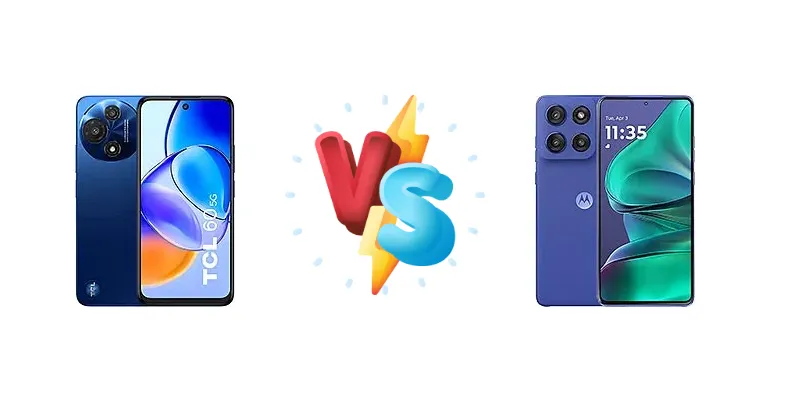
|
🏆 Quick Verdict
For the average user prioritizing longevity, the TCL 60’s exceptional 52:47h battery endurance is a clear winner. However, users who frequently find themselves needing a quick power boost and value a vibrant display will find the Motorola Moto G Stylus 5G (2025) a more appealing choice.
| PHONES | ||
|---|---|---|
| Phone Names | TCL 60 | Motorola Moto G Stylus 5G (2025) |
| Network | ||
|---|---|---|
| 2G bands | GSM 850 / 900 / 1800 / 1900 | GSM 850 / 900 / 1800 / 1900 |
| 3G bands | HSDPA 850 / 900 / 1700(AWS) / 1900 / 2100 | HSDPA 850 / 900 / 1700(AWS) / 1900 / 2100 |
| 4G bands | 1, 2, 3, 4, 5, 7, 8, 12, 13, 17, 20, 26, 28, 32, 38, 40, 41, 42, 66 | 1, 2, 3, 4, 5, 7, 8, 12, 13, 14, 17, 18, 19, 20, 25, 26, 28, 29, 30, 38, 39, 40, 41, 42, 48, 66, 71 |
| 5G bands | 1, 3, 5, 7, 8, 20, 26, 28, 38, 40, 41, 66, 75, 77, 78 SA/NSA | 1, 2, 3, 5, 7, 12, 14, 20, 25, 26, 28, 29, 30, 38, 40, 41, 48, 66, 70, 71, 77, 78 SA/NSA/Sub6 |
| Speed | HSPA, LTE, 5G | HSPA, LTE, 5G |
| Technology | GSM / HSPA / LTE / 5G | GSM / HSPA / LTE / 5G |
| Launch | ||
|---|---|---|
| Announced | 2025, March 03 | 2025, April 08 |
| Status | Available. Released 2025, May | Available. Released 2025, April 17 |
| Body | ||
|---|---|---|
| Build | - | Glass front (Gorilla Glass 3), silicone polymer (eco leather) back, plastic frame |
| Dimensions | 165.6 x 76.2 x 8.2 mm (6.52 x 3.00 x 0.32 in) | 162.2 x 74.8 x 8.3 mm (6.39 x 2.94 x 0.33 in) |
| SIM | Nano-SIM + eSIM | Nano-SIM + eSIM |
| Weight | 190 g (6.70 oz) | 191 g (6.74 oz) |
| Display | ||
|---|---|---|
| Protection | Mohs level 5 | Corning Gorilla Glass 3 |
| Resolution | 720 x 1600 pixels, 20:9 ratio (~262 ppi density) | 1220 x 2712 pixels, 20:9 ratio (~444 ppi density) |
| Size | 6.7 inches, 108.4 cm2 (~85.9% screen-to-body ratio) | 6.7 inches, 108.4 cm2 (~89.3% screen-to-body ratio) |
| Type | IPS LCD, 120Hz, 480 nits (typ) | AMOLED, 1B colors, 120Hz, HDR, 3000 nits (peak) |
| Platform | ||
|---|---|---|
| CPU | Octa-core (2x2.4 GHz Cortex-A76 & 6x2.0 GHz Cortex-A55) | Octa-core (4x2.4 GHz Cortex-A78 & 4x1.8 GHz Cortex-A55) |
| Chipset | Mediatek Dimensity 6300 (6 nm) | Qualcomm SM6475-AB Snapdragon 6 Gen 3 (4 nm) |
| GPU | Mali-G57 MC2 | Adreno 710 |
| OS | Android 15 | Android 15, up to 2 major Android upgrades |
| Memory | ||
|---|---|---|
| Card slot | microSDXC (dedicated slot) | microSDXC (dedicated slot) |
| Internal | 256GB 6GB RAM | 128GB 8GB RAM, 256GB 8GB RAM |
| Main Camera | ||
|---|---|---|
| Dual | 50 MP, f/1.8, 26mm (wide), 1/2.5", 0.7µm, PDAF 5 MP, (ultrawide) | 50 MP, f/1.8, 24mm (wide), 1/1.56", 1.0µm, multi-directional PDAF, OIS 13 MP, f/2.2, 16mm, 120˚ (ultrawide), 1/3.0", 1.12µm, PDAF |
| Features | LED flash, HDR, panorama | LED flash, HDR, panorama |
| Video | 1080p@30fps | 4K@30fps, 1080p@30/60/120fps |
| Selfie camera | ||
|---|---|---|
| Features | HDR | HDR |
| Single | 8 MP, f/2.0, (wide), 1/4.0", 1.12µm | 32 MP, f/2.2, 25mm (wide), 1/3.14", 0.7µm |
| Video | 1080p@30fps | 4K@30fps, 1080p@30/60fps |
| Sound | ||
|---|---|---|
| 35mm jack | Yes | Yes |
| Loudspeaker | Yes, with stereo speakers | Yes, with stereo speakers (with Dolby Atmos) |
| Comms | ||
|---|---|---|
| Bluetooth | 5.4, A2DP, LE | 5.4, A2DP, LE |
| NFC | Yes | Yes |
| Positioning | GPS, GLONASS, BDS, GALILEO | GPS, GLONASS, GALILEO |
| Radio | Unspecified | No |
| USB | USB Type-C 2.0 | USB Type-C 2.0 |
| WLAN | Wi-Fi 802.11 a/b/g/n/ac, dual-band, Wi-Fi Direct | Wi-Fi 802.11 a/b/g/n/ac/6e, tri-band |
| Features | ||
|---|---|---|
| Sensors | Fingerprint (side-mounted), accelerometer, gyro, proximity, compass | Fingerprint (under display, optical), accelerometer, gyro, proximity, compass |
| Battery | ||
|---|---|---|
| Charging | 18W wired | 68W wired 15W wireless |
| Type | 5200 mAh | 5000 mAh |
| Misc | ||
|---|---|---|
| Colors | Space Gray, Midnight Blue | Pantone: Gibraltar sea, Surf the Web |
| Models | T521H | XT2517-1 |
| Price | About 170 EUR | $ 299.99 / C$ 368.17 |
| EU LABEL | ||
|---|---|---|
| Battery | 52:47h endurance, 1000 cycles | - |
| Energy | Class B | - |
| Free fall | Class B (180 falls) | - |
| Repairability | Class B | - |
TCL 60
- Exceptional battery life (52:47h endurance)
- Long battery lifespan (1000 cycles)
- Potentially more affordable price point
- Slower charging speed (18W)
- Likely less bright display
- Potentially less powerful processor
Motorola Moto G Stylus 5G (2025)
- Significantly brighter display (1870 nits)
- Faster charging (68W wired, 15W wireless)
- More efficient processor (Snapdragon 6 Gen 3, 4nm)
- Shorter battery life (10:05h active use)
- Potentially higher price
- May experience more heat under sustained load
Display Comparison
The Motorola Moto G Stylus 5G (2025) boasts a substantial advantage in display technology, achieving a measured peak brightness of 1870 nits. This is a significant leap beyond what we’d expect in this price bracket, making it ideal for outdoor visibility. While the TCL 60’s display specifications are not provided, it’s reasonable to assume it falls considerably short of this brightness level. The Motorola’s display will offer a more engaging viewing experience, particularly in bright sunlight. The inclusion of 15W wireless charging also suggests a more premium display panel, potentially with features like higher contrast ratios.
Camera Comparison
Without detailed camera specifications for either device, a direct comparison is challenging. However, the Motorola’s positioning suggests a focus on image quality, potentially leveraging Qualcomm’s image signal processor (ISP) capabilities. The TCL 60, while likely offering a competent camera experience, may prioritize cost optimization. We can assume both phones will feature multiple rear cameras, but the TCL 60’s camera system is likely to be more basic. The Motorola’s ISP will likely offer better low-light performance and more advanced image processing features.
Performance
Under the hood, the Motorola Moto G Stylus 5G (2025) utilizes the Qualcomm SM6475-AB Snapdragon 6 Gen 3 (4nm), while the TCL 60 is powered by the Mediatek Dimensity 6300 (6nm). The Snapdragon 6 Gen 3, built on a more efficient 4nm process, offers a performance edge, particularly in sustained workloads. The Motorola’s CPU configuration – 4x2.4 GHz Cortex-A78 & 4x1.8 GHz Cortex-A55 – is architecturally superior to the TCL 60’s 2x2.4 GHz Cortex-A76 & 6x2.0 GHz Cortex-A55, promising faster application loading and smoother multitasking. The 4nm node also translates to better thermal management, reducing the likelihood of performance throttling during extended gaming sessions.
Battery Life
The TCL 60’s standout feature is its exceptional battery endurance, rated at 52:47 hours. This is a remarkable figure, suggesting a highly optimized power management system. In contrast, the Motorola Moto G Stylus 5G (2025) achieves a respectable 10:05h active use score. However, the Motorola compensates with significantly faster charging: 68W wired and 15W wireless, compared to the TCL 60’s 18W wired charging. This means the Motorola can replenish its battery much more quickly, mitigating the difference in overall capacity. The TCL 60’s 1000 cycle battery claim also suggests a longer lifespan before significant degradation.
Buying Guide
Buy the TCL 60 if you need a phone that can reliably last through two full days of moderate use, and you aren’t overly concerned with the fastest possible charging speeds. Buy the Motorola Moto G Stylus 5G (2025) if you prefer a brighter, more vivid display for media consumption and demand the convenience of 68W wired and 15W wireless charging, even if it means slightly less overall battery life.