
TCL 60 XE NxtPaper vs. Motorola Moto G Stylus 5G (2023): Which Budget 5G Phone Reigns Supreme?
| Phones Images | |||||
|---|---|---|---|---|---|
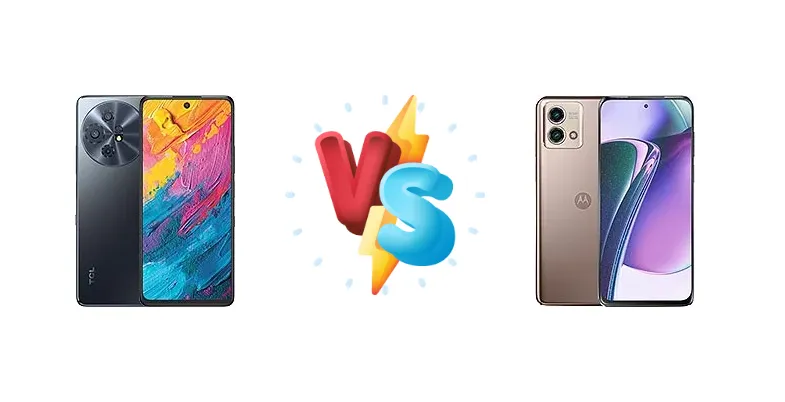
|
🏆 Quick Verdict
For the average user prioritizing all-around performance and a versatile feature set, the Motorola Moto G Stylus 5G (2023) emerges as the stronger choice. Its Snapdragon 6 Gen 1 chipset, built on a more efficient 4nm process, delivers a noticeable performance edge and better thermal management compared to the TCL's Dimensity 6100+.
| PHONES | ||
|---|---|---|
| Phone Names | TCL 60 XE NxtPaper | Motorola Moto G Stylus 5G (2023) |
| Network | ||
|---|---|---|
| 2G bands | GSM 850 / 900 / 1800 / 1900 | GSM 850 / 900 / 1800 / 1900 |
| 3G bands | HSDPA 850 / 1700(AWS) / 1900 / 2100 | HSDPA 850 / 900 / 1700(AWS) / 1900 / 2100 |
| 4G bands | 1, 2, 3, 4, 5, 7, 12, 13, 17, 20, 25, 26, 28, 29, 30, 38, 41, 42, 66, 71 | 1, 2, 3, 4, 5, 7, 8, 12, 13, 14, 17, 18, 19, 20, 25, 26, 29, 30, 38, 39, 40, 41, 48, 66, 71 |
| 5G bands | 1, 2, 3, 5, 12, 20, 25, 28, 30, 38, 40, 41, 48, 66, 70, 71, 77, 78 SA/NSA | 1, 2, 3, 5, 7, 12, 13, 14, 25, 26, 29, 30, 38, 41, 48, 66, 70, 71, 77, 78 SA/NSA |
| Speed | HSPA, LTE, 5G | HSPA, LTE, 5G |
| Technology | GSM / HSPA / LTE / 5G | GSM / HSPA / LTE / 5G |
| Launch | ||
|---|---|---|
| Announced | 2025, March 03 | 2023, May 30 |
| Status | Available. Released 2025, May | Available. Released 2023, June 02 |
| Body | ||
|---|---|---|
| Build | - | Glass front, plastic frame, plastic back |
| Dimensions | 167.6 x 75.5 x 8.2 mm (6.60 x 2.97 x 0.32 in) | 162.8 x 73.8 x 9.2 mm (6.41 x 2.91 x 0.36 in) |
| SIM | Nano-SIM + eSIM | Nano-SIM |
| Weight | 199.5 g (7.02 oz) | 202 g (7.13 oz) |
| Display | ||
|---|---|---|
| Resolution | 1080 x 2460 pixels (~396 ppi density) | 1080 x 2400 pixels, 20:9 ratio (~399 ppi density) |
| Size | 6.78 inches, 109.2 cm2 (~86.3% screen-to-body ratio) | 6.6 inches, 105.2 cm2 (~87.5% screen-to-body ratio) |
| Type | IPS LCD, 120Hz | IPS LCD, 120Hz |
| Platform | ||
|---|---|---|
| CPU | Octa-core (2x2.4 GHz Cortex-A76 & 6x2.0 GHz Cortex-A55) | Octa-core (4x2.2 GHz Cortex-A78 & 4x1.8 GHz Cortex-A55) |
| Chipset | Mediatek Dimensity 6100+ (6 nm) | Qualcomm SM6450 Snapdragon 6 Gen 1 (4 nm) |
| GPU | Mali-G57 MC2 | Adreno 710 |
| OS | Android 15 | Android 13, planned upgrade to Android 14 |
| Memory | ||
|---|---|---|
| Card slot | microSDXC (dedicated slot) | microSDXC (dedicated slot) |
| Internal | 128GB 6GB RAM, 256GB 8GB RAM | 64GB 4GB RAM, 128GB 4GB RAM, 128GB 6GB RAM, 256GB 6GB RAM |
| Main Camera | ||
|---|---|---|
| Dual | - | 50 MP, f/1.9, (wide), 1.0µm, PDAF 8 MP, f/2.2, (ultrawide), 1/4.0", 1.12µm, AF |
| Features | LED flash, HDR | LED flash, HDR, panorama |
| Triple | 50 MP, (wide), PDAF 5 MP, (ultrawide) Auxiliary lens | - |
| Video | 1080p@30fps, gyro-EIS | 4K@30fps, 1080p@30/60fps |
| Selfie camera | ||
|---|---|---|
| Features | - | HDR |
| Single | 32 MP, (wide) | 16 MP, f/2.5, (wide), 1.0µm |
| Video | 1080p@30fps | 1080p@30fps |
| Sound | ||
|---|---|---|
| 35mm jack | Yes | Yes |
| Loudspeaker | Yes, with stereo speakers | Yes, with stereo speakers |
| Comms | ||
|---|---|---|
| Bluetooth | 5.3, A2DP, LE | 5.1, A2DP, LE |
| NFC | Yes | Yes |
| Positioning | GPS, GLONASS, BDS, GALILEO | GPS (L1+L5), GALILEO |
| Radio | FM radio | FM radio |
| USB | USB Type-C 2.0, OTG | USB Type-C 2.0 |
| WLAN | Wi-Fi 802.11 a/b/g/n/ac, dual-band, Wi-Fi Direct | Wi-Fi 802.11 a/b/g/n/ac, dual-band |
| Features | ||
|---|---|---|
| Sensors | Fingerprint (side-mounted), accelerometer, gyro, proximity, compass, barometer | Fingerprint (side-mounted), accelerometer, gyro, proximity, compass, barometer |
| Battery | ||
|---|---|---|
| Charging | 18W wired Reverse wired | 20W wired |
| Type | 5010 mAh | Li-Po 5000 mAh |
| Misc | ||
|---|---|---|
| Colors | Space Blue | Cosmic Black, Rose Champagne |
| Models | T705M, T705M1 | XT2315-1, XT2315-4 |
| Price | $ 199.00 | $ 93.43 |
| SAR | 1.30 W/kg (head) 1.13 W/kg (body) | - |
TCL 60 XE NxtPaper
- Unique NxtPaper display for reduced eye strain
- Anti-glare coating enhances outdoor visibility
- Reverse wired charging adds convenience
- Less powerful Dimensity 6100+ chipset
- 6nm process less efficient than Snapdragon's 4nm
- Potentially slower app loading and multitasking
Motorola Moto G Stylus 5G (2023)
- More efficient Snapdragon 6 Gen 1 (4nm)
- Integrated stylus for note-taking and creativity
- Faster 20W wired charging
- Standard LCD display lacks the NxtPaper’s unique texture
- May not be as comfortable for extended reading sessions
- No reverse wireless charging
Display Comparison
The TCL 60 XE NxtPaper’s defining feature is its namesake display, designed to mimic the texture of paper. While specific brightness nits aren’t provided, the focus is on reducing eye strain. The Motorola Moto G Stylus 5G (2023) likely features a standard LCD panel, prioritizing color accuracy and brightness over the unique texture of the TCL. The TCL’s anti-glare coating is a significant advantage for outdoor visibility, while the Motorola’s display will likely offer more vibrant colors. The absence of high refresh rates on either device suggests a focus on power efficiency rather than fluid animations.
Camera Comparison
Without detailed sensor specifications, a direct camera comparison is challenging. However, Motorola typically focuses on computational photography, aiming for balanced and realistic images. The TCL, while likely offering decent image quality, may lean towards more saturated colors. The absence of Optical Image Stabilization (OIS) on either device suggests a reliance on software stabilization. The usefulness of a 2MP macro camera on either phone is questionable, as image quality is often subpar. The larger main sensor (if present on the Motorola) would likely capture more light and detail.
Performance
The core difference lies in the chipsets: the TCL 60 XE NxtPaper utilizes the Mediatek Dimensity 6100+ (6nm), while the Motorola Moto G Stylus 5G (2023) employs the Qualcomm Snapdragon 6 Gen 1 (4nm). The Snapdragon’s 4nm fabrication process provides a clear advantage in power efficiency and thermal management. While both CPUs are octa-core, the Snapdragon features four Cortex-A78 cores clocked at 2.2 GHz, offering superior single-core performance compared to the TCL’s two Cortex-A76 cores at 2.4 GHz. This translates to snappier app launches and smoother multitasking on the Motorola. The Snapdragon’s Adreno GPU also provides a more capable graphics experience.
Battery Life
The TCL 60 XE NxtPaper charges at 18W, while the Motorola Moto G Stylus 5G (2023) supports 20W wired charging. While the difference isn’t massive, the 20W charging on the Motorola will likely result in slightly faster 0-100% charge times. The actual battery life will depend on usage patterns, but the Snapdragon 6 Gen 1’s 4nm efficiency should contribute to longer runtimes on the Motorola, even with similar battery capacities. The TCL’s NxtPaper display *could* offer some battery savings due to its lower brightness requirements, but this advantage may be offset by the less efficient Dimensity 6100+.
Buying Guide
Buy the TCL 60 XE NxtPaper if you spend extended periods reading on your phone and prioritize eye comfort above all else. The NxtPaper display is genuinely unique and reduces blue light exposure. Buy the Motorola Moto G Stylus 5G (2023) if you value a more responsive user experience, benefit from the integrated stylus for note-taking and creative tasks, and want a phone that handles multitasking and gaming with greater ease.