
TCL 60 NxtPaper 4G vs. Motorola Moto G Power 5G: A Deep Dive into Budget 5G Choices
| Phones Images | |||||
|---|---|---|---|---|---|
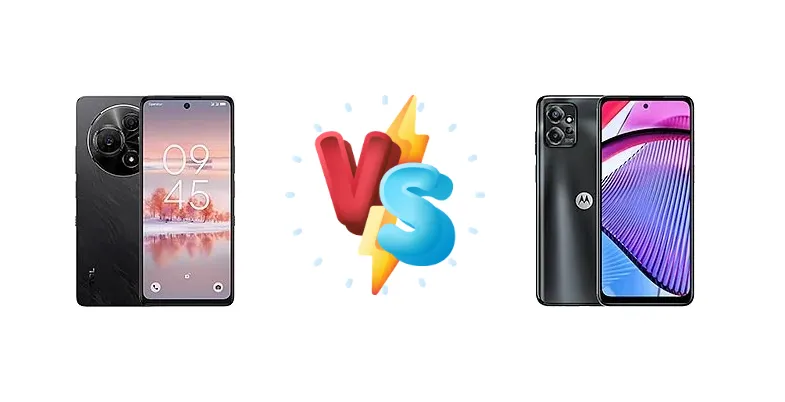
|
🏆 Quick Verdict
For the average user prioritizing performance and future-proofing, the Motorola Moto G Power 5G is the clear winner. Its Dimensity 930 chipset provides a substantial performance uplift over the TCL’s Helio G92, making it better suited for demanding apps and games. However, the TCL NxtPaper offers a unique visual experience that may appeal to specific users.
| PHONES | ||
|---|---|---|
| Phone Names | TCL 60 NxtPaper 4G | Motorola Moto G Power 5G |
| Network | ||
|---|---|---|
| 2G bands | GSM 850 / 900 / 1800 / 1900 | GSM 850 / 900 / 1800 / 1900 |
| 3G bands | HSDPA 850 / 900 / 1700(AWS) / 1900 / 2100 | HSDPA 850 / 900 / 1700(AWS) / 1900 / 2100 |
| 4G bands | 1, 2, 3, 4, 5, 7, 8, 12, 13, 17, 20, 26, 28, 38, 40, 41, 66 | 1, 2, 3, 4, 5, 7, 8, 12, 13, 14, 17, 20, 25, 26, 29, 30, 38, 39, 40, 41, 48, 66, 71 |
| 5G bands | - | 2, 5, 7, 12, 25, 30, 41, 66, 71, 77, 78 SA/NSA/Sub6 |
| Speed | HSPA, LTE | HSPA, LTE, 5G |
| Technology | GSM / HSPA / LTE | GSM / HSPA / LTE / 5G |
| Launch | ||
|---|---|---|
| Announced | 2025, March 03 | 2023, April 06 |
| Status | Available. Released 2025, May | Available. Released 2023, April 13 |
| Body | ||
|---|---|---|
| Build | - | Glass front, plastic back, plastic frame |
| Dimensions | 167.6 x 75.5 x 7.9 mm (6.60 x 2.97 x 0.31 in) | 163.1 x 74.8 x 8.5 mm (6.42 x 2.94 x 0.33 in) |
| SIM | Nano-SIM + Nano-SIM | Nano-SIM |
| Weight | 190 g (6.70 oz) | 185 g (6.53 oz) |
| - | Water-repellent design | |
| Display | ||
|---|---|---|
| Resolution | 1080 x 2460 pixels (~395 ppi density) | 1080 x 2400 pixels, 20:9 ratio (~405 ppi density) |
| Size | 6.8 inches, 109.8 cm2 (~86.8% screen-to-body ratio) | 6.5 inches, 102.0 cm2 (~83.6% screen-to-body ratio) |
| Type | IPS LCD, 90Hz, 550 nits (typ) | IPS LCD, 120Hz |
| Platform | ||
|---|---|---|
| CPU | Octa-core (2x2.0 GHz Cortex-A75 & 6x1.8 GHz Cortex-A55) | Octa-core (2x2.2 GHz Cortex-A78 & 6x2.0 GHz Cortex-A55) |
| Chipset | Mediatek Helio G92 (12 nm) | Mediatek Dimensity 930 (6 nm) |
| GPU | Mali-G52 MC2 | IMG BXM-8-256 |
| OS | Android 15 | Android 13, upgradable to Android 14 |
| Memory | ||
|---|---|---|
| Card slot | microSDXC (dedicated slot) | microSDXC (dedicated slot) |
| Internal | 256GB 8GB RAM, 512GB 8GB RAM | 128GB 4GB RAM, 256GB 6GB RAM |
| Main Camera | ||
|---|---|---|
| Dual | 108 MP, f/1.8, (wide), 1/1.67", 0.64µm, PDAF Auxiliary lens | - |
| Features | LED flash, HDR | LED flash, HDR, panorama |
| Triple | - | 50 MP, f/1.8, (wide), 0.64µm, PDAF 2 MP (macro) Auxiliary lens |
| Video | 1080p@30fps | 1080p@30fps, gyro-EIS |
| Selfie camera | ||
|---|---|---|
| Features | HDR | - |
| Single | 32 MP, f/2.0, (wide), 1/3.35", 0.65µm | 16 MP, f/2.4, (wide), 1.0µm |
| Video | 1080p@30fps | 1080p@30fps |
| Sound | ||
|---|---|---|
| 3.5mm jack | - | Yes |
| 35mm jack | Yes | Yes |
| Loudspeaker | Yes, with stereo speakers | Yes, with stereo speakers |
| Comms | ||
|---|---|---|
| Bluetooth | 5.1, A2DP, LE | 5.3, A2DP, LE |
| NFC | Yes | No |
| Positioning | GPS, GLONASS, BDS, GALILEO | GPS, GLONASS, GALILEO |
| Radio | Unspecified | No |
| USB | USB Type-C 2.0 | USB Type-C 2.0 |
| WLAN | Wi-Fi 802.11 a/b/g/n/ac, dual-band, Wi-Fi Direct | Wi-Fi 802.11 a/b/g/n/ac, dual-band |
| Features | ||
|---|---|---|
| Sensors | Fingerprint (side-mounted), gyro, accelerometer, proximity, compass | Fingerprint (side-mounted), accelerometer, gyro, proximity, compass |
| Battery | ||
|---|---|---|
| Charging | 33W wired | 15W wired |
| Type | 5200 mAh | Li-Po 5000 mAh |
| Misc | ||
|---|---|---|
| Colors | Dark Black, Alps White | Dark Blue |
| Models | T626K, T626K1 | - |
| Price | About 200 EUR | $ 97.90 / £ 199.00 |
TCL 60 NxtPaper 4G
- Faster 33W wired charging
- Unique NxtPaper display for comfortable reading
- Potentially lower price point
- Less powerful Helio G92 chipset
- Limited gaming performance
- Less future-proofed
Motorola Moto G Power 5G
- More powerful Dimensity 930 chipset
- 5G connectivity for faster data speeds
- Improved thermal efficiency
- Slower 15W wired charging
- May lack the unique display experience of the TCL
- Potentially higher price point
Display Comparison
The TCL 60 NxtPaper 4G’s defining feature is its NxtPaper display, designed to mimic the texture of paper for reduced eye strain. While resolution and panel type are not specified, the focus is on comfort. The Moto G Power 5G, lacking this specialized tech, likely utilizes a standard LCD panel. The TCL’s display is geared towards static content consumption, while the Motorola’s will likely offer better color vibrancy and viewing angles. The absence of high refresh rates on either device suggests a focus on power efficiency over visual fluidity.
Camera Comparison
Without detailed sensor information, a direct camera comparison is difficult. However, the Motorola Moto G Power 5G’s chipset generally supports more advanced image processing capabilities. The TCL 60 NxtPaper 4G likely relies on the Helio G92’s ISP, which is less sophisticated. While both phones likely feature a multi-camera setup, the Motorola’s image processing pipeline will likely deliver more detailed and dynamic photos, particularly in challenging lighting conditions. The presence of OIS (Optical Image Stabilization) on the Motorola, if present, would further enhance image quality.
Performance
The Motorola Moto G Power 5G’s Mediatek Dimensity 930 (6nm) represents a significant leap in processing power compared to the TCL 60 NxtPaper 4G’s Mediatek Helio G92 (12nm). The Dimensity 930’s Cortex-A78 cores, clocked at 2.2 GHz, outperform the Helio G92’s Cortex-A75 cores at 2.0 GHz. The 6nm process node of the Dimensity 930 also translates to improved thermal efficiency, reducing the likelihood of performance throttling during sustained workloads. This means the Motorola will handle multitasking, gaming, and demanding applications with greater ease. The TCL, while capable for basic tasks, will likely struggle with more intensive operations.
Battery Life
The Motorola Moto G Power 5G’s 15W charging is significantly slower than the TCL 60 NxtPaper 4G’s 33W charging. However, the Dimensity 930’s superior power efficiency may offset this difference in real-world usage. The TCL’s faster charging will provide quicker top-ups, but the Motorola’s chipset may allow it to maintain a usable charge for longer periods. Battery capacity is not specified for either device, but the Motorola’s more efficient processor is likely to deliver comparable or even superior battery life despite the slower charging speed.
Buying Guide
Buy the TCL 60 NxtPaper 4G if you prioritize a comfortable, paper-like reading experience and are less concerned with demanding gaming or intensive multitasking. Buy the Motorola Moto G Power 5G if you value 5G connectivity, smoother performance for everyday tasks, and a more responsive user experience, even if it means sacrificing the NxtPaper display.