
TCL 501 vs Motorola Moto G Power 5G: A Deep Dive into Budget 5G Performance
| Phones Images | |||||
|---|---|---|---|---|---|
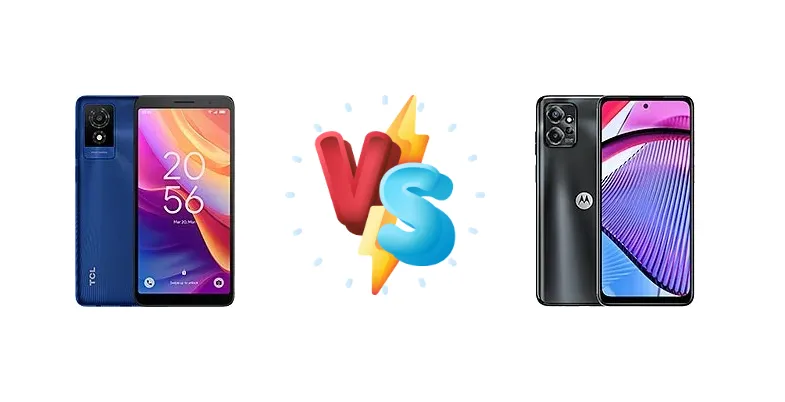
|
🏆 Quick Verdict
For the average user prioritizing responsiveness and future-proofing, the Motorola Moto G Power 5G is the clear winner. Its Mediatek Dimensity 930 chipset provides a substantial performance advantage over the TCL 501’s Helio G36, making it better suited for multitasking, gaming, and demanding applications. While the TCL 501 offers a lower entry price, the performance trade-offs are significant.
| PHONES | ||
|---|---|---|
| Phone Names | TCL 501 | Motorola Moto G Power 5G |
| Network | ||
|---|---|---|
| 2G bands | GSM 850 / 900 / 1800 / 1900 | GSM 850 / 900 / 1800 / 1900 |
| 3G bands | HSDPA 850 / 900 / 1900 / 2100 | HSDPA 850 / 900 / 1700(AWS) / 1900 / 2100 |
| 4G bands | 1, 3, 5, 7, 8, 20, 28, 38, 40, 41 | 1, 2, 3, 4, 5, 7, 8, 12, 13, 14, 17, 20, 25, 26, 29, 30, 38, 39, 40, 41, 48, 66, 71 |
| 5G bands | - | 2, 5, 7, 12, 25, 30, 41, 66, 71, 77, 78 SA/NSA/Sub6 |
| Speed | HSPA, LTE | HSPA, LTE, 5G |
| Technology | GSM / HSPA / LTE | GSM / HSPA / LTE / 5G |
| Launch | ||
|---|---|---|
| Announced | 2024, February 26 | 2023, April 06 |
| Status | Available. Released 2024, April | Available. Released 2023, April 13 |
| Body | ||
|---|---|---|
| Build | - | Glass front, plastic back, plastic frame |
| Dimensions | 156.5 x 74.9 x 9.7 mm (6.16 x 2.95 x 0.38 in) | 163.1 x 74.8 x 8.5 mm (6.42 x 2.94 x 0.33 in) |
| SIM | Nano-SIM + Nano-SIM | Nano-SIM |
| Weight | - | 185 g (6.53 oz) |
| - | Water-repellent design | |
| Display | ||
|---|---|---|
| Resolution | 540 x 1092 pixels (~203 ppi density) | 1080 x 2400 pixels, 20:9 ratio (~405 ppi density) |
| Size | 6.0 inches, 92.3 cm2 (~78.7% screen-to-body ratio) | 6.5 inches, 102.0 cm2 (~83.6% screen-to-body ratio) |
| Type | IPS LCD | IPS LCD, 120Hz |
| Platform | ||
|---|---|---|
| CPU | Octa-core (4x2.2 GHz Cortex-A53 & 4x1.6 GHz Cortex-A53) | Octa-core (2x2.2 GHz Cortex-A78 & 6x2.0 GHz Cortex-A55) |
| Chipset | Mediatek Helio G36 (12 nm) | Mediatek Dimensity 930 (6 nm) |
| GPU | PowerVR GE8320 | IMG BXM-8-256 |
| OS | Android 14 (Go edition) | Android 13, upgradable to Android 14 |
| Memory | ||
|---|---|---|
| Card slot | microSDXC (dedicated slot) | microSDXC (dedicated slot) |
| Internal | 32GB 2GB RAM | 128GB 4GB RAM, 256GB 6GB RAM |
| Main Camera | ||
|---|---|---|
| Features | LED flash | LED flash, HDR, panorama |
| Single | 5 MP, f/2.2 | - |
| Triple | - | 50 MP, f/1.8, (wide), 0.64µm, PDAF 2 MP (macro) Auxiliary lens |
| Video | 1080p@30fps | 1080p@30fps, gyro-EIS |
| Selfie camera | ||
|---|---|---|
| Single | 2 MP, f/2.8 | 16 MP, f/2.4, (wide), 1.0µm |
| Video | 720p@30fps | 1080p@30fps |
| Sound | ||
|---|---|---|
| 3.5mm jack | - | Yes |
| 35mm jack | Yes | Yes |
| Loudspeaker | Yes | Yes, with stereo speakers |
| Comms | ||
|---|---|---|
| Bluetooth | 5.1, A2DP, LE | 5.3, A2DP, LE |
| NFC | No | No |
| Positioning | GPS, GLONASS, GALILEO, BDS | GPS, GLONASS, GALILEO |
| Radio | Unspecified | No |
| USB | USB Type-C | USB Type-C 2.0 |
| WLAN | Wi-Fi 802.11 a/b/g/n/ac, dual-band, Wi-Fi Direct | Wi-Fi 802.11 a/b/g/n/ac, dual-band |
| Features | ||
|---|---|---|
| Sensors | Accelerometer | Fingerprint (side-mounted), accelerometer, gyro, proximity, compass |
| Battery | ||
|---|---|---|
| Charging | 10W wired | 15W wired |
| Type | 3000 mAh | Li-Po 5000 mAh |
| Misc | ||
|---|---|---|
| Colors | Black, Glacial Blue | Dark Blue |
| Models | T433D | - |
| Price | - | $ 97.90 / £ 199.00 |
TCL 501
- Lower price point makes it accessible to budget-conscious buyers.
- Sufficient for basic smartphone tasks like calling and texting.
- Potentially longer standby time due to less powerful chipset.
- Significantly slower performance compared to the Moto G Power 5G.
- Struggles with multitasking and demanding applications.
- Limited gaming capabilities.
Motorola Moto G Power 5G
- Much faster and more responsive performance thanks to the Dimensity 930.
- Better suited for gaming and demanding apps.
- Faster 15W charging.
- More efficient chipset for potentially longer battery life.
- Higher price compared to the TCL 501.
- May experience slightly more heat under heavy load.
Display Comparison
Neither device's display specifications are provided, so a direct comparison is limited. However, given the price points, both likely utilize LCD panels. The TCL 501, positioned as a more budget-friendly option, may feature lower peak brightness and narrower color gamut coverage. The Moto G Power 5G, while still budget-focused, may benefit from slightly improved display quality due to its higher tier chipset and potentially better panel sourcing. Bezels are likely comparable, reflecting cost-saving measures in both designs.
Camera Comparison
Without detailed camera specifications, analysis is limited. However, it’s reasonable to assume the Moto G Power 5G benefits from the more powerful ISP (Image Signal Processor) within the Dimensity 930. This allows for faster image processing, better noise reduction, and potentially improved dynamic range. While both phones likely feature a primary camera, the Dimensity 930’s capabilities suggest superior image quality, especially in low-light conditions. The TCL 501 will likely rely more heavily on software processing to compensate for its less capable chipset.
Performance
The core difference lies in the chipsets. The Motorola Moto G Power 5G’s Mediatek Dimensity 930 (6nm) is a significant leap over the TCL 501’s Mediatek Helio G36 (12nm). The Dimensity 930 utilizes more modern CPU cores – 2x Cortex-A78 at 2.2 GHz and 6x Cortex-A55 at 2.0 GHz – compared to the Helio G36’s 4x Cortex-A53 at 2.2 GHz and 4x Cortex-A53 at 1.6 GHz. This architectural difference translates to substantially improved single-core and multi-core performance. The 6nm process node of the Dimensity 930 also offers superior power efficiency, meaning less heat generation and potentially longer sustained performance. The Helio G36 will struggle with demanding tasks and multitasking.
Battery Life
The Motorola Moto G Power 5G features 15W wired charging, while the TCL 501 is limited to 10W. While battery capacity isn't specified, the Dimensity 930’s superior power efficiency means the Moto G Power 5G will likely achieve comparable or better battery life despite potentially having a similar or even slightly smaller battery. The faster charging speed on the Moto G Power 5G also provides a convenience advantage, reducing the time spent tethered to an outlet.
Buying Guide
Buy the TCL 501 if you need a basic, functional smartphone for essential tasks like calls, texts, and light social media browsing, and your budget is extremely limited. You're willing to accept slower performance and limited multitasking capabilities. Buy the Motorola Moto G Power 5G if you prioritize a smoother user experience, enjoy mobile gaming, or frequently use demanding apps. The extra investment delivers a noticeable performance uplift and better long-term usability.